Spokane waste‑to‑energy director warns Climate Commitment Act could cost city millions; staff seek legislative delay and evaluate carbon capture
Loading...
Summary
City public‑works staff reviewed operations and a life‑cycle assessment for Spokane's waste‑to‑energy facility, outlined potential annual carbon‑allowance costs under Washington's Climate Commitment Act (up to ~$8 million), and described a legislative strategy to delay compliance while pursuing mitigation such as carbon capture.
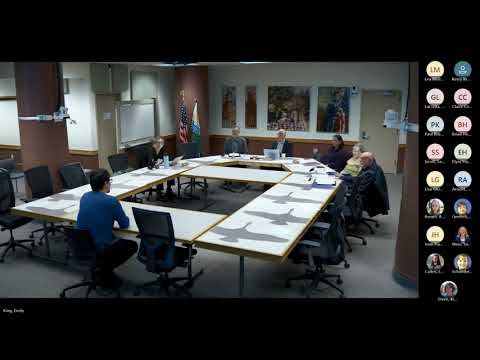
Chris Sabert, director of strategic initiatives for Public Works, told the Spokane Climate Resilience & Sustainability Board on Jan. 8 that the city's waste‑to‑energy facility processes roughly 250,000 tons of municipal solid waste annually, reduces waste mass by about 75% and volume by about 90%, supports regional customers and supplies electricity under a power‑purchase agreement that serves roughly 13,000 homes.
Sabert said the facility provides regional benefits, recovers ferrous metals (about 9,000 tons/year) and supports apprenticeship and local contracting. He traced the plant's history—construction began in 1989 with state support and operation started in 1991; the city assumed operations in 2014 and the plant now operates as an enterprise fund.
On regulatory and financial risks, Sabert briefed the board on Washington's Climate Commitment Act (CCA), a cap‑and‑trade program. He said a 20‑year global warming‑potential life‑cycle assessment the city funded shows the waste‑to‑energy option produced lower overall warming potential than three evaluated regional landfill alternatives when life‑cycle avoidances (transportation, material recovery) are included. However, Sabert said the CCA now recognizes only a limited share of such emission avoidances, which could leave the city exposed to significant compliance costs.
Sabert estimated those carbon‑allowance costs could be "up to $8,000,000 per year" for Spokane under current CCA accounting rules. He described legislative work intended to secure a temporary compliance window and free allowances to give the city time to implement mitigation strategies (including carbon capture feasibility studies). Sabert said capital costs for a carbon capture retrofit are currently estimated between about $75 million and $210 million, with roughly a three‑year design and construction timeline once decisions and funding are in place.
Board members asked for a copy of the draft legislation and clarity on sponsors; Sabert said he would circulate the legislative text when filed and accept feedback. He also acknowledged fallback options if legislative relief does not pass, including increased rates to cover allowance costs, scaling operations toward biogenic fuels that are treated differently under the CCA, or increasing regional transfer/landfill use—actions that would require mayoral and council direction and public discussion.
Sabert emphasized tradeoffs and the facility's mitigation potential: he noted that biogenic emissions (from organic waste) account for a large share of facility CO2 but are treated differently in the CCA, and that diversion of plastics and other non‑biogenic materials (including federal/state extended producer responsibility efforts) is key to lowering non‑biogenic CO2.