
Palo Alto Human Relations Commission narrows 2026 priorities, emphasizes housing and youth mental health
Get AI-powered insights, summaries, and transcripts
Subscribe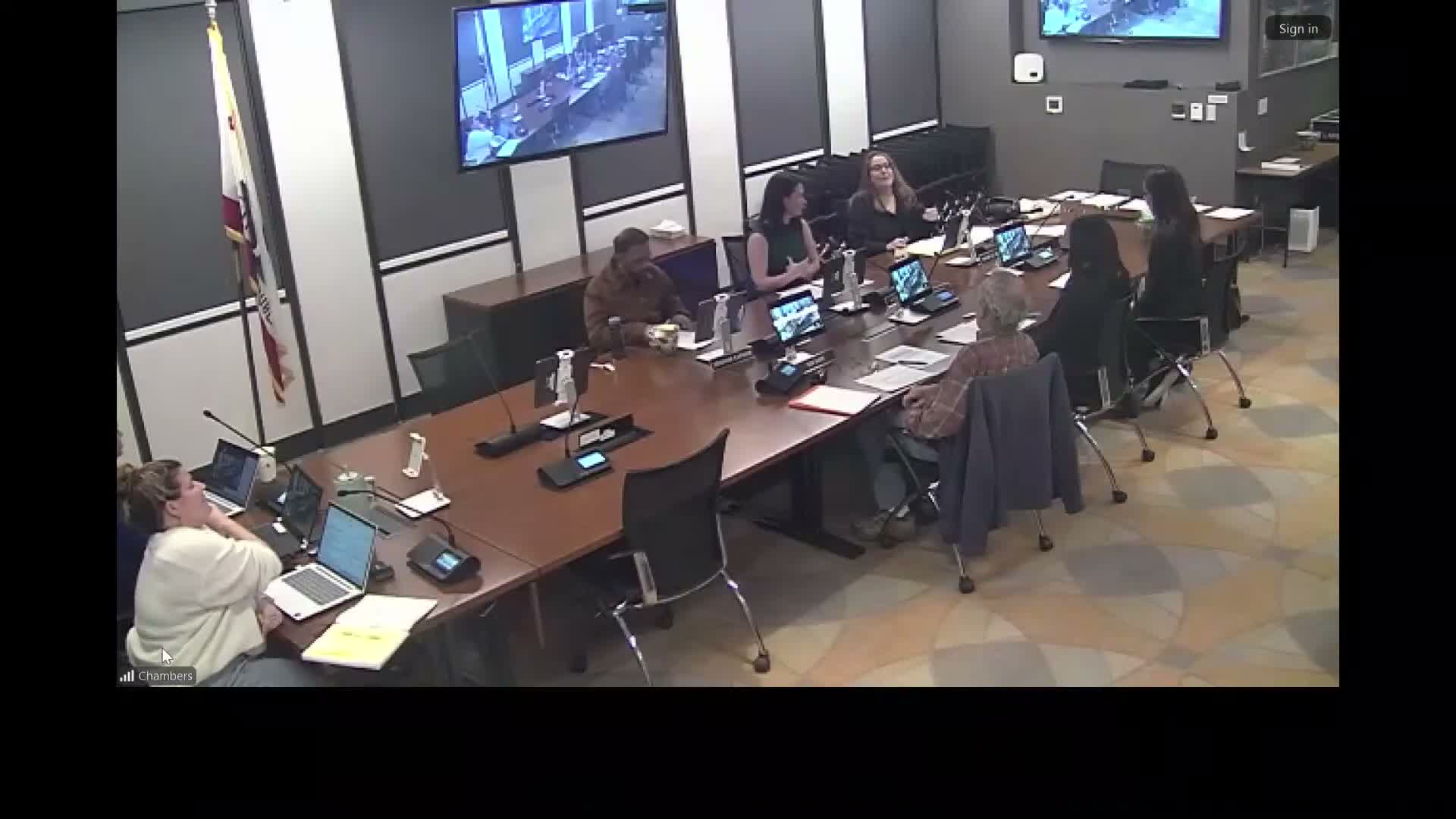
Summary
At its Jan. 8 meeting, the Palo Alto Human Relations Commission refined its 2026 work-plan 'buckets' to focus on core responsibilities, housing, climate resilience, community safety and engagement, youth mental health/suicide prevention, and technology/AI. Commissioners agreed to refine subgoals and assign liaisons before the next meeting.
The Palo Alto Human Relations Commission met Jan. 8 and moved to sharpen its 2026 work plan around a smaller set of priorities, with repeated calls to center housing equity and youth mental health.
Chair opened the meeting by reviewing the commission’s core responsibilities and the three funding streams it oversees: city core HSRAP grants to nonprofit service providers, federal Community Development Block Grant (CDBG) funds, and an 'emerging needs' fund used for urgent community supports. The chair asked commissioners to complete liaison forms and suggested folding rapid-response capacity into core responsibilities.
Discussion among commissioners focused on how many goals the commission should adopt and how specific each should be. One commissioner urged fewer, measurable goals and the use of a scorecard; another recommended aligning the HRC’s agenda with City Council priorities. On housing, a commissioner noted state housing-element pressure and said Palo Alto must plan for roughly 6,000 housing units by 2031, arguing the commission should prioritize which populations (for example, seniors, low-income households or unhoused residents) should benefit from new units.
The meeting included a research-driven presentation urging the HRC to modernize its approach. The presenter recommended three work streams: structured community dialogue to channel protests and public energy, a subcommittee on AI equity and governance, and direct alignment with council priorities such as housing, climate resilience and economic recovery. "We've moved awareness to a structured, you know, maybe I can share some of these research so I don't have to go through that," the presenter said, calling for a shift from advisory work to measurable community impact.
Public comment underscored youth mental health as an urgent local concern. Mary Lucas, who identified herself as a parent and suicide-prevention advocate, asked the commission to make youth mental health and suicide prevention a top priority. "I lost a son to suicide 8 years ago," Lucas said. She described what she characterized as alarming local statistics: "20 percent of students at Palo Alto High School have suicide plans. 10 percent will try." She urged the commission to act as a bridge between the city and community groups such as Project Safety Net and the JED Foundation.
Commissioners proposed concrete steps: convening nonprofit and service-provider meetings, requesting presentations from Project Safety Net, checking the status of a proposed North County LGBTQ resource center, and liaising with affordable-housing developers to ensure vulnerable populations are included in new projects. Staff said the rental-registry report and potential renter-protection items are expected to reach council and relevant committees early in the year, and that HSRAP/grantee reporting is provided semiannually.
The commission approved the draft minutes from its Dec. 11, 2025 meeting by roll call vote (motion by Sherry Tannen; second by Don Barr). All recorded votes were 'Aye.'
Next steps: commissioners agreed to refine goal bullets offline, return with proposed subcommittees and liaison assignments, and to review the City Council retreat outcomes to align priorities where appropriate. The HRC set a plan to present a more detailed and measurable work plan at a future meeting.