Get Full Government Meeting Transcripts, Videos, & Alerts Forever!
Get email alerts on the Student Meals topic
No spam. Unsubscribe anytime.
Platte County School District #1 weighs changes to travel-meal rules after parents flag affordability
Summary
At a district work session, parents and board members debated using district funds, booster-club revenue or a per-diem to cover meals for students traveling to out-of-town athletic events; staff will research options and consider short-term use of the Sherrard fund.
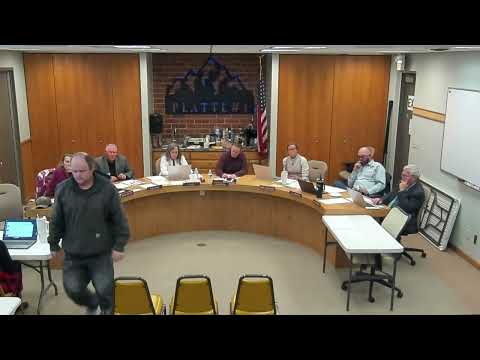
At a Platte County School District #1 work session, parents, board members and district staff discussed revising a district regulation that limits school-paid meals for student-athletes on travel to overnight trips only, after parents described acute affordability problems for some students.
District staff member (Speaker 3) opened the discussion, noting a regulation attached to the agenda and asking coaches and parents to describe how travel meals have been handled. A long-standing informal practice, described by a participant as handled discreetly by coaches, was presented as background. "We always knew those kids, and we would just the coaches would just front the money and just give them say we knew and we just pay for their meal," Speaker 4 said, explaining that coaches historically covered costs out of pocket.
Parents urged clearer district action. "My daughter spent $368.15 on meals alone just for early games last season," Speaker 9 said, illustrating the scale of out-of-pocket costs and arguing that some teammates are left without food and too embarrassed to ask for help. Attendees raised concerns that ad-hoc donations or sport-specific 'adopt' programs could leave gaps in coverage or create visibility that stigmatizes students.
Board members and staff debated several options: routing donations to a central activities account (including continued use of the Sherrard fund), asking the Booster Club to channel revenue outside the district accounting where appropriate, modest admission or voluntary gate charges to raise a consistent pool, or adopting a single per-diem (for example, $20–$25 per traveling student) rather than the regulation's older per-meal caps (transcript cited amounts: $6, $8 and $10 per meal). Speaker 7 summarized the simplification idea: rather than broken per-meal amounts, "If you're on the trip, $20."
District staff described operational and short-term administrative fixes: making a district credit card available to coaches and routing charges to the activities account, and improving coach-to-parent communications through ParentSquare so families know when money will be needed. Speaker 3 said coaches could have access to the same account and run expenses through activities as an immediate step.
Those at the meeting asked staff to research how neighboring districts handle travel meals, estimate the annual cost of expanded coverage, and return with proposed regulatory or policy language. Attendees also discussed safeguards for any parent-donation model so funds reach intended students, and suggested using an existing fund while the district develops a longer-term, more transparent approach. One attendee reported there is "about $8,000" currently in the Sherrard fund; meeting participants characterized that number as an estimate.
Next steps: staff will research comparative district practices, produce cost estimates for a per-diem or expanded coverage, and present draft regulatory or policy revisions for board consideration; in the short term the district may route meal charges through the activities account or the Sherrard fund pending formal policy change.