
Clay County approves ordinance extending senior property tax credit to include bond levies
Get AI-powered insights, summaries, and transcripts
Subscribe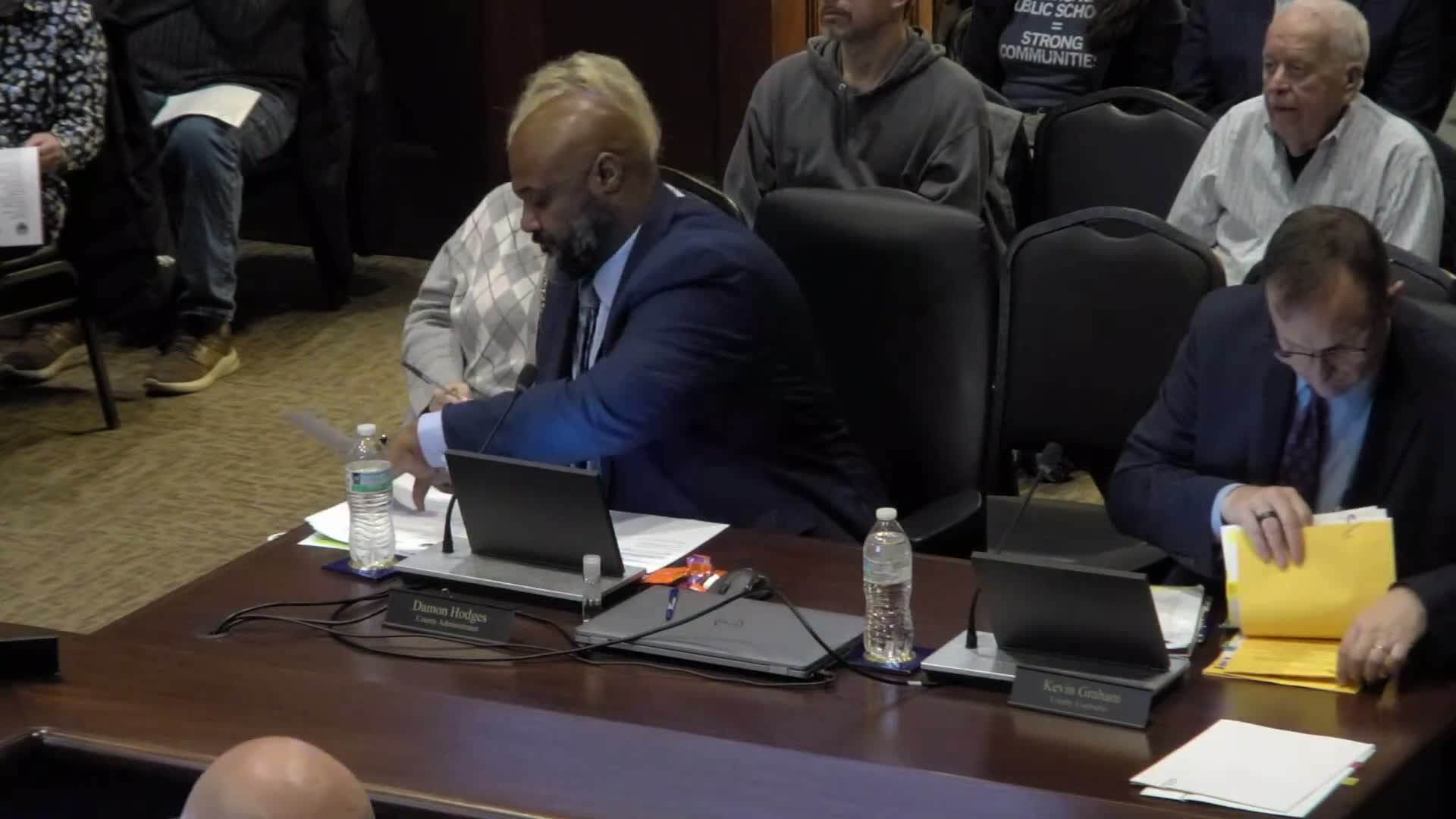
Summary
After public testimony and fiscal projections from the county auditor, the Clay County Commission voted 6–0 to amend the senior property tax credit so it applies to bonded debt levies; the auditor projected annual credit growth and long‑term revenue effects and commissioners debated tradeoffs for schools, fire districts and other taxing jurisdictions.
The Clay County Commission on Jan. 8 adopted an amendment to the county's senior real estate tax credit that makes bonded debt levies eligible for the senior credit, voting 6–0 to approve 2025 Ordinance 27.
The change removes a sentence in the county code that had excluded bonded-debt levies from the senior credit. "That has been deleted, and, of course, the result of that would be that those bonded debt obligations would be subject to the senior tax credit," County Attorney Kevin Graham explained during the hearing.
Auditor Victor Hurlburt presented the commission with the fiscal outlook for including bond debt in the credit. Hurlburt said the county's one-year fiscal impact of the program had been approximately $3.2 million but "when we include that that 3.2 million ... increases by another 2,000,000 and more to roughly $5,300,000 a year." He projected that, using a 5% annual growth assumption, the cumulative effect could reach about $66,000,000 by 2034 and that net revenues across jurisdictions would also change over time.
Commissioners and taxing-jurisdiction representatives focused on whether schools, fire districts and other entities could still meet debt-service requirements if the credit were broadened. "If this is passed, can you still cover your bond payment and the coverage that you are required to have?" Commissioner Wagner asked, pressing for assurance that capital obligations would still be met; he said, "If the answer is no and we have got to dip into operational income to now pay off this debt ... that's a different story entirely." Officials from school districts and fire districts acknowledged the fiscal impact and said they would review pro formas and fund balances to assess coverage.
Members of the public also weighed in during a lengthy comment period. Theresa Lemming said her taxes had "increased almost threefold since I bought my house" and thanked the commission for limiting future increases; other residents expressed confusion about how the credit was implemented and frustration over software and communication issues during the initial rollout.
Commissioners explained implementation mechanics: the change will use 2024 as the base year for the senior credit (effectively preserving seniors' liabilities at 2024 levels rather than issuing refunds for 2025), which Commissioner Johnson described as the legislative intent. The commission also noted ongoing state legislation that may affect local practice and said staff would continue to coordinate with taxing jurisdictions.
The ordinance was approved on a roll-call vote with Commissioners Johnson, Thompson, Carpenter, Worthington (Whittington), Lawson and Wagner recorded as voting yes. The presiding commissioner said the county will continue to monitor impacts and share information with the public and other local jurisdictions.
The ordinance takes effect according to the schedule specified in the adopted text; commissioners said they will return with implementation details as needed and continue discussions with state legislators on related statutory changes.