Norfolk Public Schools presents mixed accountability picture under new state framework
Summary
District staff told the school board that Norfolk made gains in several indicators despite new state accountability rules, but federal identifications and staffing-reporting issues pushed some schools into lower categories; district has filed accreditation appeals with VDOE.
Miss McGarity, the district presenter, opened the "State of the Schools" review for the 2024–25 year and told the Norfolk School Board that the division "ensured we navigated that change with intention" as Virginia shifted its accountability and accreditation systems. The presentation laid out how the Virginia SPSF (school performance framework) and the state accreditation system differ and how federal identifications shift schools' final categories.
The most immediate headline from the presentation: Norfolk had 43.9% of its schools performing "on track" using the SPSF performance calculation; when federal identifications are layered in that share falls to about 34.1%, with 12.2% of schools in the "needs intensive support" category, according to McGarity. She pointed to several schools that were very close to higher designations — Larchmont, Southside STEM Academy, Oceaneer Elementary and Lindenwood Elementary — and said VDOE rounding rules and identification procedures changed final placements for some schools.
McGarity said the district is contesting some accreditation findings and has filed formal appeals with the Virginia Department of Education (VDOE). She said the accreditation citations were largely in two areas: staffing and federal program outcomes. The staffing findings, she said, stemmed from unlicensed support roles (for example, vacant media specialist or counselor positions) that affected the accreditation status even where classroom performance had improved. "A formal accreditation appeal has been submitted and received by VDOE," she told the board.
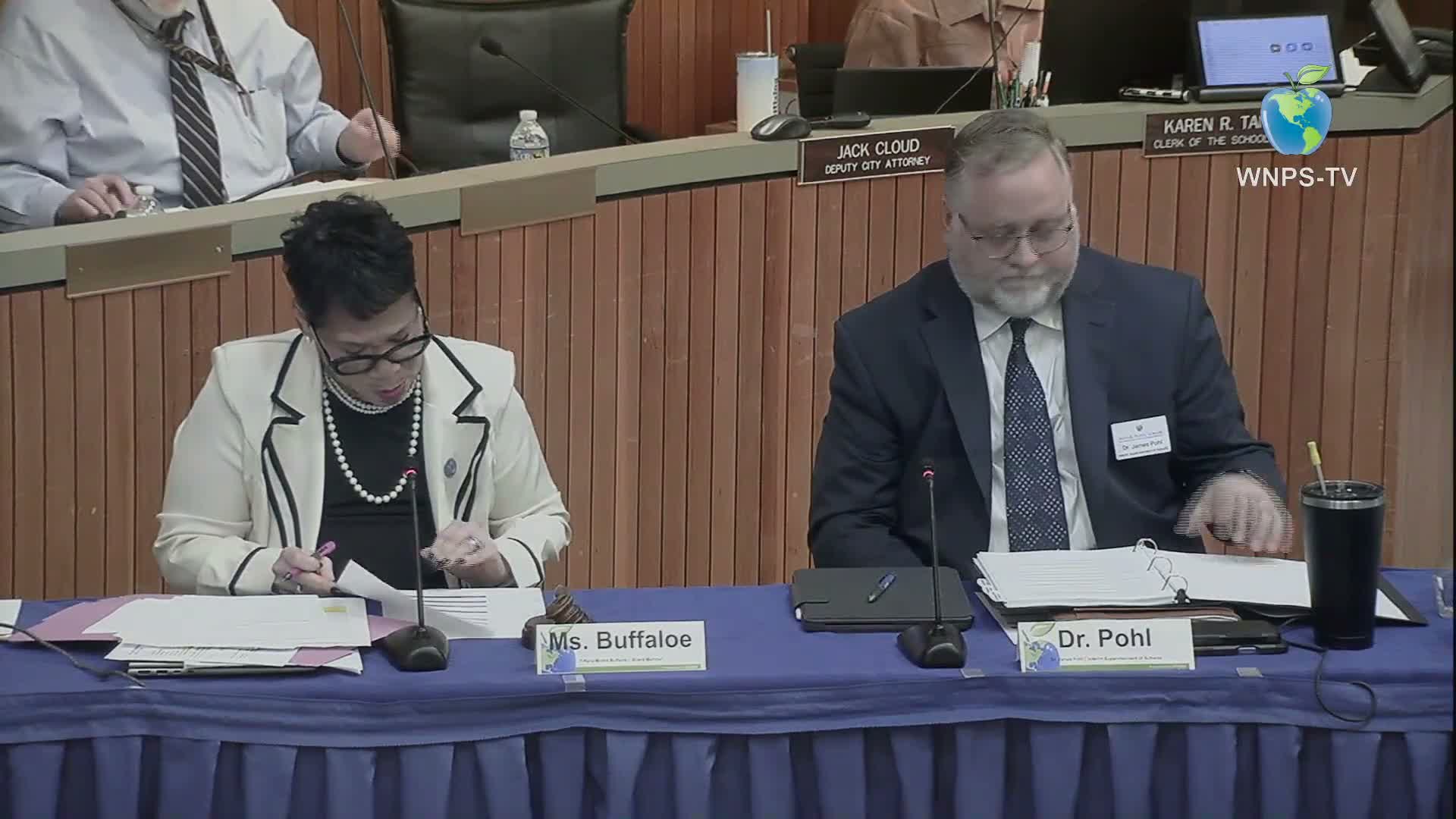
Board members pressed the administration on how those results will be communicated to families. Dr. Pohl and McGarity said the district will publish school-level comprehensive support plans and will create a one-page explainer and a web page that separates "performance" (student outcomes) from "accreditation" (adult inputs) so the public can see both celebrations and areas to improve.
The presentation also highlighted inequities in subgroup outcomes. McGarity reported that, before federal identification, roughly 41% of Black students were in on-track schools (about 33% after federal IDs), and that socioeconomic status (SES) consistently correlated with off-track identification. She cautioned that some indicators — for example English-language-proficiency measures and federal identifications called out by a recent JLARC review — can shift category assignments and complicate comparisons across divisions.
Other data points included district pass-rate trends in reading, math, science and history, and persistent barriers such as staffing vacancies and state delays in textbook approvals. Board members asked for subgroup breakdowns and for a public-facing one-pager the board can use when speaking with constituents. McGarity and Dr. Pohl said those materials will be prepared and that district web pages will be updated once the VDOE finalizes any accreditation changes.
Next steps noted to the board were continued appeals to VDOE, targeted supports grounded in tier 1 instruction improvements, and the use of these accountability data to inform school-level supports and comprehensive school support plans.