
Riley County officials warn state proposals on property valuation could deepen local budget shortfalls
Get AI-powered insights, summaries, and transcripts
Subscribe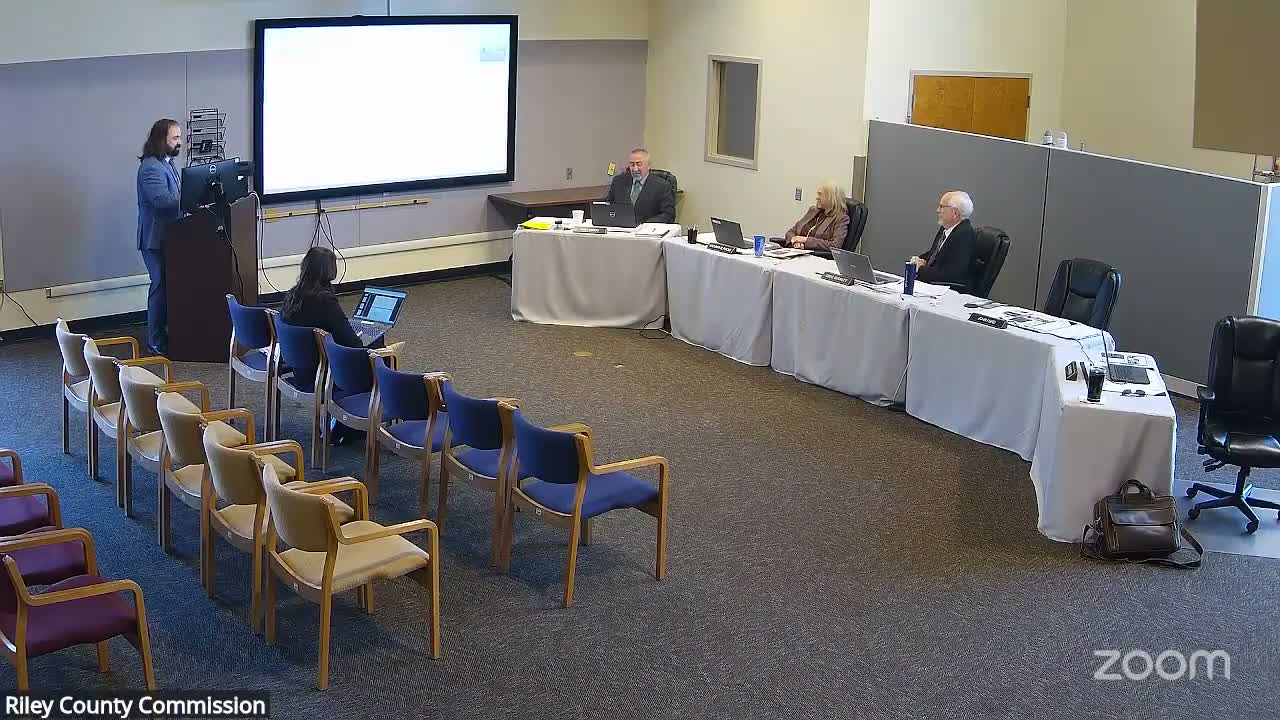
Summary
Riley County commissioners spent much of their Jan. 12 meeting reviewing fiscal reports and debating proposed state changes to property valuation that officials said would shift tax burdens, reduce county revenue and complicate administration. Commissioners asked staff to prepare outreach to legislators.
Riley County commissioners opened their Jan. 12 meeting with routine business but devoted most of the session to long-range fiscal pressures and proposed state action on property valuations.
Jacob Anson, a Riley County councilor, told the commission he planned to draft a short letter to state representatives explaining local budget mechanics and urging care on property-tax proposals. "I anticipate that the arguments will go well," Anson said, noting an upcoming Kansas Supreme Court hearing related to local government authority and asking commissioners whether they wanted to educate legislators before action proceeds.
The county clerk's financial presentation highlighted year-to-date wages, overtime and fund-level activity; the clerk flagged rising costs at the Riley County Public Detention (RCPD) facility for inmate housing and medical care and said a budget amendment is likely. Those pressures, combined with lower investment income and flat sales-tax receipts, framed the commission's discussion of proposed valuation caps and exemption changes at the state level.
County staff and appraisal officials described proposals being considered at the statehouse and warned they could freeze assessed values to an earlier base year and then apply small annual increases. County staff said that approach would preserve market-driven increases only for a limited set of properties and could create a patchwork of assessments across adjacent parcels.
Commissioners and staff cautioned that reversing recent valuation growth or broadly exempting classes of property would not eliminate the need to collect the same total tax dollars for existing obligations. One commissioner summarized the trade-off this way: reducing assessed values for some taxpayers shifts the burden to others or forces cuts to county services unless the mill levy is increased. Staff recommended educational outreach to legislators to explain the mechanics and likely trade-offs.
Other business: the commission voted to authorize the filing of the annual real-estate tax foreclosure sale case, approved routine contract extensions for county grounds maintenance and several public-works construction items, and approved personnel actions to open a budgeted paramedic position and PRN staffing in emergency services.
The commission directed staff to prepare a concise explanatory letter to state policymakers and to provide more detail on the projected revenue impacts of any proposed valuation or exemption changes. No formal county legislative position was adopted during the meeting; commissioners asked staff to return proposed language for review.