Get Full Government Meeting Transcripts, Videos, & Alerts Forever!
Get email alerts on the Community Benefits Offshore Wind topic
No spam. Unsubscribe anytime.
Harbor District frames community benefits for paused Humboldt Bay heavy‑lift terminal; staff urges built‑in commitments
Summary
District staff presented a detailed framework for community benefits tied to the Humboldt Bay heavy‑lift marine terminal project after the loss of two federal grants, emphasizing built‑in amenities, program options and the district's limited authority over ocean and transmission components. Public commenters urged legally binding agreements and early community protections.
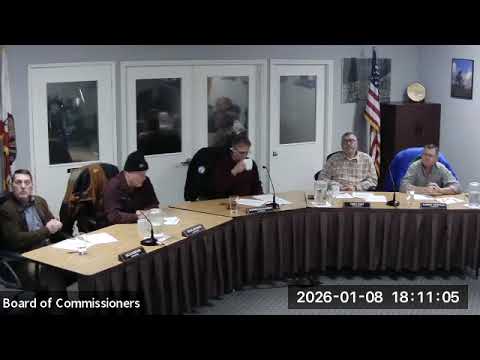
HUMBOLDT BAY — Staff for the Humboldt Bay Harbor, Recreation and Conservation District outlined how community benefits would be defined and secured for the district’s proposed heavy‑lift marine terminal project, saying the work will continue even while project funding is being reconfigured.
Rob, the district staff member who delivered the presentation, told the board the district is in a temporary pause after the loss of two federal grants and is negotiating with state partners to reconfigure the budget. He outlined three ways the district could handle community benefits: define benefits before selecting an operator and require implementation as a lease condition; select an operator and delegate benefit design to that operator; or use a hybrid approach that involves the operator in final decisions. “We are a community benefit organization by statute. We exist to do nothing more than benefit Humboldt Bay,” Rob said.
Why it matters: The district’s heavy‑lift terminal project is portrayed by staff as a multi‑component effort (ocean, port, transmission) in which the Harbor District controls port facilities but has limited authority over ocean and land‑based transmission elements. Built‑in amenities originally included in the project’s infrastructure grant remain in the project description but do not currently have a dedicated funding source, staff said.
Staff and the packet materials separated benefits into categories: natural benefits that arise from the project (for example, jobs and infrastructure upgrades), built‑in amenities added to the project, ongoing community benefit programs (such as a project‑associated competitive fund), and legally enforceable community benefit agreements. Attachment materials in the staff report list examples including ground‑mounted solar, a dewatering area, a bike path, and upgrades to a fishermen’s work dock on Woodley Island.
Public reaction: Community speakers praised the staff’s outreach and urged legally binding protections. “We wanna make sure that we're still attaching them to the plan and to the design of of the project,” said Colleen Clifford of the Peninsula Community Collaborative, a member of the district’s community advisory committee. Demi Jester of Corehub urged centering communities likely to experience disproportionate burdens and recommended binding instruments such as lease and development agreements.
Next steps: Staff said no board action was required tonight and that the operator‑selection role and the decision whether to pursue community benefit agreements will return to a future agenda. Staff also said a public workshop on community benefits (hosted by researchers) is scheduled in mid‑January at the Wharfinger, and the district plans to circulate further materials and recommendations in coming months.
Context: Rob said the project cost estimate includes substantial restoration tied to the project; during the presentation staff stated that roughly $5,060,000,000 was included in project restoration cost estimates as part of the planning materials. Staff also noted that some built‑in amenities were credited as positive elements in federal grant applications under prior administrations and later cited by federal reviewers as misalignments when the grants were rescinded.
The board did not take formal action on community benefits tonight; staff recommended board members review attachments 1–3 in the packet (natural benefits, built‑in amenities, and community benefit program options) and prepare for future direction on operator involvement and agreement structures.