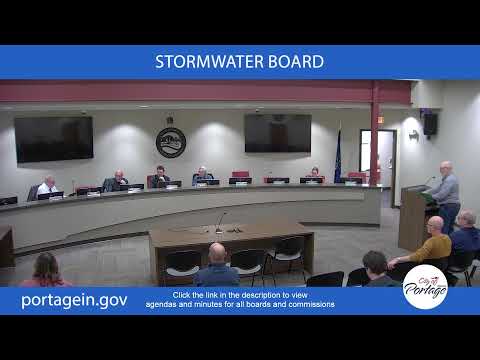
Portage board approves two variances for proposed BJ’s Wholesale Club at US‑6 and Airport Road
Loading...
Summary
The Portage board approved two variances for a BJ’s Wholesale Club development that will add above- and below-ground stormwater detention and seek relief from the city’s 2024 allowable release rate; staff said the design will reduce runoff to the existing pond and the motion passed by voice vote.
Brett Hickey, a civil engineering consultant with Kimberly Horn and Associates, told the board the BJ’s Wholesale Club site at the southwest corner of US 6 and Airport Road (next to Kohl’s) needs two variances because a detention pond built in 2006 no longer meets the city’s 2024 code. Hickey said the proposal combines an above‑ground basin and an underground detention system on the BJ’s lot that would drain to the existing pond.
"So the 2 variances that we're seeking, 1 is to utilize underground detention," Hickey said, and the second is relief from the allowable release rate in the 2024 Portage code. He told the board the design would "improve the capacity and improve the functionality" of the existing basin while avoiding impacts to adjacent properties that currently drain to it.
A staff engineer (referred to in the discussion as Tom) told the board the basin was designed before current standards and said the BJ’s design will release less water from the BJ’s site than the existing pre‑development condition and would lower the pond's normal pool level over time. Hickey noted the underground system under consideration is a concrete 'storm trap' vault and described the vault as sized at about 80,000 cubic feet.
Board members asked about downstream conveyance as future development proceeds. Dan, a staff member, warned runoff from the northeast across the larger development will need a permanent solution and suggested relief may require permits or future piping when adjacent lots are developed. Board participants said they expect to coordinate with the developer (referred to as Simon in the discussion) and to review older plans as the area redevelops.
A motion to approve the two variances was made and seconded; the board approved the motion by voice vote with ayes recorded. The transcript does not record a roll‑call tally. The board’s approval was limited to the variances described and did not, according to the meeting record, adopt any additional design changes.