Lifetime Citizen Portal Access — AI Briefings, Alerts & Unlimited Follows
Massachusetts to use Commonwealth Care Trust Fund to backfill expired ACA credits, pledges $250 million for 270,000 enrollees
Loading...
Summary
Governor Healy announced the state will draw on the Commonwealth Care Trust Fund to provide about $250 million in 2026 to replace expired federal enhanced premium tax credits, helping roughly 270,000 Connector Care enrollees for one year; officials urged Congress to restore the credits and detailed eligibility and enrollment steps.
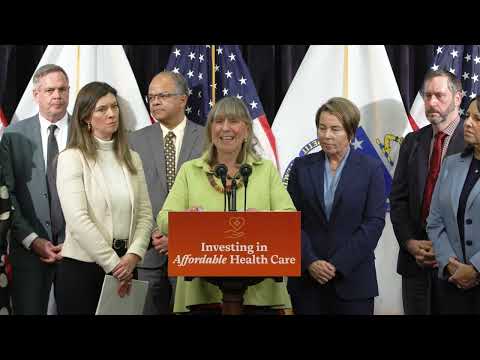
Governor Healy announced that Massachusetts will use money from the Commonwealth Care Trust Fund to replace expired federal enhanced premium tax credits for 2026, directing about $250,000,000 to help roughly 270,000 Connector Care enrollees keep health coverage for the year.
Healy said the move responds to "congressional inaction" and a failure by the federal administration to extend the enhanced Affordable Care Act tax credits, which she said has left many people facing "double and triple digit increases" in insurance costs. "There are approximately 270,000 Massachusetts residents who will be helped," she said, adding that some people had already received notices of premium increases "as much as $25,000 this year." Healy framed the state step as temporary and urged Congress and the president to restore the federal credits.
Audrey Morse Gasteyer, executive director of the Massachusetts Health Connector, said Connector Care combines federal tax credits with state investments to reduce premiums, copays and deductibles for eligible enrollees. "Connector care means not just having health insurance with premiums you can afford, but meaningful access to care and services without cost barriers," she said, and reminded residents that open enrollment continues through Jan. 23 and that help is available via mahealthconnector.org and the Connector call center.
Gasteyer said the state's commitment will moderate or prevent premium increases for many Connector Care enrollees: about a quarter of the 270,000 enrollees will likely see no premium increase while the remainder should see much smaller increases than they would have without the state's supplement. She also warned that tens of thousands statewide remain outside Connector Care’s reach; in particular, people just over 400% of the federal poverty level — ‘‘about 27,000 people’’ — are losing federal tax credits and face the steepest premium increases, with older enrollees (ages 55–60 cited) hardest hit.
A finance official at the briefing provided a rough revenue picture for the Commonwealth Care Trust Fund, saying the fund expects "probably around $650,000,000" in revenue this year and listing sources including cigarette tax receipts, employer assessments and occasional general‑fund contributions. Healy said if Congress reinstates enhanced credits, the state will revert to the federal cost‑sharing model "as it has been operating."
Healy described the state action as a one‑year plan for 2026. "This is a one year plan right now," she said when asked whether the assistance can continue beyond the year, adding that funding schedules and future decisions will be negotiated later.
Reporters also pressed officials on related oversight issues. In response to questions about an "erroneous payment to Lamarfa," Healy called the payment "a mistake" and "unacceptable conduct," said investigators and prosecutors are involved, and pledged cooperation while declining to provide disciplinary specifics in the briefing. On immigration enforcement, Healy said ICE flights using Hanscom Airport raised due‑process and community‑safety concerns and that she asked the DHS secretary and the private carriers involved to stop those flights.
The administration said operationally eligible Connector Care enrollees do not need a new enrollment process to receive the state support; they should continue to use the Health Connector's established processes and, for people not yet enrolled, open enrollment remains open through Jan. 23.
The governor and legislative leaders emphasized the state's intention to step in where federal action has paused and to protect coverage for residents while continuing to press Washington to restore the enhanced tax credits. The administration said it is prepared to implement federal restorations rapidly if Congress passes an extension.