UN marks 1,000 days of Sudan conflict, warns of catastrophic humanitarian needs
Loading...
Summary
The United Nations said 1,000 days of conflict in Sudan have produced one of the world’s largest humanitarian crises, with nearly 34 million people needing assistance, widespread displacement, cholera outbreaks and a $2.9 billion 2026 response plan to reach 20 million people.
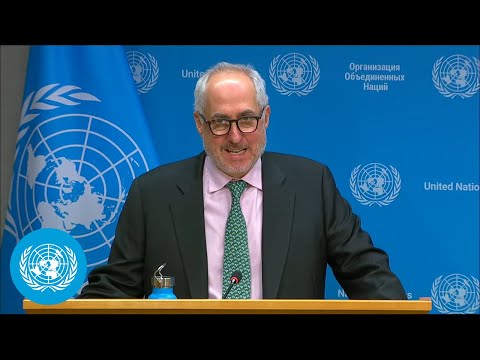
Spokesperson Gabriel Vaniti said the conflict in Sudan has reached 1,000 days and left civilians "bearing the brunt" of massive losses of homes and livelihoods.
Vaniti said UN humanitarian colleagues estimate nearly 34,000,000 people in Sudan now need some form of humanitarian assistance, making it "the world’s largest humanitarian crisis" by some measures. He cited about 9,300,000 people displaced inside Sudan and more than 4,300,000 refugees in neighboring countries. "The generosity of those countries neighboring Sudan needs to be underscored and reminded," he added.
The briefing listed acute food insecurity and public-health emergencies: famine confirmed in El Fasha (North Darfur) and Kadugli (South Kordofan), more than 21,000,000 people estimated to be acutely food insecure nationwide, cholera reported in all 18 states with more than 72,000 suspected cases last year, and nearly 12,000,000 people at risk of gender-based violence, "mostly women and girls." Vaniti also said fewer than half of health facilities in Sudan are fully functional in many areas and that more than 125 aid workers have been killed since April 2023.
On funding, Vaniti described a 2026 humanitarian needs and response plan seeking $2,900,000,000 to assist 20,000,000 people. He repeated calls for an immediate cessation of hostilities, full respect for international humanitarian law, and safe access for aid and protection of civilians and aid workers.
The UN also highlighted constraints on access caused by sieges, drone strikes and long-range attacks in Kordofan and Darfur, and said local and women-led organizations often serve as the first responders in high-risk areas. The spokesperson said the UN hopes to provide further details on diplomatic coordination intended to reduce fighting and improve safe humanitarian access.
The UN did not announce new funds in the briefing; Vaniti said the plan represents the scale of need and the partnership required to reach people in harm’s way.