Get Full Government Meeting Transcripts, Videos, & Alerts Forever!
Get email alerts on the Infrastructure Funding topic
No spam. Unsubscribe anytime.
Analysis finds Basalt Creek development needs TIF or other tools to bridge early‑year shortfalls
Summary
A Wilsonville staff and consultant presentation on the Basalt Creek (WILR) infrastructure funding analysis found system development charges alone are insufficient for necessary city infrastructure and identified early‑year shortfalls (about $300K–$2.3M); tax‑increment financing could produce long‑term surpluses but timing and political support remain key.
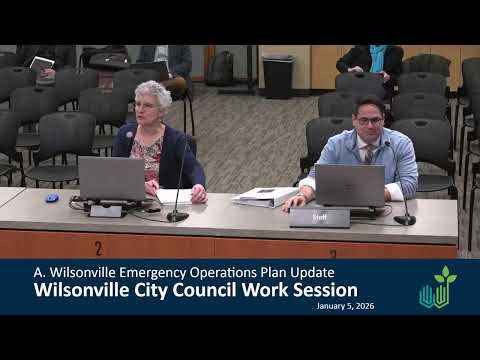
Wilsonville staff and a public finance consultant presented preliminary infrastructure‑funding scenarios for the Basalt Creek planning area at the Jan. 5 council meeting, concluding that system development charges (SDCs) will not cover all city‑responsible infrastructure and that tax‑increment financing (TIF, urban renewal) or other tools will be required to bridge early‑year funding gaps.
Matt Lorenzen, the city’s economic development manager, introduced the WILR (Wilsonville Industrial Land Readiness) study. The consultant said the analysis focused on roughly 250 acres inside the larger concept plan area and produced illustrative development scenarios and cash‑flow projections. "This is a preliminary funding analysis," the presenter said, noting the numbers and timing will shift but the key conclusions are robust across scenarios.
The scenario the city displayed estimated about 3,000,000 square feet of high‑tech employment, 2,000,000 square feet of light industrial and roughly 300,000 square feet of craft industrial at full build‑out. Under a full build‑out scenario, the consultant estimated transportation SDCs could total roughly $27,000,000 over 25 years, stormwater SDCs about $7,000,000, water and wastewater a few million and parks about $1,000,000. A 50% build‑out scenario reduces those numbers roughly in half.
Because many of the transportation improvements needed for development are expected to be developer‑built and therefore not city capital projects, the presentation noted that transportation SDC revenue generated from the area would be available citywide rather than being spent exclusively within the Basalt Creek study boundary.
Consultants ran four cash‑flow scenarios and concluded that most feasible approaches produce a short‑term funding shortfall in the early years; the maximum shortfall across scenarios ranged from about $300,000 to $2,300,000. The consultant said those shortfalls could persist from roughly four years to more than a decade depending on phasing, project timing and market conditions.
Potential mitigation strategies included delaying noncritical public improvements, structuring developer‑led construction with SDC crediting, extending or restructuring debt service terms, searching for state or federal grants and creating an urban renewal (TIF) district. The analysis estimated that an urban renewal area covering the study site could generate cumulative TIF receipts in the low‑to‑mid tens of millions over 25 years (presented range: about $12M to $50M depending on scenario and horizon).
Councilors generally expressed support for studying TIF in earnest and coordinating with developers on early projects. Councilor Cunningham said the industrial focus in the area makes TIF an appropriate local tool; others urged staff to begin study and outreach promptly because the assessment, potential advisory vote, implementation and assessment timing mean revenues may not appear for several years.
Staff emphasized the analysis is a planning tool to inform future decisions; specific project lists, development agreements and further sensitivity analysis will be needed before any financing commitments are made.