
St. Mary's County planning staff set 45‑day public review for 'St. Mary's 2050,' outline outreach and implementation matrix
Get AI-powered insights, summaries, and transcripts
Subscribe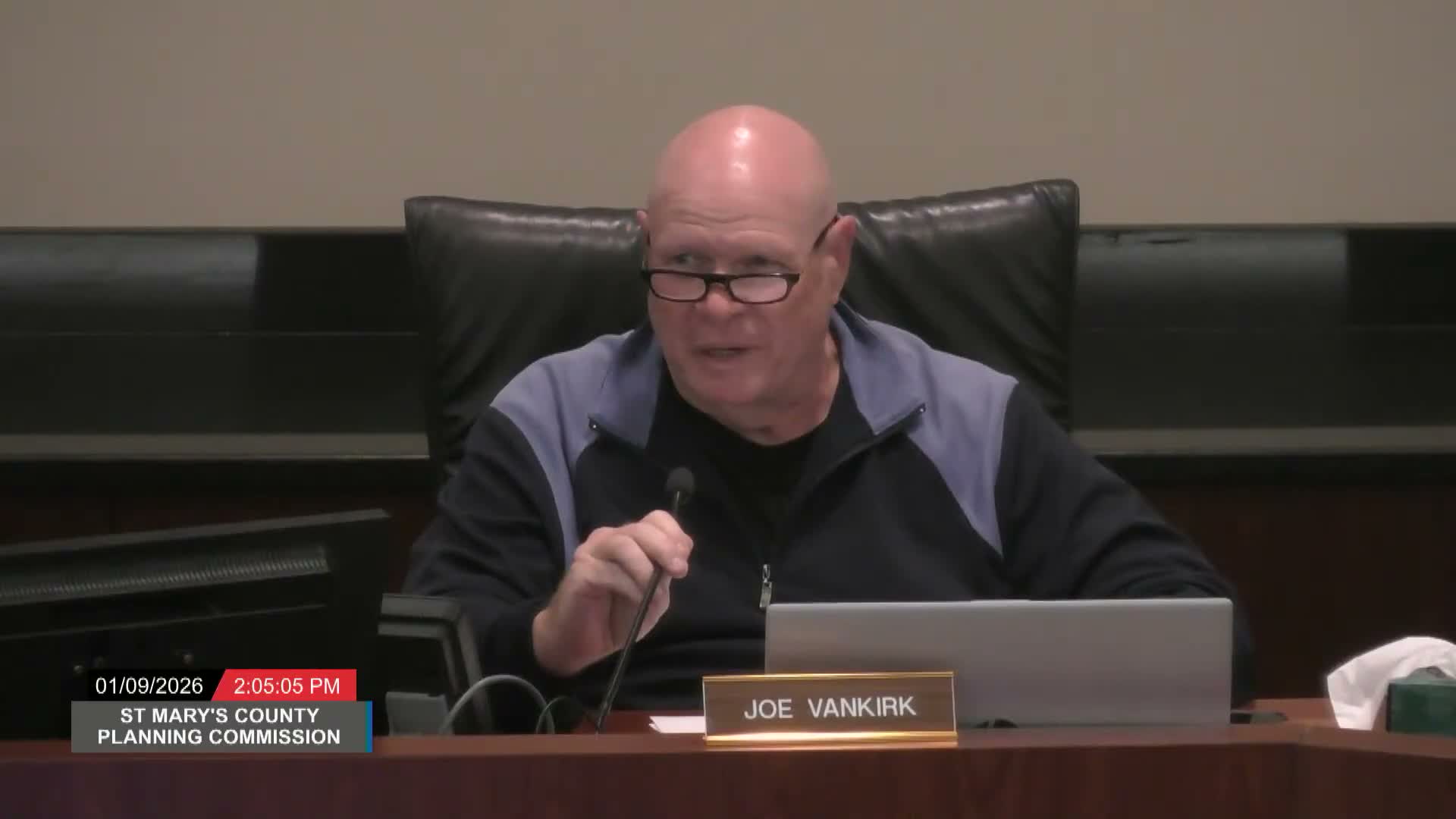
Summary
At a Jan. 9 work session, project staff previewed the introduction and implementation chapters of the St. Mary's 2050 comprehensive‑plan draft, announced a roughly 45‑day public review period beginning when the first public draft is released in February, and outlined open houses, grocery‑store tabling and an online feedback process.
Planning commission project staff presented the introduction and implementation sections of the St. Mary's 2050 comprehensive‑plan draft at a Jan. 9 work session and said they plan to release a public draft in February followed by a roughly 45‑day review period called Community Engagement Window (CEW) #3.
"What we're hoping to accomplish during this 45‑day window is, again, check‑in with our community to make sure that the information that they're seeing in one cohesive draft reflects what their priorities are," said an unnamed project staff member leading the presentation. Staff described two rounds of open houses (one at the start and one toward the end of the review window), and a late‑February strategy of tabling at area grocery stores to drive attendance to March open houses.
The presentation listed project team members present, including Jessica Andrews, director of the Department of Land Use and Growth Management; deputies Courtney Jenkins and Brandy Glenn; senior planning specialist Gabby Gleisner; deputy county attorney John Sterling Houser; and Cynthia Greb, director of economic development. Consultant Leanne King of Clarion Associates attended and answered technical questions about the draft.
Commissioners sought clarity on several points. Judy Felias questioned a line in the introduction that reports a "projected population increase of 34% between 2020 and 2045," saying she believed growth rates were slowing. Leanne King, the consultant, responded that while overall population is projected to increase over the 25‑year period, the rate of increase declines in later years — a distinction reflected in the draft's framing of long‑term trends.
Staff also described the implementation chapter as a framework and placeholder at this stage. The implementation matrix will list action items, assign lead departments or community partners, and identify short‑, mid‑ and long‑term time frames and anticipated resource needs. Staff said they have begun reaching out to project team leads — including Metcom, the health department and other county agencies — to classify items and to flag where additional resources may be required.
"It lays the foundation to say, well, remember back in 2026, when you adopted this plan, we identified that we were going to need some additional resources," the project staff member said, describing how the implementation chapter can be used in later budget or funding requests.
The project team reported 88 unsolicited interactions through the draft website's "participate now" button to date and said online engagement through publicinput.com will remain open during CEW #3. Staff asked commissioners to help promote the process by attending outreach events and by encouraging community members to respond; commissioners suggested additional outreach at coffee shops, the Saint Innes community center and with Saint Mary's College employees.
On statutory review schedules, staff reminded the commission that state law requires a five‑year implementation performance review and a full plan review at least once every 10 years. Staff said they will present CEW #3 input to the commission in a formal briefing and will bring a revised draft back to the commission for possible recommendation to the county commissioners; the county commissioners would then hold public hearings before adoption.
Next steps: staff will continue outreach, finalize the growth‑management element at the commission's next work session, release the public draft in February and hold open houses and grocery‑store tabling to solicit public comment during the 45‑day review period.