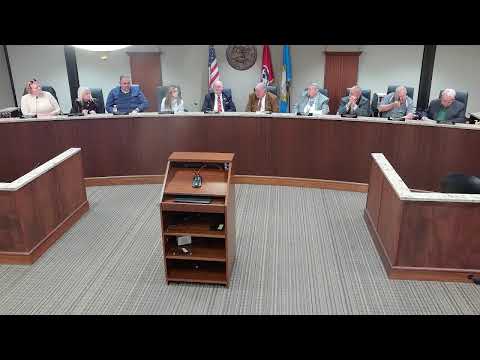
Council advances school‑zone speed ordinance on first reading, requests MTAS guidance
Loading...
Summary
Council approved the ordinance on first reading to replace a fixed 15 mph school‑zone speed in the code with a posted speed regime and indicated the police chief will set posted limits (including raising some school zones to 20 mph). The council asked the city attorney to seek MTAS guidance before second reading to confirm delegation language and legal authority.
The council advanced a change to the municipal code governing school‑zone speed limits on first reading and instructed the city attorney to seek guidance from MTAS (Municipal Technical Advisory Service) before the second reading. The proposal replaces a fixed 15 mph requirement in the current code with language making it unlawful to exceed the posted speed limit in school zones; the chief of police indicated he would post 20 mph in some school zones to mitigate congestion.
Context: The police chief explained that congestion in school pick‑up and drop‑off areas has been significant in recent years and that raising the posted limit from 15 to 20 mph in selected zones could allow more cars through intersections and reduce queuing. The chief also referenced planned automated speed‑enforcement cameras to be activated in the next school year.
Council concerns and direction: Several council members asked whether the ordinance as drafted properly delegates authority and whether the governing body may have to approve speed‑limit changes for enforceability; some members recommended obtaining MTAS guidance before the second reading. Council voted to approve the ordinance on first reading and to direct the city attorney to obtain MTAS guidance to clarify whether delegation to the chief for posting is lawful and how to document any change.
Next steps: City attorney will seek MTAS guidance and staff will present any clarifying language or edits at the second reading. If confirmed, the city plans to post updated limits and proceed with speed‑enforcement systems per the schedule discussed.