
Burlington voters approved ban on guns in bars; S.131 would let the city enforce a firearms prohibition on licensed premises with exceptions
Get AI-powered insights, summaries, and transcripts
Sign Up Free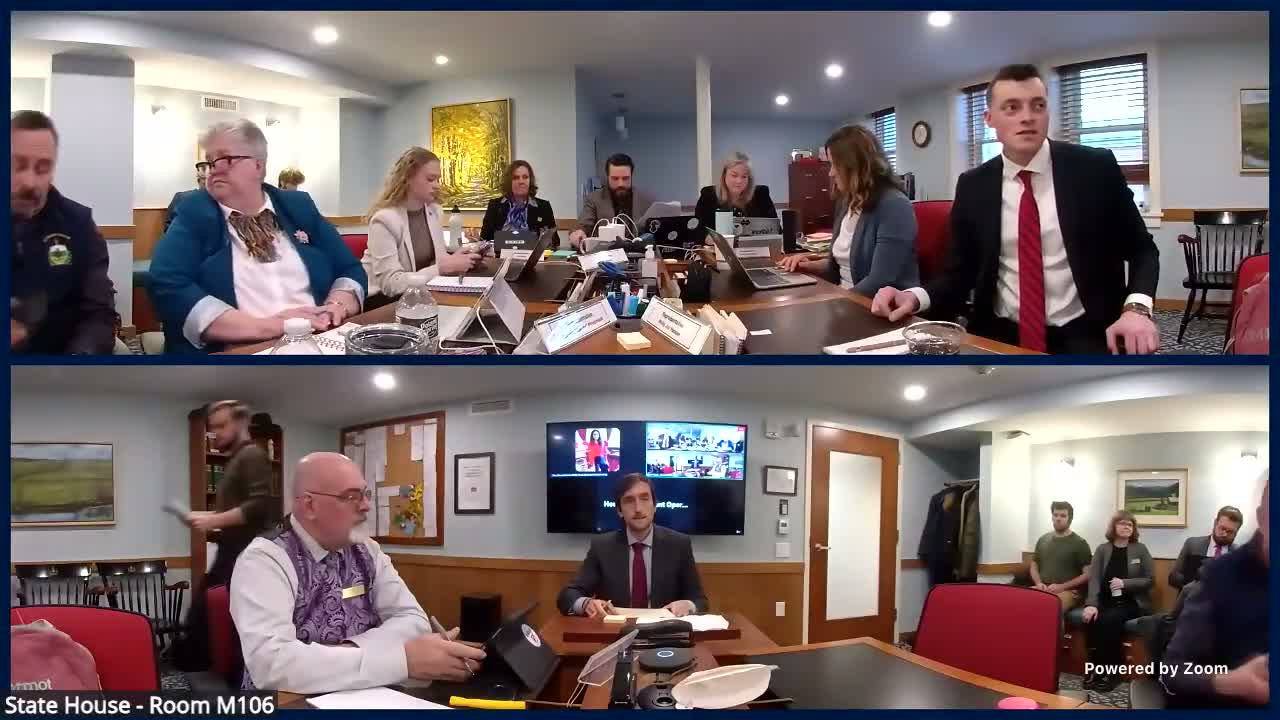
Summary
Legislative counsel told the committee that S.131 would expressly allow Burlington to ban knowing possession of firearms on premises licensed to serve alcohol, list enumerated exceptions (law enforcement, on-duty military, certain license-holders) and create civil and criminal penalties; council leaders urged respect for overwhelming local voter support.
Legislative counsel told the House Government Operations & Military Affairs committee that S.131 would permit Burlington to ban possession of firearms on premises that hold licenses to serve alcoholic beverages, subject to enumerated exceptions and penalties.
"No person may knowingly possess a firearm as defined by the definition of firearm for purposes of Title 13 ... in any premises licensed to serve alcoholic beverages," Tucker Anderson, legislative counsel, told the panel as he read the bill's operative language.
Scope and exceptions: Anderson said the bill includes exceptions for on-duty federal, state and local law enforcement; members of the armed forces or Vermont National Guard acting within duties; government officers or agents authorized to carry; and the "holder of the license for the premises," a drafting choice that generated committee questions because many license-holders are corporations and the exception may not reach individual corporate officers or managers.
Penalties and enforcement: Anderson said violations could be prosecuted criminally (a fine not more than $1,000 or imprisonment not more than 90 days) and could also be treated as a civil ordinance violation with penalties of $200–$500. He acknowledged that general statute typically requires civil or criminal treatment but said the charter language would provide specific authority for both sanctions in this instance and leave charging discretion to Burlington's prosecuting officials.
Local support and safety argument: Burlington City Council President Ben Travers urged lawmakers not to overturn the will of local voters, citing a downtown shooting outside a bar and telling the committee that the most recent town-meeting vote on the measure won "over 86%" support in Burlington. Travers framed the proposal as a public-safety measure rather than a partisan or Second Amendment question and asked the Legislature to respect voter preference even if statewide adoption is not yet possible.
Outstanding drafting questions: Committee members probed how the license-holder exception should be drafted (for example, whether to specify individual corporate officers or managers) and how prosecutors would choose civil versus criminal charges; Anderson said those choices and practical effects may warrant additional drafting and committee consideration.
Next steps: The committee took testimony, raised technical questions about exceptions and enforcement, and recessed; no formal vote or committee disposition is recorded in the transcript.