Lifetime Citizen Portal Access — AI Briefings, Alerts & Unlimited Follows
CREG trims Wyoming revenue forecast; school fund projection rises after enrollment updates
Loading...
Summary
Wyoming's Consensus Revenue Estimating Group narrowed the general fund forecast by $15.9 million across FY26'FY28 but raised school foundation program projections by $44.4 million after updated enrollment and expenditure figures, presenters told the Joint Appropriations Committee.
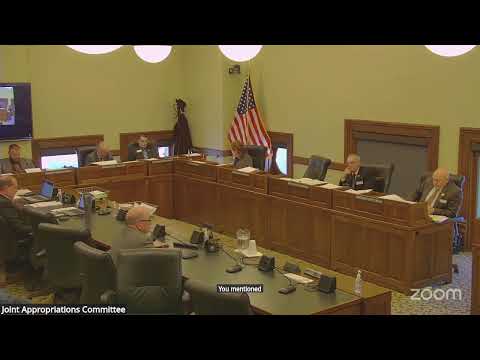
Don Richards, cochair of the Consensus Revenue Estimating Group, told the Joint Appropriations Committee on Jan. 9 that the January 2026 CREG report resulted in modest net downward revisions overall: "we revised, a few things downward," he said, summarizing a $15.9 million reduction over the next three fiscal years for the general fund.
The group identified three changes it judged material. Representatives at the hearing said CREG cut the forecast price for natural gas by $0.15 for calendar years 2025 and 2026 and reduced the modeled share of produced gas that is sold from 85% to 80% for 2025 (82.5% for 2026), citing weaker than expected winter demand in the West. Richards said those changes fed into the small general‑fund reduction but noted offsetting gains elsewhere.
CREG also added 5 million tons to 2025 coal production after reviewing railcar shipment counts and modestly raised projected uranium output across 2025'28 based on faster‑than‑expected company ramp‑ups, though Richards called the uranium gains primarily a signal of sector activity rather than a major revenue source. Investment returns also helped the picture: pooled investment income for FY26 was increased by $10 million after higher early‑year realized gains.
The panel flagged a $9 million downward revision to state royalties (to $99 million) after several months of under‑timed receipts, one‑third of which is directed to the school foundation program. Despite the relatively modest three‑year general fund change, Richards emphasized the long‑term profile: "You'll see line 41 is in the negative," he said, noting a cautionary downward slope for the school foundation program that, if combined with a potential recalibration, could push reserves negative in later years.
Members pressed whether likely ballot measures had been incorporated; Richards said a 50% property tax cut proposal was not baked into the forecast and estimated it would cost roughly $71 million per year to schools if enacted in November 2026, with a potential biennial impact near $145 million. The committee will use the January CREG figures as it prepares supplemental and biennial budget decisions.