
Staff presents aggressive schedule for Sequim comprehensive‑plan release and walks commission through Title 17 land‑division rewrite
Get AI-powered insights, summaries, and transcripts
Sign Up Free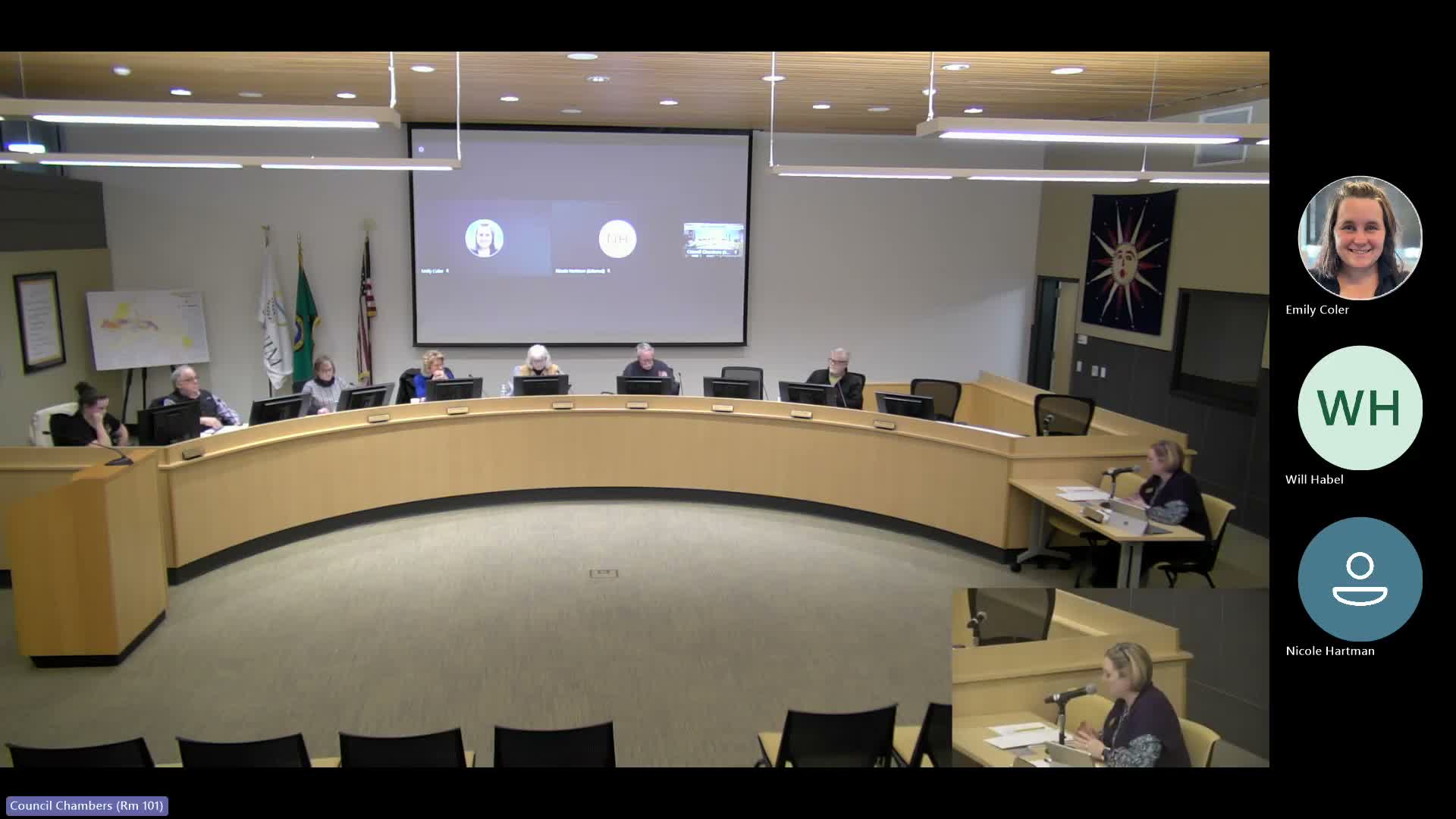
Summary
City planning staff told the commission Jan. 6 that a Planning Commission redline will lead to an April 1 public release of the draft comprehensive plan, with a target to meet a June 30 state deadline; staff also reviewed a comprehensive rewrite of Title 17 covering land-division standards, boundary adjustments, minor subdivisions and new unit‑lot subdivisions limited to nine lots.
City planning staff briefed the Sequim Planning Commission on Jan. 6 about a compressed schedule for the comprehensive plan and a substantial rewrite of Title 17 (Land Division).
Staff said a Planning Commission redline policy document had been posted and will form the foundation for the full public release of the draft comprehensive plan on April 1, 2026. Staff outlined a near-term schedule of regulatory work: Title 17 (land division) and a housing-focused Title 18 code amendment in February–March, a developer forum April 16, a public hearing on the plan during the commission’s May 5 meeting, and subsequent transmission of the commission’s recommended package to the City Council for council hearings that staff cited as culminating in a June 8 hearing. Staff also noted the city is aiming to meet a June 30, 2026, date tied to state coordination and said the timeline is “moderately aggressive” but feasible.
On Title 17, staff described the draft as a comprehensive rewrite that reorganizes provisions, consolidates scattered standards and implements recent state law changes. Staff said the draft adds a clearer statement of statutory authority (reference to RCW 58.17 and the Growth Management Act), expands definitions (including unit‑lot subdivisions and administrative lot splits), and centralizes standards for streets, utilities and frontage improvements. Staff explained the draft includes proportionality language so required frontage or street improvements are proportionate to the application, with determinations made by the city engineer and documented in writing.
The draft also adds a new unit‑lot subdivision section (17.50). Staff said the provision is tied to short plats, applies in zones that permit residential uses (including mixed‑use and downtown zones), and limits unit‑lot subdivisions to no more than nine unit lots per parent lot. Staff cautioned that unit‑lot implementation is new statewide; planners cited guidance from the Washington State Commerce Department and said jurisdictions are taking somewhat different approaches. Commissioners raised procedural and practical questions—how CC&Rs and HOAs interact with unit lots and ADUs, whether land title companies will accept the new fee‑simple patterns, sidewalk and frontage‑improvement exceptions, and how undergrounding of utilities would be handled; staff agreed to follow up with public works on technical authority and to refine definitions and formatting in the draft.
Staff also described administrative improvements to boundary‑line adjustments and short‑plat processes to increase clarity and turnaround time, and noted work to finish the capital facilities plan and a SEPA supplemental EIS. Staff said a special planning commission meeting is tentatively scheduled for Jan. 27 if needed and that the schedule will be recalibrated if additional time is required.
Commissioners thanked staff for the work and emphasized both the opportunity the draft creates for infill home‑ownership (for example, through unit lots) and the need to watch for inconsistent statewide application while the new state law evolves.