
Department of Mental Health outlines budget, staffing and rising service costs
Get AI-powered insights, summaries, and transcripts
Subscribe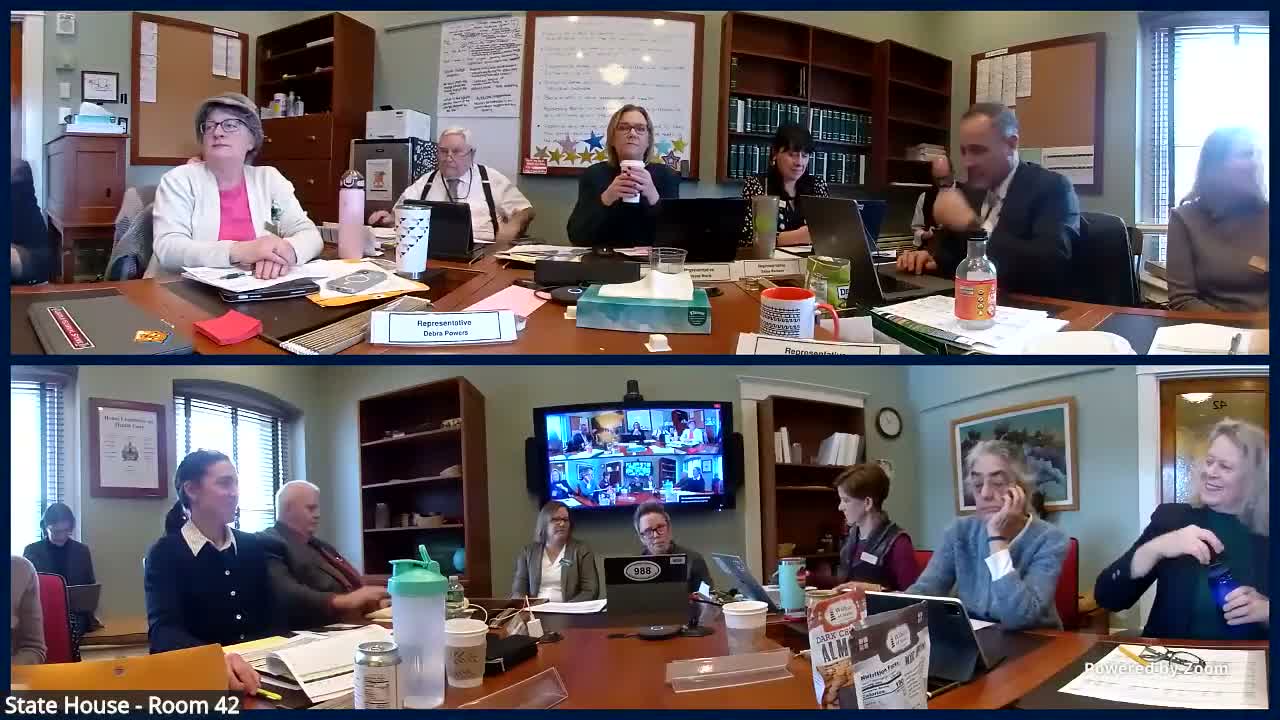
Summary
DMH Commissioner Emily Hawes summarized department responsibilities, said DMH runs two state facilities and manages a roughly $339 million budget serving over 25,000 Vermonters, and flagged rising transport and forensic-evaluation costs and travel-nurse reliance at facilities.
Emily Hawes, commissioner of the Vermont Department of Mental Health, told the House Committee on Health Care that DMH manages the state's mental-health system, a budget of roughly $339 million and services for more than 25,000 Vermonters.
Hawes said DMH oversees 10 designated agencies and two specialized service agencies, operates the Vermont Psychiatric Care Hospital (described as a 25-bed facility for adults under the commissioner’s care) and River Valley Therapeutic Residence (a 16-bed secure residential treatment facility), and runs grants and contracts for community and forensic services. "We oversee and run the Vermont Psychiatric Care Hospital, which is a 25 bed hospital for adults who are under the care and custody of the commissioner," Hawes said.
She told members DMH is seeing rising transportation costs for both youth and adults — including emergency-department transfers and out-of-state placements — and increased requests for services that require state-supported transport. Hawes also reported increased demand and costs for forensic competency evaluations, estimating roughly 800–1,000 competency evaluations per year, up from roughly 500–600 five years prior.
Hawes addressed staffing pressures: DMH is using travel contracts but has reduced the number of travelers at its psychiatric hospital from about 51 last year to roughly 47 today; she said travel contracts have declined but remain a key recruitment tool and that conversion of travelers into permanent staff has occurred in many cases. On facility finances, Hawes said some facility services did not generate as many reimbursable dollars as expected, requiring general-fund support; staff agreed to follow up to clarify some accounting entries and a $1,000,000 figure raised during questioning.
On residential costs, Hawes said River Valley does not bill Medicaid for room and board and DMH covers room-and-board gaps for residents; she offered to provide business-office figures on rent and resident costs.
Hawes and DMH staff fielded committee questions on out-of-state youth placements, the role of PNMI and PRTF placements, workforce development measures taken in recent years and next steps; DMH agreed to return with additional detail on utilization, staffing conversions and specific cost figures.
The committee took no final vote; DMH will provide follow-up data and appear again for further BAA consideration.