
Joint Fiscal Office walks House Health Care committee through 'ups and downs' budget worksheet
Get AI-powered insights, summaries, and transcripts
Subscribe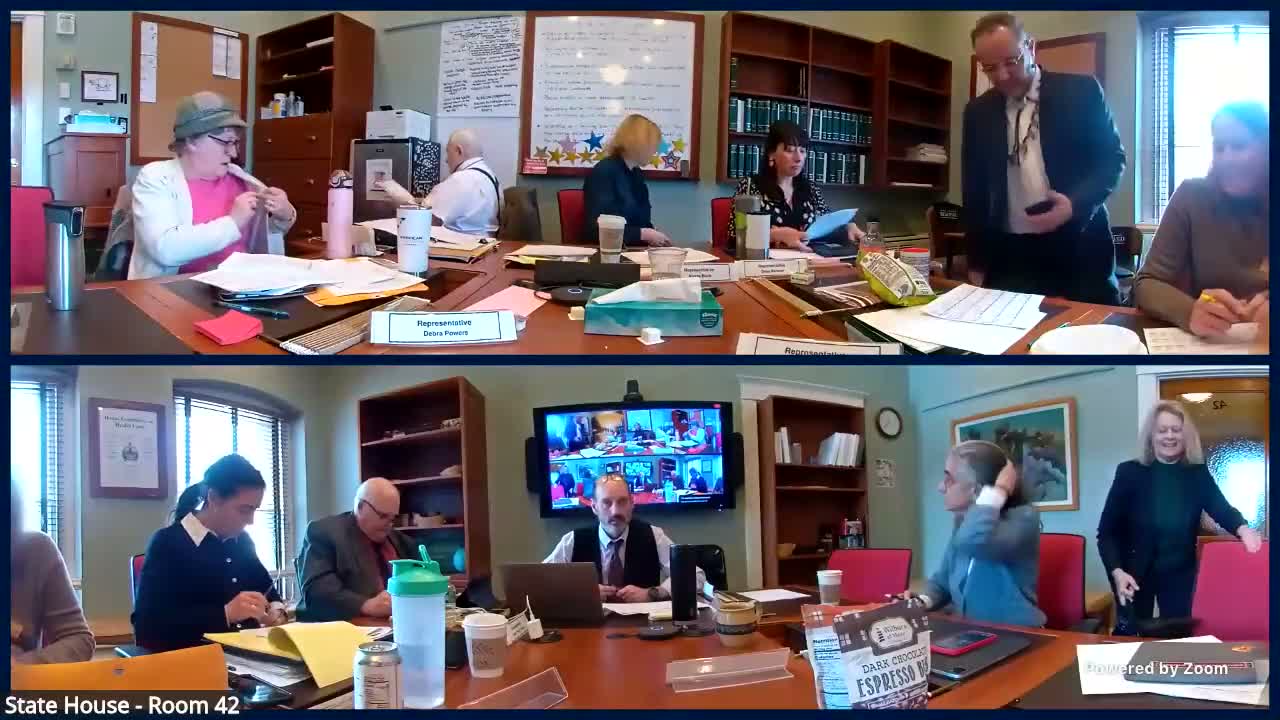
Summary
A Joint Fiscal Office presenter gave members a step-by-step tutorial on how to read the BAA 'ups and downs' worksheet, explaining sections A–E, fund types, Global Commitment matching and example line items such as an $850,000 family planning reduction.
A Joint Fiscal Office presenter delivered a practical tutorial to the House Committee on Health Care on how to read the Budget Adjustment Act 'ups and downs' worksheet, telling members "there's the ups and the downs" and showing how B- and E-sections relate.
The presenter explained that budget bills are organized into A (language/explanation), B (numbers/appropriations), C (current-year adjustments), D (transfers/reserves) and E (text that explains numbers). They emphasized that while e-language corresponds to b-numbers, not every b-number has an explanatory e-section, so cross-referencing both parts is essential to understand appropriations.
Using the committee's focus on the 300–399 human-services range as an example, the presenter showed how departmental lines (for example B314 and B315 for the Department of Mental Health) map to the AHS central office totals. He illustrated the matching mechanics with a family-planning example: an $850,000 reduction showed as a 'down' on the AHS worksheet and must be reconciled against department lines where federal and state matches can cause figures to appear in multiple places.
The presenter also reviewed fund headings that appear on the worksheet — GF (general fund), SF (special funds, including tobacco settlement funds), IDT (interdepartmental transfers), federal funds and dedicated state health care resources — and explained the Global Commitment Fund (GCF) concept, where federal/state matched dollars can appear on both central-office and department lines.
Committee members questioned how departmental transfers and timing affect where changes appear; the presenter said the timing of a transfer determines whether it shows up in a BAA adjustment or in another accounting vehicle and offered to follow up on detailed timing questions. The presenter closed by reiterating the difference between one-time items (generally in the 1100 range) and base increases, and encouraged members to attend an offered hands-on tutorial session.
The committee did not take a formal vote on any budget item during the session; staff offered to provide follow-up materials and hard copies to help members cross-check numbers in future hearings.