Get Full Government Meeting Transcripts, Videos, & Alerts Forever!
Get email alerts on the Capex Financing topic
No spam. Unsubscribe anytime.
Delaware Valley board signals support for $10 million financing to fund district office, athletics and facility upgrades
Summary
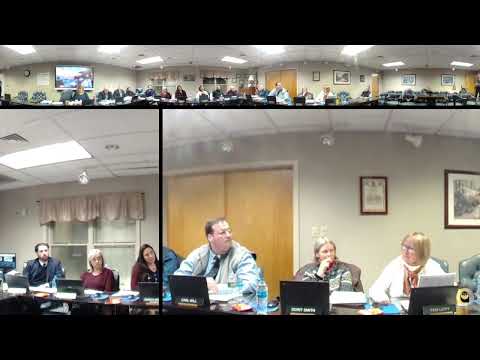
Board members at the Jan. 8 work session signaled preliminary support for pursuing up to $10 million in borrowing to fund a district office renovation, PE/locker-room expansion and athletic field upgrades while asking staff for firmer cost and timing estimates.
The Delaware Valley School District board coalesced around a plan to pursue financing to cover several high‑priority capital projects, including a district office renovation, added locker‑room space and athletic field upgrades, at a Jan. 8 work session.
Staff presented an updated capital expenditures (CapEx) list and three borrowing scenarios prepared for a July 2027 financing window. The scenarios — roughly $5 million, $7.5 million and $10 million — trade higher near‑term debt service for either a shorter payoff or a wrapped schedule that lowers immediate budget pressure but raises long‑term interest costs. Staff said the district will pursue grants and other offsets where possible.
Several board members said the district office renovation and PE/locker‑room expansion were high priorities, and the board chair summarized an informal count that as of the meeting “there is 5 votes for the district office, 5 votes for turf, [and] barely 5 votes for the additional locker room,” making clear the support was a preliminary straw poll rather than a binding vote. Board members also backed lower‑cost, safety‑oriented projects — bollards and a renovated concession stand — as items to accelerate if financing moves forward.
Board members asked staff for more precise estimates, phasing options and grant prospects before committing to a financing resolution. Staff said some projects could be combined to reduce mobilization costs and that timing the borrowing to potential interest‑rate declines could yield savings. Financial consultants (PFM was referenced) had been asked to model the three scenarios and to show annual debt service impacts under a traditional amortization and a wrapped schedule.
Next steps included staff returning to the board with exact vendor estimates, a recommended prioritization and a proposed calendar for decisions ahead of any formal borrowing vote. The board did not adopt any binding financing motion on Jan. 8; the discussion functioned as direction to staff to refine numbers and timelines.