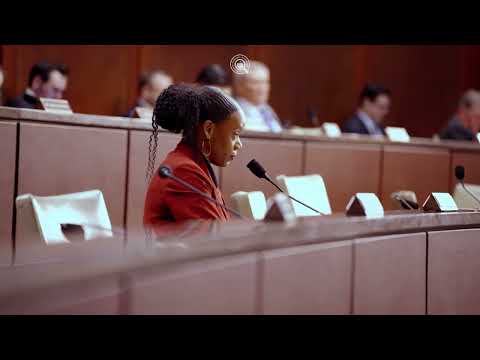
Committee member says GOP-led hearing is a ‘hypocritical witch hunt,’ urges targeted oversight
Get AI-powered insights, summaries, and transcripts
SubscribeSummary
An unidentified committee member criticized a Republican-led hearing as politicized, defended GAO, inspectors general and whistleblowers as central oversight tools, and warned recent funding freezes and proposed cuts could harm thousands of children and low-income households.
Unidentified Speaker, a committee member, told the hearing that rooting out waste, fraud and abuse is ‘‘incredibly’’ important to the committee and caucus but accused Republican members of using oversight as a partisan tool.
She said the tone of the hearing struck her as ‘‘a hypocritical witch hunt’’ rather than ‘‘an actual oversight effort,’’ and argued that oversight should be surgical: "To truly tackle waste, fraud, and abuse, we need to approach the issue with a scalpel, not a mallet." The member repeatedly framed the hearing as a political attack on Democratic-led states and on vulnerable immigrant communities.
The member listed the formal tools she said are available to detect and prevent improper payments — hearings with the Government Accountability Office, inspectors general and whistleblowers — and said the federal government already has mechanisms to address fraud. She asked whether those institutions work to reduce waste, fraud and abuse and emphasized their importance to oversight.
She also criticized the Minnesota House fraud prevention committee, saying the panel chaired by Kristen Robbins "has issued no reports on these uncovered schemes," had not advanced legislation to address them and had not shared whistleblower reports with Democratic colleagues. She described the Minnesota case as an example of headline-generating activity that, in her view, did not translate into meaningful remedies.
The member warned that the current political approach risks undermining the programs themselves. She said Republicans’ plan — referred to in the hearing as a ‘‘big beautiful bill’’ — was estimated, she said, to cut about $1 trillion from Medicaid and CHIP and reduce SNAP eligibility for roughly 40 million people. She framed those cuts as especially harmful because, she said, when programs are gutted, fraud becomes even more damaging since ‘‘even less money is going to people who need it.’'
Turning to recent administrative actions, she said the Department of Health and Human Services froze child-care funding to Minnesota after online allegations and that the freeze would affect "more than 23,000 children," and added that the administration had frozen approximately $10 billion in funding for child care, social services, grants and cash assistance. She named other Democratic-led states she said were affected — California, Colorado, New York and Illinois — and argued federal policy should serve people of all states regardless of party.
The member closed by urging the committee to use oversight to improve the system’s safeguards rather than to end programs and said she welcomed future efforts to strengthen oversight. She then yielded back.