Las Cruces council approves slate of resolutions, extends police pay increases and accepts multiple grants
Loading...
Summary
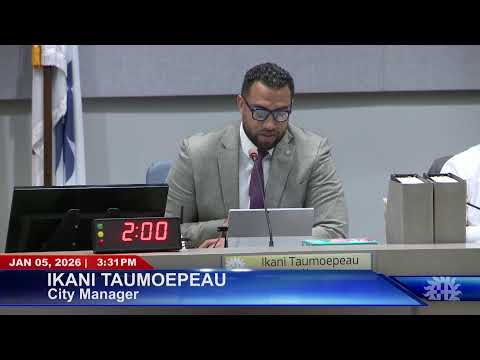
At its Jan. 5 organizational meeting the Las Cruces City Council unanimously approved a package of routine and substantive items — including a police MOU with across‑the‑board pay increases, a large grant bundle for mental‑health and infrastructure projects, several vehicle acquisitions, a liquor license recommendation, and a developer park reimbursement agreement.
The Las Cruces City Council on Jan. 5 approved a series of resolutions covering labor, grants, procurement and land‑use reimbursements in a meeting that also included organizational votes and extensive public comment.
Council approved a memorandum of understanding with the Las Cruces Police Officers Association that the union signed Dec. 2, 2025. According to Jose Vargas, assistant director of human resources, the MOU includes a 5% pay increase for commissioned (represented) staff and a 3% increase for non‑commissioned staff; it also extends the contract expiration date to Oct. 3, 2026. Vargas said the pay adjustments would take effect the first full pay period after council ratification (Jan. 11 if approved). Councilors pressed staff on whether the increases are retroactive and how the city ranks in pay; Vargas said Las Cruces is approximately 15th in the state by the most recent internal survey and that additional recruitment incentives and benefit levels (the city pays roughly 82% of medical/dental premiums) are used in hiring.
Council also approved Resolution 26‑085, a consolidated package of 22 grant awards and budget adjustments presented by Gabriela Pratts, the city’s grant manager. Notable items in the package include a $3 million congressional earmark to plan and design an integrated health‑care facility to support crisis response; $5.5 million in state capital outlay toward a mental health crisis station to house mobile integrated health services; funding for a 50‑unit housing project at the Mesilla Valley Resource Campus (Amador Crossing); an additional $1 million for the RACE rural air service expansion program (bringing the award to approximately $5.5 million with matching requirements), and more than $1.7 million for upgrades to the city’s proposed real‑time crime center. Pratts described most awards as capital outlay or federally directed spending and noted some grant amendments required additional local match.
Other approvals and actions included:
- Resolution 26‑083: Recommendation to the New Mexico Alcoholic Beverage Control Division for a restaurant beer‑and‑wine license for LA Hot Pot and Barbecue LLC at 840 South Tauscher Boulevard; staff reported reviewing departments raised no objections.
- Resolution 26‑086: Updates to the vehicle acquisition program, reflecting higher quotes for two Elgin street sweepers (new total $421,667), a change in the fire vehicle replacement to a Ford F‑150 Lightning ($61,460) to advance fleet electrification goals, and a new cargo van for outreach work; Fleet Services said departments have funds available to cover the changes.
- Resolution 26‑087: A reimbursement agreement for a negotiated neighborhood park in the Royals at Settlers Pass subdivision; staff said the pre‑adoption reimbursement cap is $533,000 and that park impact fees collected citywide or previously unencumbered fees could be used to reimburse costs.
- Board appointment: Council approved the appointment of Dwight Eggers to the Utilities Board.
Votes on the listed resolutions were taken by roll call and recorded as adopted (votes for individual resolutions were recorded as unanimous yes in the transcript). The mayor and council also completed organizational business, electing Councilor John Munoz as the new mayor pro tem by roll call.
The council packet and staff presentations listed matching and fiscal notes for several grants and projects; councilors requested follow‑up details on match requirements, timeline and procurement steps for the real‑time crime center, active‑transportation project designs and airport requirements for the new Phoenix route. City staff said several departments remain available to provide technical follow‑up and that specific projects will return with implementation plans or budget proposals as appropriate.
What happens next: Ratified personnel changes take effect in the next payroll period per the MOU language; capital outlay projects move to the planning and procurement phases and will follow standard grant‑management reporting requirements. Councilors requested additional briefings on active transportation and capital‑outlay stewardship at upcoming work sessions.