Get Full Government Meeting Transcripts, Videos, & Alerts Forever!
Get email alerts on the Building Codes Adoption topic
No spam. Unsubscribe anytime.
Cochise County advisory committee reviews jump to 2024 I‑Codes, 2023 NEC; energy code to be studied
Summary
County staff recommended adopting the 2024 International Codes and the 2023 National Electrical Code while studying the energy conservation code and proposing local amendments; members flagged potential cost and safety impacts for builders and residents.
Cochise County building officials reviewed proposed updates to the county’s adopted codes on Jan. 8, as staff recommended moving from the 2015 code cycle to the 2024 International Codes (I‑Codes) and adopting the 2023 National Electrical Code (NEC) while separately studying changes to the energy conservation code.
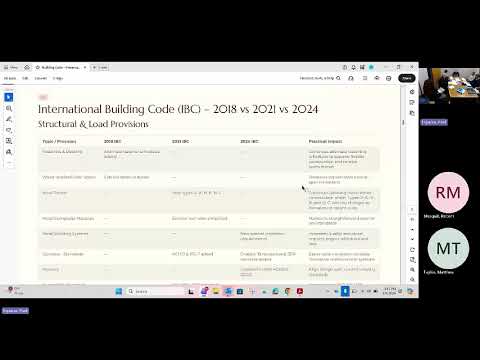
Paul Esparza, Cochise County building official, presented a condensed summary comparing the 2018, 2021 and 2024 I‑Code cycles and the 2017–2023 NEC. "The county had every intention of moving to the 2024 I‑Codes and the 2023 NEC," Esparza said, noting that staff had compiled a 44‑page summary and a PowerPoint of key changes. He emphasized the presentation covered major, not exhaustive, changes and that staff would recommend specific local amendments.
Why it matters: the I‑Code and NEC updates include new and revised technical requirements that can affect design, permitting and construction costs. Esparza highlighted provisions such as new recognition of shipping‑container structures, expanded carbon monoxide detection language, updated tornado‑load provisions in the 2024 IBC, and revisions to occupant‑load calculations and sprinkler tradeoffs. He said some provisions are unlikely to affect rural Cochise County projects, but others — such as revised wind and snow maps and certain accessibility updates — could have local impact.
On the energy conservation code, Esparza said the county currently operates under an older energy code and that the 2018–2024 cycles introduce changes to insulation R‑values, air‑leakage testing, and performance‑path baselines. "There are clear cost implications for builders," Esparza said; staff proposed studying local amendments and alignment with nearby jurisdictions before recommending a final energy‑code approach. He told the group the county may adopt the 2024 I‑Codes and 2023 NEC while either retaining an earlier energy code or crafting targeted local amendments to reduce undue cost burdens.
Several members urged coordination with neighboring jurisdictions. Esparza said staff will review actions by Sierra Vista, Huachuca City and Pima County (Tucson) so neighboring jurisdictions do not diverge in ways that complicate contractors’ work across boundaries. He said the target is to finish staff work and bring recommendations back to the committee, with a possible midyear timeline for formal adoption work.
Procedural note: the committee approved minutes from the Aug. 21 meeting at the start of the session.
The committee did not adopt the codes or energy‑code amendments at this meeting; staff will return with local‑amendment proposals and comparative analysis of neighboring jurisdictions’ choices.