
Residents and nonprofits urge Roseville to target CDBG/HPRR funds at homelessness, youth mental health and rental assistance
Get AI-powered insights, summaries, and transcripts
Subscribe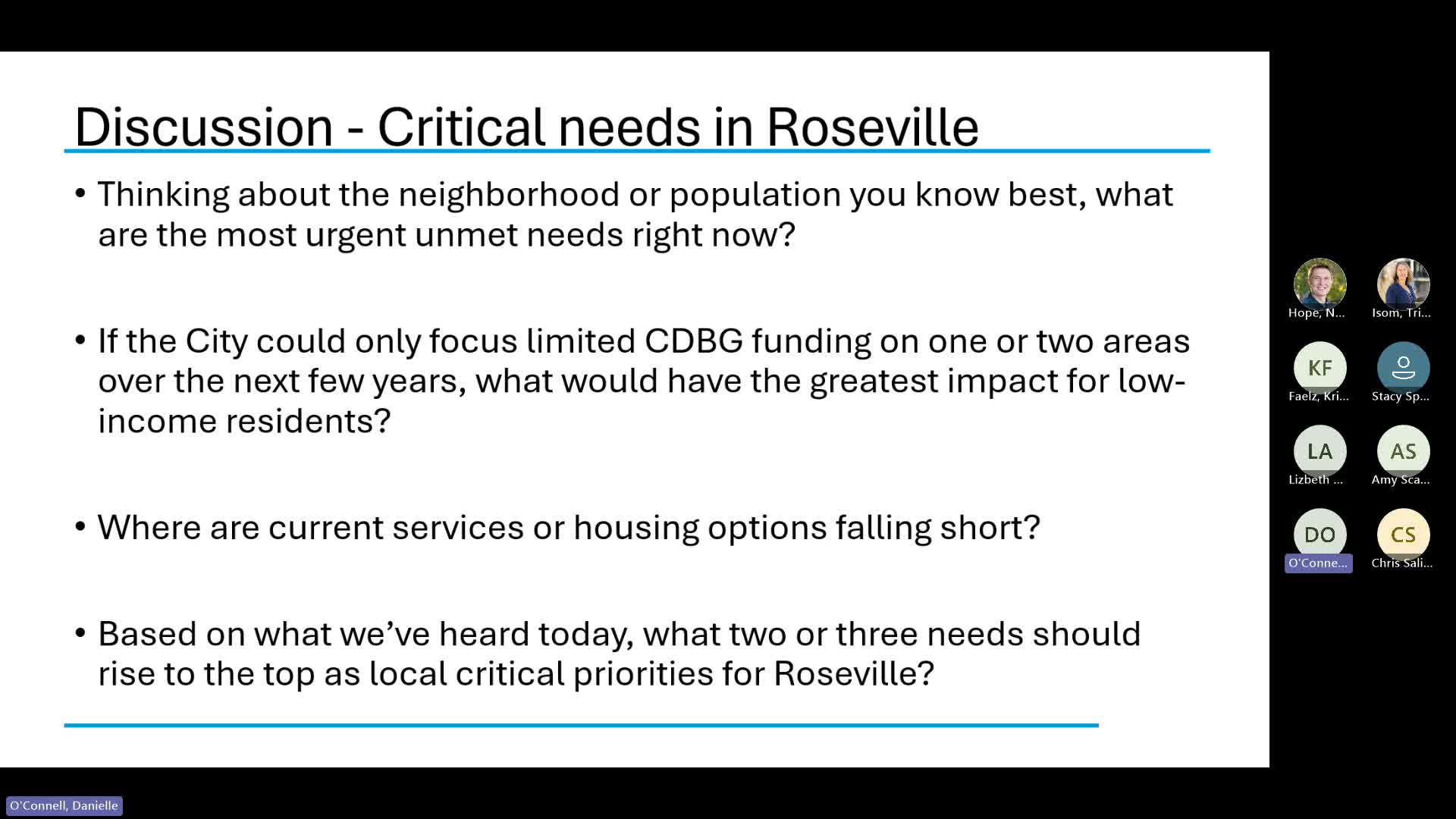
Summary
Local advocates at a Roseville workshop urged the city to prioritize permanent supportive housing and rental assistance and described hidden homelessness among families and youth; speakers asked whether the city proactively assesses organizations for funding and warned of impending behavioral health cuts.
At a City of Roseville public workshop, local advocates and nonprofit leaders urged that limited federal grants focus on housing and services for people experiencing or at risk of homelessness.
"There are probably at least 300 people who sleep on our streets every day," said Paul, who introduced himself as with the Roseville advocate for the homeless and described both visible street homelessness and hidden family homelessness among students and households living in cars or doubled up.
Paul urged the city to seek enough funding so buildings such as hotels or schools could be converted into permanent supportive housing when opportunities arise. He also described difficulties placing one client, "James," into available subsidy programs and asked whether CDBG funds could be used to supplement gaps in local assistance.
Stacy, who works with transitional‑age youth, said several partner agencies have closed and 211 is receiving more calls—an indicator she described as growing demand for prevention and intervention services. Jenny Roberts of Big Brothers Big Sisters said research supports mentoring and that her agency is expanding to include a clinical caseworker to serve youth with severe mental illness; she cited data from Mental Health America saying about 55% of youth have endured emotional abuse at home.
A representative of a Latino community organization said past CDBG funding supported rental assistance but that demand exceeds the funds available; the speaker warned behavioral‑health funding shifts scheduled for June 2026 will reduce local prevention dollars and increase service needs. That representative asked whether the City conducts outreach or assessments to identify small organizations that would benefit from funds rather than relying only on applicants who come forward.
Staff answered that the pre‑application step is meant to screen fit and give earlier direction to applicants and encouraged organizations to contact staff for help; they also reiterated the upcoming deadlines for pre‑applications and full applications. Several speakers asked practical questions about proof of address and eligibility documentation, which staff said would be required.