
Vermont retirement systems show funding gains; treasurer’s office asks for task force and investment‑authority change
Get AI-powered insights, summaries, and transcripts
Subscribe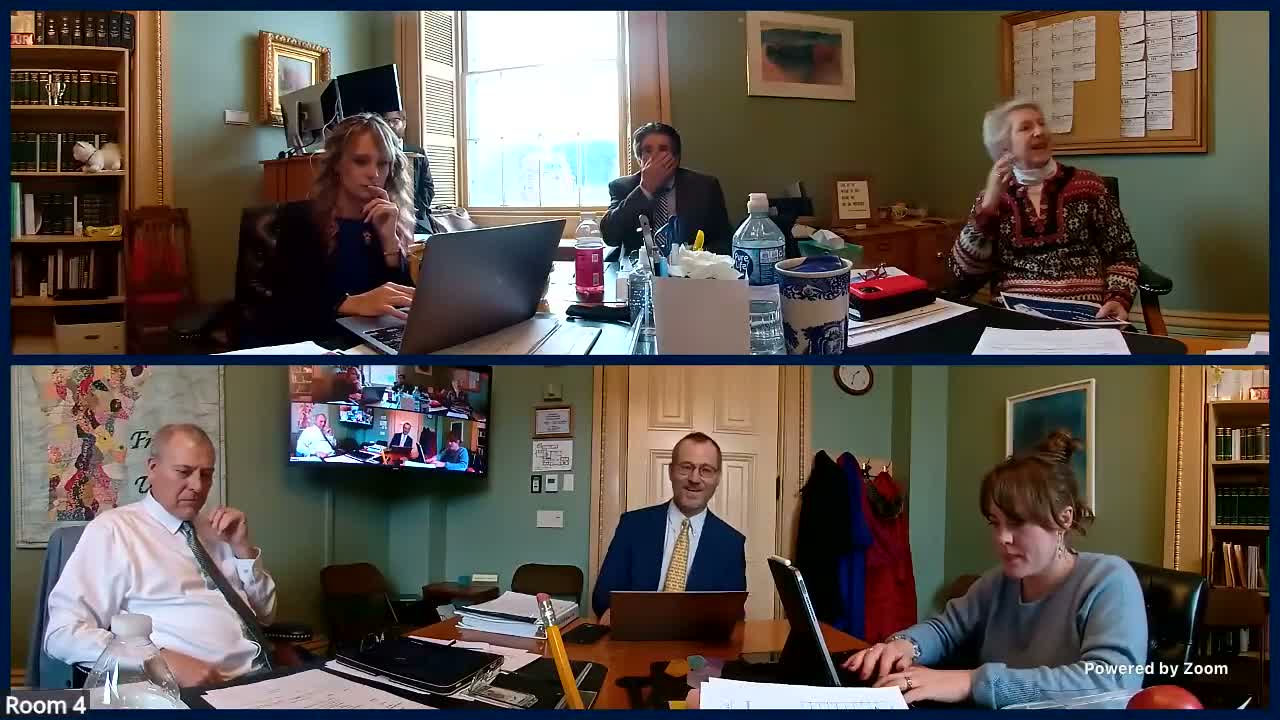
Summary
Tim Duggan told the Senate Government Operations Committee on Jan. 9 that Vermont’s retirement systems have recovered funding after recent reforms, that investment gains and Act 114 measures will generate long‑term savings, and that the treasurer’s office is seeking a funding‑policy task force and transfer of investment authority to VPIC.
Tim Duggan, director of the Vermont Retirement Systems in the state treasurer’s office, told the Senate Government Operations Committee on Jan. 9 that a suite of reforms and recent investment returns have materially improved the state’s pension funding trajectory and that the office will seek legislative action to lock in long‑term stability.
Duggan said the retirement systems exist to recruit and retain public servants and to provide reliable, lifelong benefits. He cited a presentation study finding that “for every dollar of taxpayer investments, … 4 and a half comes out in economic activity in the state,” and said the systems’ payments are a broad‑based economic driver across counties. He reported strong 2025 investment results and actuaries’ valuations that have lifted funded ratios for major systems.
Why it matters: the committee heard that policy changes adopted since the 2008 funding plan — including member contribution increases, one‑time plus payments and Act 114 measures to prefund retiree health benefits — together are reducing future taxpayer contributions and smoothing the state’s long‑term liabilities. Duggan told senators those reforms, if continued, could generate roughly "$6,000,000,000 savings" over the life of the commitments that run into the 2038/2048 period.
Duggan summarized how the systems are funded (employer contributions, employee contributions and investment earnings), the office’s practice of smoothing gains and losses over a rolling five‑year period, and the presence of deferred investment gains of about $165,000,000 that currently support funding stability. “Contributions plus investments equal benefits and expenses,” he said, explaining the administration’s approach to valuation and annual appropriation requests.
Committee members asked for further detail on several points, including retention of members in the state after retirement, the effect of assumption changes on funded ratios and the timing of external credit‑rating reviews. Duggan deferred some technical questions to the treasurer’s investment and actuarial teams and agreed to follow up where the office did not have immediate data.
Two policy requests: Duggan outlined two formal requests the treasurer’s office is advancing this session. First, he asked the legislature to create a task force to review the state’s closed 30‑year funding policy to reduce the risk that good years reduce required contributions now and leave the state exposed to steep contribution spikes if poor returns occur close to amortization deadlines. He described layered amortization and other best practices as options to reduce year‑to‑year volatility while preserving the policy’s buy‑in. Second, Duggan recommended transferring investment authority for certain assets from the current single‑fiduciary model to VPIC, the state’s investment commission, to centralize investment expertise and avoid concentrating large sums under one fiduciary.
What’s next: Duggan said the task‑force idea is reflected in the treasurer’s bill being discussed in the House and pledged to provide additional actuarial detail at members’ requests. There were no committee votes on either request during the hearing.
Speakers quoted or referenced in this article are drawn from the committee transcript and include Tim Duggan, who presented the material. The committee did not take formal action on the task force or the VPIC proposal during the session reported here.