
Treasurer presents H.567 to speed small unclaimed-property claims, fund Vermont Saves and shift OPEB oversight
Get AI-powered insights, summaries, and transcripts
Subscribe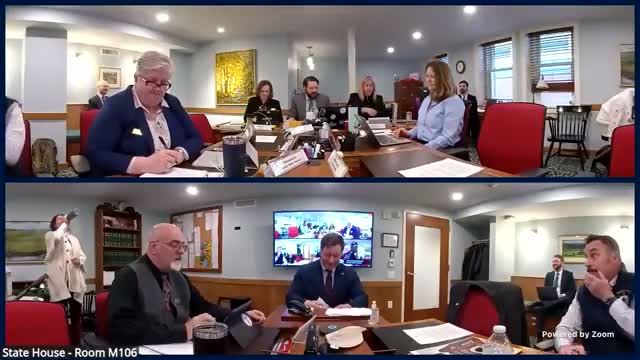
Summary
Treasurer Picek told the House Government Operations & Military Affairs committee on Jan. 9 that H.567 would raise small‑claims thresholds, require insurers to provide patient identifiers for medical reimbursements, temporarily redirect limited unclaimed‑property transfers to Vermont Saves, and transfer OPEB investment oversight to VPIC; the bill also requests three staff positions and a task force to study OPEB amortization.
Vermont Treasurer Picek on Jan. 9 told the House Government Operations & Military Affairs committee that H.567 would ease procedures for small unclaimed‑property claims, provide temporary funding for the state’s auto‑IRA program Vermont Saves, and move management of other post‑employment benefit (OPEB) trust investments to the Vermont Pension Investment Commission (VPIC).
Picek said the bill groups changes: the first five sections amend unclaimed‑property law, later sections address retirement system governance and OPEB, and section 24 requests three full‑time positions—two for unclaimed property and one policy and research manager for the retirement division. “We have about $150,000,000 in unclaimed property,” he said, noting the office returned about $9.8 million to Vermonters last year while processing a rising volume of claims.
Why it matters: the proposed changes aim to speed payments and reduce administrative burden for low‑value claims, make it easier to reunite medical reimbursement money with the correct patient, shore up the nascent Vermont Saves program until it becomes self‑sustaining, and consolidate OPEB investment oversight with VPIC as those funds grow.
Unclaimed property and small‑claims thresholds Picek told the committee claims have climbed from roughly 18,000 a year to about 32,000, creating significant verification work for a small team. H.567 would raise the “fast claim” threshold — claims that do not require original documents or notarization — from $250 to $1,000, allowing staff to return small amounts more quickly. The bill would also raise the probate threshold for decedent claims from $5,000 to $10,000 to spare families the time and expense of probate in lower‑value cases.
On insurer reporting for medical reimbursements, Picek said insurers often remit lump sums to hospitals without patient identifiers; the bill would require an identifier such as an explanation‑of‑benefits number so the treasurer’s office can ask hospitals to identify and directly reimburse patients where appropriate. “We want to make sure we get it back to them,” Picek said.
Vermont Saves funding proposal Picek described Vermont Saves, the state‑run retirement program launched in December, as growing but not yet self‑funding: about 1,300 businesses and roughly 5,300 employees are participating, with about $5 million in assets in the program’s first year. The one‑time startup appropriation of $750,000 is near exhaustion; Picek said annual operating costs run near $300,000 until the program’s fee revenue scales. The treasurer proposed temporarily diverting up to $300,000 of the annual unclaimed‑property transfer that normally goes to the Higher Education Trust Fund to Vermont Saves until the program reaches sustainability.
Picek justified the proposal by pointing to a recent one‑time $26 million estate‑tax windfall to the Higher Education Trust Fund; he said stakeholders including VSAC, UVM and Vermont State Colleges have expressed support for a temporary diversion.
Fraud, staffing and vault inventory Picek warned of increasing fraud attempts against larger claims and said the two requested unclaimed‑property positions would improve claim verification, fraud diligence and outreach to holders who may not be remitting required funds. Asked how the office safeguards physical items and safe‑deposit box contents, he described a secure, inventory‑controlled vault and said the office plans a re‑inventory and audit. He also noted the state lists holdings on missingmoney.com so Vermonters can search for property.
Retirement provisions and OPEB task force Sections 6 and 7 would allow the treasurer to assess late‑payment penalties (a 1% monthly rate in the draft) against political subdivisions that do not remit employer contributions to the state retirement system — an authority already available for some other pension systems — and would create a task force to study amortization risks for OPEB funding. The draft includes a one‑time $75,000 appropriation for actuarial work to model scenarios and options; the task force would not make recommendations on member benefits, contribution levels or assumed rates of return.
Transfer of OPEB investment management to VPIC Counsel and the treasurer said the bill moves administration of the state and teacher OPEB trust investments from the treasurer’s office to VPIC, citing administrative efficiency as the OPEB funds grow (Picek estimated OPEB assets around $400 million). The change would consolidate investment management under VPIC’s board and staff rather than expanding a small team inside the treasurer’s office.
Service credit for employee‑organization presidents and CDAC language The bill would allow members to purchase service credit for time served as a fully released president of an employee organization (for teacher and municipal systems), a change the treasurer and counsel described as actuarially neutral. Counsel also noted cleanup language for the Capital Debt Affordability Advisory Committee (CDAC) reporting criteria to align earlier committee actions and last year’s amendments.
Next steps Committee members asked technical and implementation questions; counsel said the committee will conduct a line‑by‑line review and return to the bill for more detailed consideration. Picek offered to provide additional information and reiterated the office’s willingness to work with stakeholders.
The committee did not take any formal votes during this hearing; members scheduled further work on the bill.