
Iroquois County hearing on Ranger Power project draws sharp local debate over farmland, runoff and jobs
Get AI-powered insights, summaries, and transcripts
Subscribe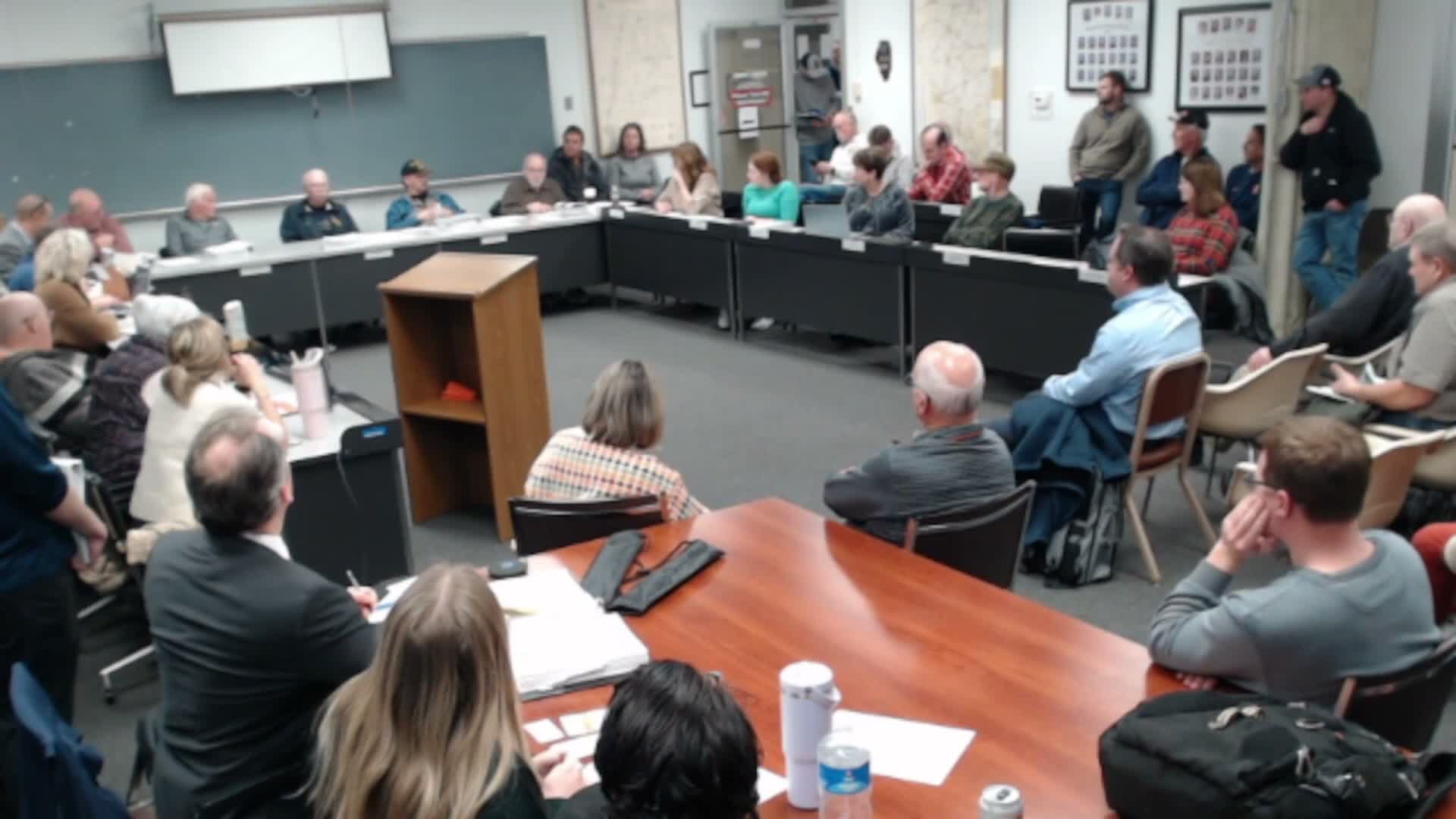
Summary
At an Iroquois County Planning Commission hearing on Jan. 6, 2026, developer representatives said they seek a conditional use permit for a 4,468.2‑acre parcel with roughly 3,000 acres to be developed; residents warned of runoff, soil and economic harms while supporters cited millions in tax revenue and construction jobs.
IROQUOIS COUNTY, Ill. — Developer representatives and county residents debated a proposed Ranger Power solar project at an Iroquois County Planning Commission hearing on Jan. 6, 2026, with questions focused on acreage, stormwater, fencing and local economic impacts.
Ashton Merbach, speaking for the project, said the permit request covers 4,468.2 total parcel acres and that the ‘‘end result of the project with all of our facilities, buffer, etcetera, will be cited on more of 3,000 of that acreage.’’ He told the commission the developers filed a transportation memorandum and access plan and said they will negotiate road‑use agreements with county or township road authorities to address any construction damage.
Merbach also addressed drainage and runoff: ‘‘We see no increase in runoff from our projects. We have a permanent vegetative cover under all of our solar panels,’’ he said, adding the groundcover is ‘‘deep rooted vegetation’’ intended to limit runoff.
Those assurances did not satisfy several neighbors. Diane Matter, a Buckley landowner, read a prepared statement and urged the commission to deny the applications. ‘‘Please stop letting these companies take our profession and livelihood away,’’ Matter said, citing concerns that solar and related industrial development could harm wildlife, soil and community life. Her written submission, entered as an exhibit, also listed chemicals associated with panel manufacture and made claims about large data‑center water use.
Several farm families argued that converting productive acreage to solar would undermine local agriculture and businesses. Mark Russ, a longtime landowner, said large‑scale solar ‘‘strips away fertile topsoil’’ and warned of lost jobs, reduced demand for local farm services and declining property values. Other speakers asked how the project would affect drainage tiles and whether developers would repair damaged county or private drains.
Supporters said the project would bring local revenue and temporary construction employment. A commenter who identified himself in the record as a participating landowner described an economic‑impact estimate projecting up to $81 million in lifetime revenue shared among 14 taxing bodies in the county and cited figures such as roughly $404,000 to a local school district in year one and lifetime school revenue totals discussed during public comment. Dane Simpson, who identified himself as renewable energy director for a Great Plains labor organization, told the commission similar projects employ several hundred construction workers and that union members spend and pay taxes locally.
Commission staff and the developer also discussed site design details: Liam Sawyer, a project consultant, said designers will ‘‘weave the existing drainage and topography as close to existing conditions as possible’’ and that substantial mass grading is not expected. Merbach confirmed the county ordinance requires a woven‑wire fence and said no barbed wire would be installed on top.
The chair read an Illinois statute passed in January 2023 into the record that sets required ordinance parameters for counties reviewing commercial solar facilities and noted the statute provides that a county permit ‘‘shall be approved if the request is in compliance with the standards and conditions imposed in this act.’’
No final decision was made. The commission recessed the hearing and directed staff to prepare findings and conditions; the meeting will continue Jan. 20, 2026, at 6 p.m. in this building.
Questions remain about specific site plans, final acreage to be developed, and technical stormwater analyses the commission may require before taking a vote.