
Santa Rosa planning commissioners recommend approval of housing element implementation package
Get AI-powered insights, summaries, and transcripts
Subscribe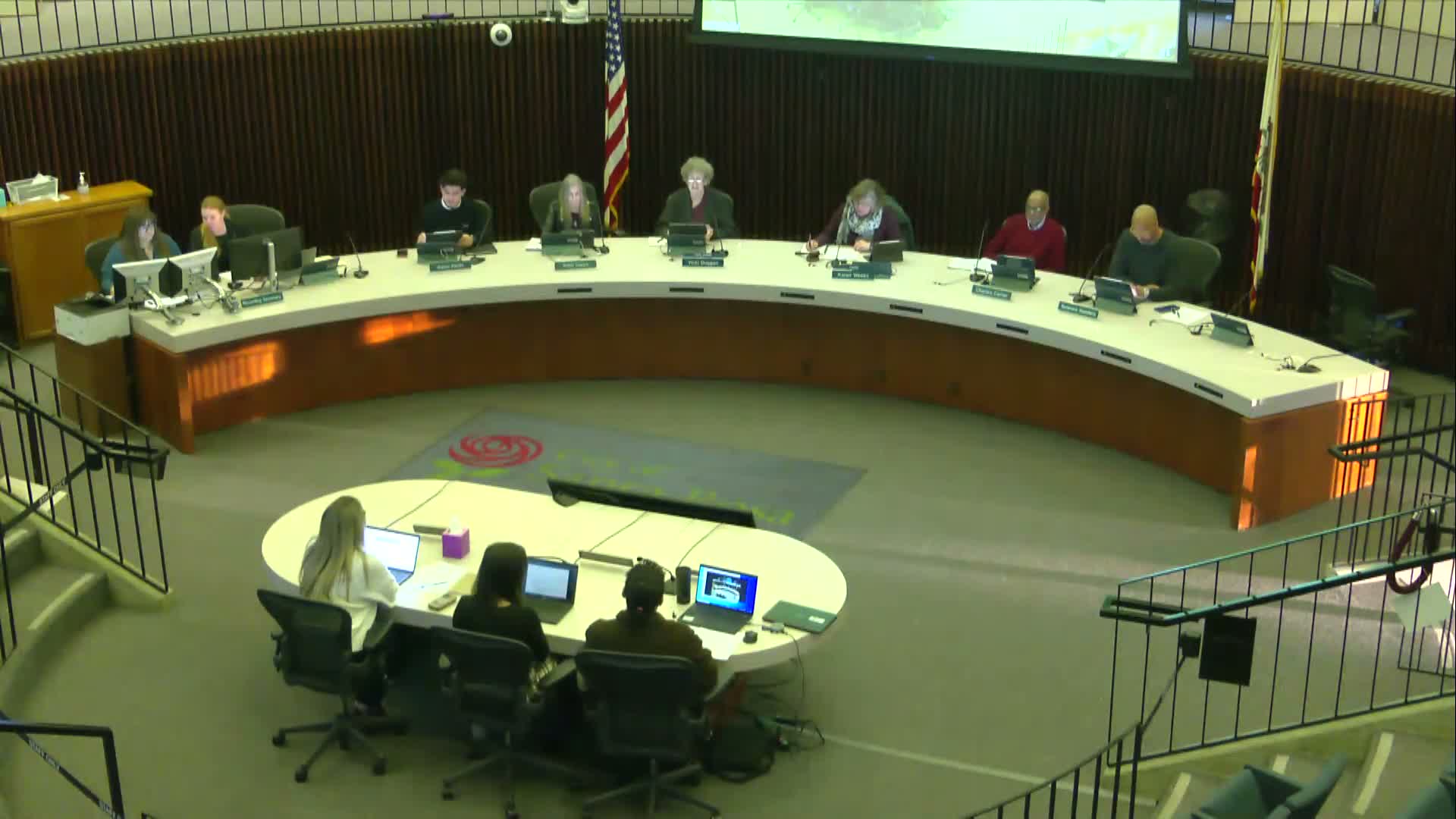
Summary
The Planning Commission voted 6-0 on Jan. 8, 2026 to recommend City Council adopt amendments to Titles 20 and 21 (PLN25-0397) implementing the 2023–2031 housing element. Changes address tiny homes on wheels, housing cooperatives, farmworker housing, care‑facility definitions and ADU rules to align with recent state laws.
The Santa Rosa Planning Commission voted 6-0 on Jan. 8, 2026 to recommend that the City Council approve zoning and municipal code amendments implementing the city’s 2023–2031 housing element and state housing laws (File PLN25‑0397).
Kristen, a planning department presenter, told the commission the package updates two housing element programs and several zoning provisions to align local regulations with state law. “Before you today is the housing element implementation package,” Kristen said, describing the project as both an implementation step and a compliance effort.
The package includes housing element program H6, which the staff described as “innovative housing options.” Under H6 the city would allow tiny homes on wheels as an explicit housing option with design standards and limits: units would be self-contained on a trailer chassis, include a bathroom and kitchen, be limited to 400 square feet and 14 feet in height, require DMV licensing and a minor conditional use permit, and generally be limited to one per property in RR and R‑1 zoning districts. The staff also proposed zoning definitions to support housing cooperatives (shared ownership corporations) so residents can form cooperative housing arrangements.
The zoning amendments collected under program H38 cover a range of state-mandated updates, including farmworker housing. Staff explained three farmworker categories: single‑family farmworker dwelling units, farmworker housing complexes (which state law allows by right in certain areas), and temporary seasonal farmworker housing that would require a temporary use permit. Kristen said some of these uses would be allowed in RR and R‑1 districts consistent with state allowances.
The package splits the existing community care/health care facility section into separate residential care and medical care facility sections, clarifying size and licensing categories (for example, “large” residential care facilities were described as those with seven or more patients and “small” as six or fewer). Staff also described overconcentration buffers (a 300‑foot standard in many cases and a 1,000‑foot buffer for some facility types) and a set of exemptions that include assisted living, alcohol and other drug treatment facilities, foster family homes, and temporary/transitional shelters.
Accessory dwelling unit (ADU) rules were revised to clarify allowable numbers for single‑family and multifamily properties, allow ADUs in some historic‑register properties, and implement three recently enacted bills staff cited in the presentation: AB 462 (disaster-recovery occupancy rules for detached ADUs), SB 543 (square‑footage calculations and appeals/timing procedures), and AB 1154 (removal of an owner‑occupancy deed restriction for JADUs that have a private bathroom). Staff said ADU updates were aligned with guidance from the California Department of Housing and Community Development (HCD). The commission was also told the City Code (Title 21) would include an inclusionary housing exemption for tiny homes on wheels; that change was publicly noticed and no public comments had been received at the time.
On environmental review, staff said the amendments were considered under the addendum to the environmental impact report certified with the city’s general plan (certified by council in February 2023 and again in June 2025) and that statutory exemptions apply to many ADU changes; staff concluded the amendments would not cause significant environmental effects and that future individual projects will be reviewed under CEQA as needed.
After the presentation, Chair Weeks opened and immediately closed the public hearing when no members of the public spoke. Commissioner Sanders moved and Vice Chair Duggan seconded a resolution recommending City Council adopt the Title 20 and Title 21 amendments to implement the housing element (PLN25‑0397). Commissioners Sanders, Carter, Pardo (transcript contains an alternate spelling of this commissioner’s name), Cisco, Vice Chair Duggan and Chair Weeks each stated they could make the required findings and expressed appreciation to staff for the work. The clerk recorded a roll‑call vote with six ayes and one absence; the motion passed 6‑0.
The commission’s recommendation will be transmitted to the City Council for its consideration; no City Council hearing date was specified on the record during this meeting.