
Tri-Creek reports $651,250 in 2025 investment income and warns SEA 1 could cut $2 million a year
Get AI-powered insights, summaries, and transcripts
Subscribe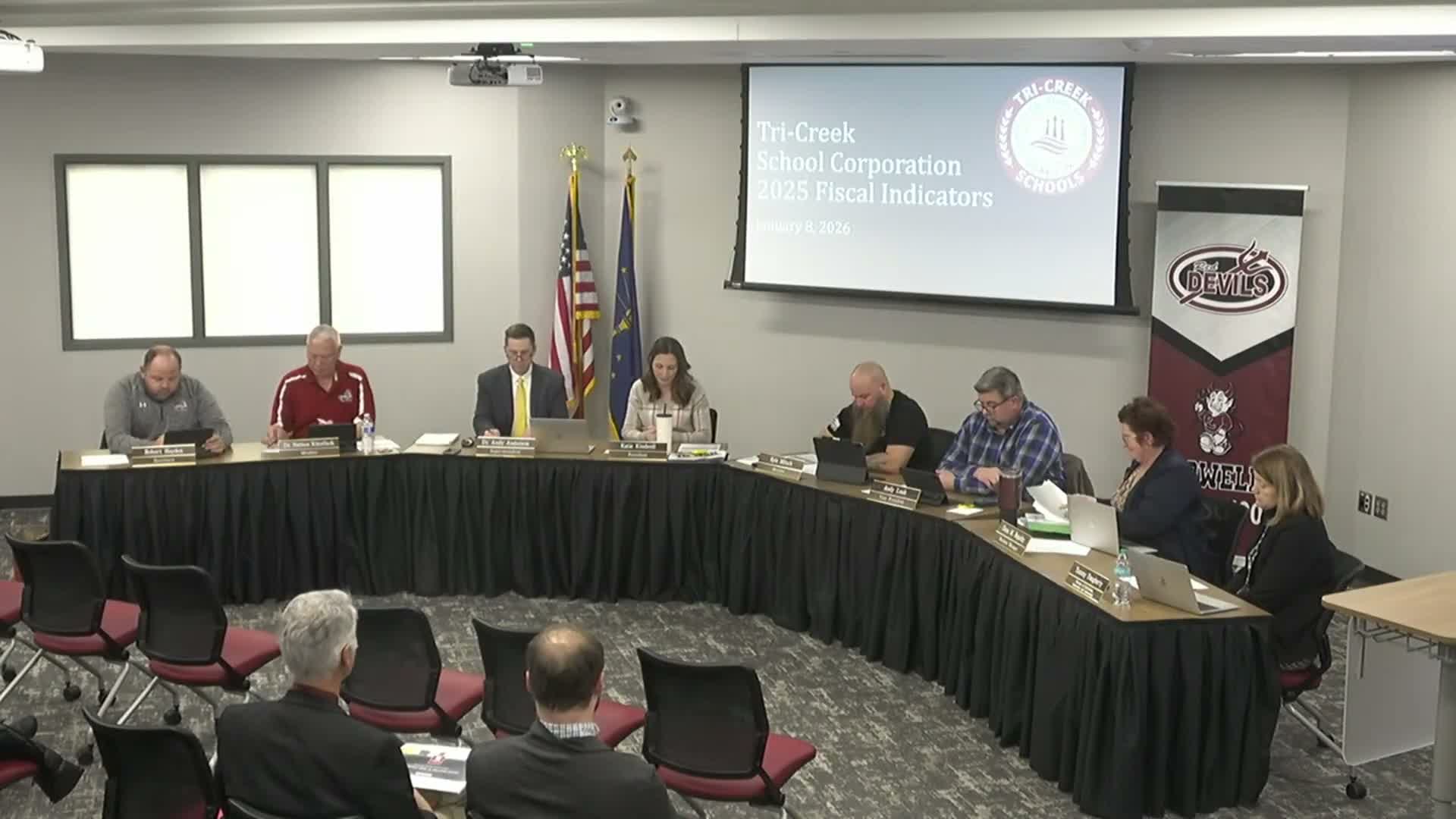
Summary
Business office reported $651,250.29 in investment income for calendar year 2025 and described cash‑flow scenarios showing a possible $2 million annual property-tax revenue loss under Senate Enrolled Act 1, prompting discussion of timing for a possible referendum as a revenue replacement.
Dana Bogathe, executive director of business operations, presented the district’s 2025 investment results and fiscal indicators, and cautioned trustees about near-term revenue pressure from recent state tax changes.
Dana said the district earned $651,250.29 in investment income in calendar year 2025 and described an RFP that resulted in placing $6,000,000 in a 12‑month certificate of deposit at First Merchants Bank at 3.85% to lock in yield as interest rates fell. “For 2025, the calendar year, $651,250.29 in investment income,” Dana reported.
The presentation then reviewed the Distressed Units Appeals Board fiscal indicators and multi‑year cash projections. Under current language in Senate Enrolled Act 1 (SEA 1), the district faces an estimated $2,000,000 annual property‑tax revenue loss that would primarily affect operations once debt service protections are restored, Dana said: “We have about $2,000,000 a year in property tax loss revenue…that start affecting our cash balance” and could move the district into a tight reserve position earlier than previously projected.
Board members discussed options, including running a referendum to replace lost property-tax revenue. Dana explained timing constraints: a referendum may only be run in even-numbered Novembers and tax collections can lag roughly 18 months from approval to revenue receipt, requiring careful planning for payroll and cash-flow continuity.
Why it matters: The combination of lower future investment returns and SEA 1’s property‑tax changes could reduce operating cash and force trade-offs in services or staffing unless the district secures replacement revenue.
Next steps: Trustees will continue monitoring fiscal scenarios, review bid and budget items in upcoming meetings, and consider referendum planning and timing if needed.