Vernon board members raise alarm over town's PILOT deal and possible cost to schools
Loading...
Summary
During open board forum Vernon board members questioned a town council PILOT (payment-in-lieu-of-taxes) for a 27-unit development, saying developer figures (8 students at $13,000 each) may undercount district impacts and could force budget cuts under the district's capped revenue rules.
Board members used the open forum portion of the Vernon Township School District meeting to discuss a recent town council vote approving a Payment-In-Lieu-Of-Taxes (PILOT) agreement for a proposed 27-unit development and to flag potential fiscal and operational consequences for the district.
A board member summarized the council's action and the developer's estimates, saying, "At the end of 30 years, they're projecting $3,800,000 that will be the revenue for the town," and noting the developer projected the development would generate about eight new students at roughly $13,000 per student annually. The member said that gap could leave the district facing an annual shortfall in the range of $100,000 if those students enroll without corresponding tax revenue.
Other board members challenged the developer's cost and enrollment assumptions. One member said the district's per-pupil cost is closer to $26,000'$27,000, and another noted the developer-provided figure was produced using a Rutgers Blaustein model, which some members said does not always reflect local housing patterns. A participant said a pending legislative proposal could require PILOT revenue sharing with school boards, but panelists cautioned any new law may not be retroactive to agreements already in place.
Members also described significant public opposition at the council meeting, including a petition and large public turnout. Several urged the school board to monitor planning- and land-use-board agendas more proactively and re-establish a liaison committee to engage earlier in municipal decisionmaking so the district's interests can be considered before final council votes.
Board members emphasized particular operational risks under the district's revenue cap: sudden year-to-year enrollment increases without corresponding revenue can force cuts to staff or programs because the board cannot immediately raise the tax levy beyond statutory limits.
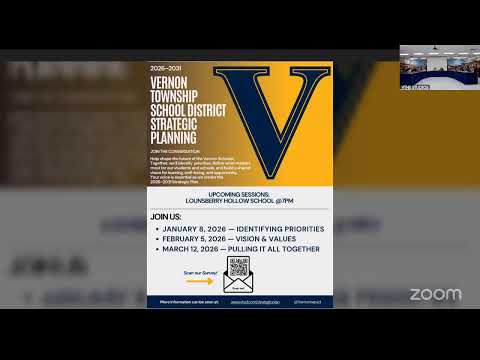
The discussion concluded with agreement to consider committee-level follow-up (finance, community relations) and an invitation for broader public participation at the district's upcoming strategic planning session.