
McCall council adopts broad code amendments, removes references to outdated impact-area jurisdiction
Get AI-powered insights, summaries, and transcripts
Subscribe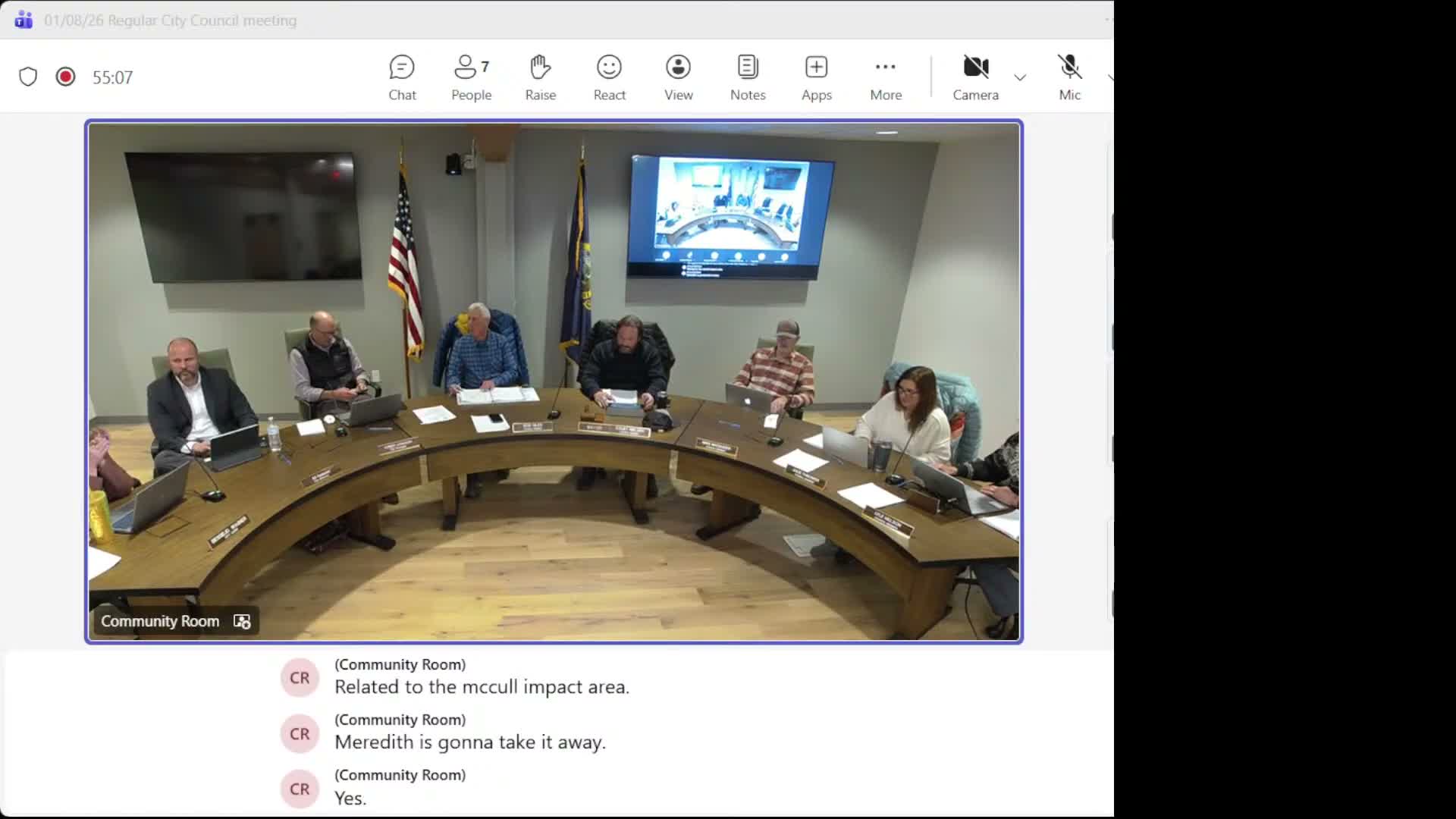
Summary
The McCall City Council unanimously adopted ordinance 10-33, approving a package of code amendments that remove references to an out‑of‑date impact area, adjust residential and commercial use charts (including a limited self‑storage exception), and add a narrow public‑hearing surrebuttal provision; council amended one line of language before adoption.
McCall — The McCall City Council voted unanimously on Jan. 9 to adopt ordinance 10‑33, a package of code amendments to Titles 2, 3 and 9 that, among other changes, removes references to the city’s former impact‑area jurisdiction and updates definitions and permitted uses across residential, commercial and special districts.
City planner and sustainability planner Meredith Todd presented the revisions at the public hearing, saying the Planning and Zoning Commission reviewed the draft and "recommended via a footnote in the residential use chart... an exception be made for self storage when it is secondary to a primary multifamily residential use." Todd said the change is intended to allow storage tied to apartment, townhouse or condo projects so long as the storage is screened and ancillary to the residential use.
The package also revises hotel definitions to reflect multi‑building properties, clarifies planning‑commission membership eligibility, and relocates or removes references to the former McCall Area Joint Planning Commission. Todd said the amendments shift some daycare-related review in medium‑density residential zones from conditional to administrative review, reflecting the state’s increased role in daycare licensing.
Councilmembers raised three public comments from a prior Planning & Zoning hearing and asked staff to treat the proposed public‑hearing surrebuttal language (Section K) as a work‑in‑progress to be refined during a broader code audit planned for 2026. After limited discussion, the council moved a single technical amendment to clarify annexation‑related language in section 9.78 and then read the ordinance by title before adopting it.
A roll‑call vote recorded unanimous affirmative votes from Council member Thrower, Council member Nelson, Mayor Nelson, Council member Giles and Council member Machesic. Mayor Nelson was authorized to sign the documents following adoption. Council signaled staff will continue a follow‑up code audit this year and pursue a wildfire‑risk mapping approach in coordination with the fire district and the comprehensive plan process.
What happens next: The ordinance takes effect as provided in the city code and staff will return with a Phase‑2 code audit during 2026 to refine zoning details and the public‑hearing procedures noted during the discussion.