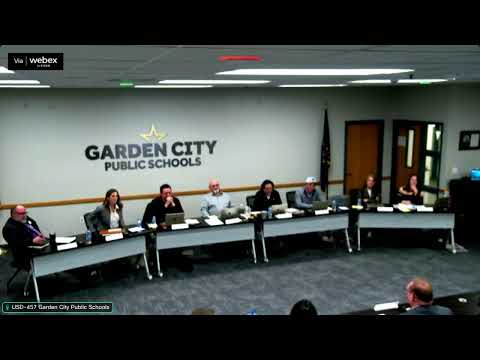
Garden City board hears first reading of recommended K–12 ELA adoption; teachers favored HMH
Loading...
Summary
The Garden City USD 457 board received a first reading of a recommended K–12 ELA curriculum (HMH Into Reading/Into Literature), reported teacher support of 89.3% and first‑year materials and PD costs presented at about $2.46 million; the adoption will return for final approval in January.
The Garden City USD 457 Board of Education reviewed a first reading of the district's recommended K–12 English language arts curriculum during its regular meeting. District staff and a teacher committee outlined a multi‑month adoption process and recommended HMH's Into Reading (K–5) and Into Literature (secondary) after applying a new rubric.
Curriculum lead (identified in the packet) said committee members — approximately 36 to 40 educators who attended review meetings — averaged rubric scores across group evaluations and the teacher committee vote favored the recommended option by 89.3%. The presenter said the committee used demo lessons and classroom pilots to gather student and teacher feedback before ranking vendors.
Teachers and committee members described the strengths they found in HMH: stronger phonics and phonemic‑awareness supports at the elementary level, more embedded writing instruction, and more state‑aligned assessment practice in secondary materials. One committee member summarized the effect on classroom practice: "It gives students the kind of diagnostic feedback so teachers can re‑teach targeted skills," and another said the AI writing tool will give students prompts and immediate feedback but "it does not correct it for them." (Attributions reflect speakers shown in the meeting transcript.)
Committee members also flagged weaknesses: scripted lessons that some veteran teachers dislike, an initial perception of less author diversity at secondary grade levels compared with the district's current materials, and a large site with many resources that will require teacher training to use effectively.
District staff presented a first‑year cost figure for materials and initial professional development of roughly $2,463,000, and described a rollout plan: district PD day on April 6 with grade‑band half‑day sessions and an optional July 30 training ahead of an August classroom start. The elementary reading tool Amira was discussed at length; staff said Amira had been demonstrated but not widely demoed with district students, that it would be used only briefly (presenters cited no more than five minutes per day for most students in demonstrations), and that it generates individual diagnostic reports teachers can use for small‑group instruction.
Board members thanked the committee and emphasized the importance of a seven‑year curriculum decision. No final adoption vote was taken; the presenter said the first‑read will be placed on the January consent agenda for formal approval. The board did not commit to additional professional development purchases beyond the first year and noted the district retains the option to purchase PD as needed over the seven‑year adoption.
What happens next: staff will place the recommendation on the consent agenda at the next meeting for a final vote. Committee materials, rubric scores and vendor documentation are linked in the district packet for board and public review.