
Officials: State funds unlock large private investment but rising labor and delays push up housing costs
Get AI-powered insights, summaries, and transcripts
Subscribe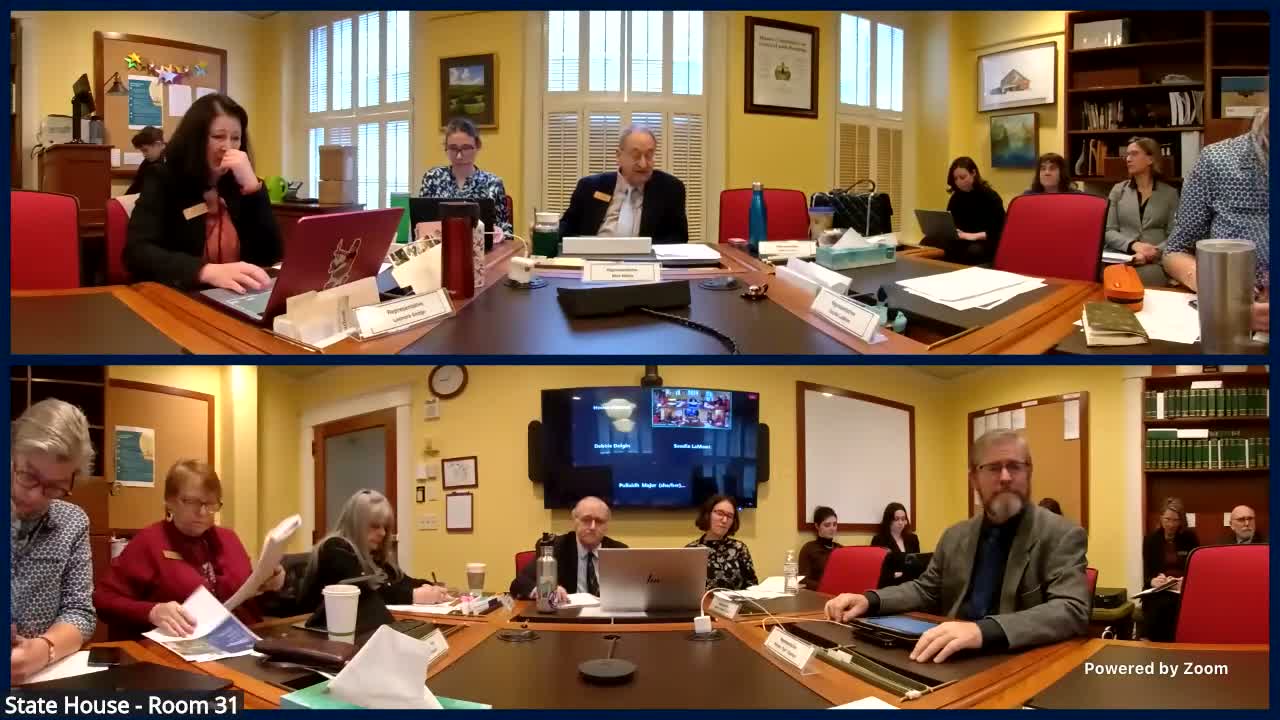
Summary
Witnesses told the General & Housing Committee state housing investments (about $125,000 per 9% unit) unlock federal tax-credit equity and private capital, but labor shortages and multi-year appeal delays have pushed development costs sharply higher, undermining production.
Gus Seelig, executive director of the Vermont Housing and Conservation Board, and Polly Major, the board’s policy director, told the General & Housing Committee on Jan. 8 that state dollars remain essential to attract federal and private capital for housing projects — but that rising labor and materials costs and lengthy appeals are driving up total project prices.
"My message has been to encourage density, and you did that in the HOME Act in a big way that we need to grow vertically," Seelig said, describing how regulatory changes and state investment work together. Major told the committee that for a typical 9% low-income housing tax-credit unit VHCB contributes about $125,000 in state funds, which then unlocks federal HOME funds, tax-credit equity and private debt.
Why it matters: witnesses said modest state investments multiply into far larger project budgets. Major cited an ARPA-funded Burlington project that leveraged roughly $260,000,000 in outside financing and produced 38 apartments and a community justice center.
The witnesses warned state contributions may yield less production as annual housing budgets shrink. "We were averaging $90 million a year; our budget this year is going to be more like $30 million," Major said, and she warned the state will produce fewer 4% tax-credit deals without additional onetime funds.
Cost drivers and delays: both witnesses pointed to a smaller local construction labor pool and competition from high-end residential work as key drivers of higher per-unit costs. Seelig gave a concrete example: a project initially estimated at about $11 million became roughly $15 million after nearly four years of delay, an increase he attributed to appeals and rising labor/materials costs.
Shelter and leverage limits: witnesses noted shelter projects are often ineligible for tax credits, reducing leverage and making per-bed costs closer to apartment costs. Major said shelter projects have much less ability to draw private equity and federal tax-credit investment, and she urged the committee to consider additional targeted funds for shelters.
Policy options discussed: committee members and witnesses discussed appeal-reform strategies, pairing regulatory reform with investment to make density provisions effective, and using career-technical programs to grow the construction labor pool. Major emphasized balancing cost containment with design choices that support livability.
Next step: witnesses offered to provide more detailed trend data on private equity and multi-year cost changes and asked to return for follow-up sessions to dive deeper into leverage, energy funding and developer feedback.