Get Full Government Meeting Transcripts, Videos, & Alerts Forever!
Get email alerts on the Parks Recreation topic
No spam. Unsubscribe anytime.
Kalispell presents 60% draft parks plan; FWP offers partnership to revive Woodland Park pond
Summary
City staff and consultant presented a 60% draft Parks & Recreation Master Plan on Jan. 12, 2026, highlighting priorities to maintain assets, improve access and pursue partnerships; Montana Fish, Wildlife & Parks offered to help study and potentially stock a revitalized Woodland Park pond if the city and public support the idea.
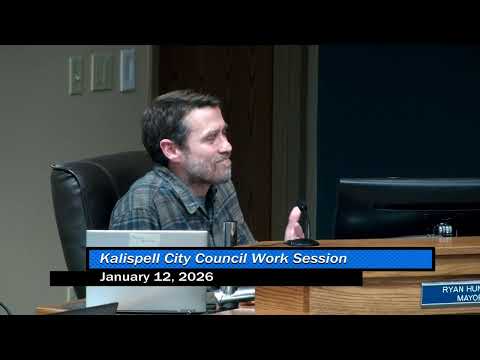
Kalispell city staff and their consultant presented a 60% draft update to the city's Parks & Recreation Master Plan at a Jan. 12 work session, outlining goals to maintain existing parks, improve access and plan for growth.
The plan update, which updates the 2006 master plan and is slated for final adoption in early 2026, "serves as the city's long term strategic framework for park development, recreation programming, open space preservation, and facility management," said Mike Terrell, principal of MTLA, the landscape architecture firm leading the study. Staff said the update is about 60% complete and that community outreach produced more than 1,000 survey responses.
Why it matters: Councilors and staff framed the update as a roadmap for maintenance and prioritizing limited budget resources. Key draft goals include maintaining and enhancing existing parks and facilities, prioritizing underserved neighborhoods and universal design, planning for growth, and securing diverse, stable funding sources.
During the public-comment period, Dylan Tabish of Montana Fish, Wildlife & Parks (FWP) urged the city to consider revitalizing Woodland Park pond as an "urban pond" for family fishing. Tabish told council FWP is willing to partner on the project, assist with study and stocking, and help identify funding: "If the city is interested, we will make it happen." Staff later confirmed the pond's maximum depth is roughly three feet and that it has not been dredged in living memory, which affects feasibility and winter-ice uses such as pond hockey.
Staff also presented several project concepts and constraints: the Park Line and Ashley Park projects, a Northwest Sports Complex parcel that lacks development funding, and an aquatics study to evaluate whether to maintain, enclose or replace the existing outdoor pool. Parks staff said the current outdoor aquatic facility faces mechanical and weather-related maintenance issues and recommended a study to weigh long-term options and costs.
On funding, consultants and staff discussed traditional grant sources, a recent Land and Water Conservation Fund (LWCF) award that required scope adjustments after construction bids exceeded original estimates, and potential special improvement districts or public-private partnerships for large, tourism-oriented facilities. Parks Director Chad Fincher said staff members have successfully written grants but that capacity and competition for funds remain limiting factors.
Councilors raised a range of issues during discussion: coordination with School District 5 for gym and court access, the city's lack of a special-needs playground compared with peer cities, noise and siting concerns for pickleball courts, food‑truck leasing arrangements adjacent to the Park Line, and ways to coordinate park-related social services ahead of camp clearings. On restrooms, staff said year-round open bathrooms have previously produced vandalism, so the department currently uses portables in high-use parks and is exploring access controls and design changes for future facilities.
Next steps: staff will hold another public open house and continue work to a 90% draft; the plan is targeted for adoption in early 2026. Councilors asked staff to return with additional detail on funding options, accessibility upgrades and the feasibility of site-specific projects such as the Woodland Park pond.