
Board reviews major capital projects and CTE facility options; new elementary estimated at ~$45M
Get AI-powered insights, summaries, and transcripts
Subscribe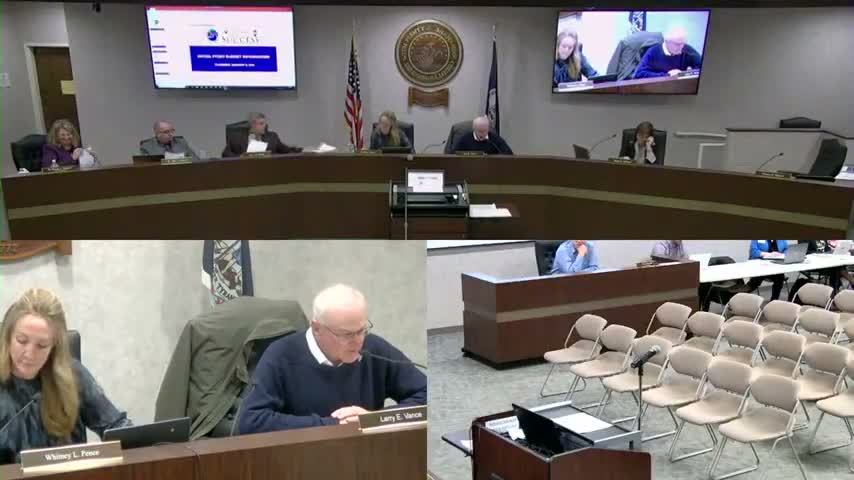
Summary
Superintendent and architects presented high-level options for a new elementary school (architect estimate ~ $45 million), renovation/expansion scenarios for three elementary schools and three CTE scenarios; CIP presenters flagged urgent HVAC, roofing and safety needs and a five-year plan that could raise capital requests significantly.
Superintendent Dr. Shepherd and staff presented conceptual cost estimates and scenarios for major capital projects during the Jan. 8 Shenandoah County School Board meeting, including a proposed new elementary school and several renovation or expansion options for existing elementary campuses.
"The architects have said that ... it's gonna be about $45,000,000," Dr. Shepherd said, summarizing the high-level estimate for a new 90,000-square-foot elementary that architects priced at roughly $400 per square foot. The presentation noted that a renovation/expansion of Sandy Hook Elementary was estimated in preliminary figures at roughly $15,085,000 (architects' mid-range estimate), with project ranges for renovation/expansion across elementary campuses running into the low- to mid-teens of millions each. Combined scenarios presented on the study slide placed totals for new-plus-renovations in a range near $59.5M to $81.5M depending on options and whether expansions were included.
The board also reviewed three Career and Technical Education (CTE) scenarios: renovation and expansion of the existing Triplett Tech (architect estimate ~ $38.6M including equipment), purchase/renovation of the Mount Jackson Press Building to host trades (~$23M purchase/renovation plus equipment) and a new central-county CTE facility (architect estimate ~$28.4M plus equipment budgets). Superintendent Shepherd and staff noted donations under discussion that could reduce net costs by several hundred thousand to several million dollars for certain scenarios.
Assistant Superintendent for Student Services and Operations Mister Hensley and Finance Director Miss Campbell then presented the Capital Improvement Plan (CIP) packet and described a prioritized five-year list of 75 projects culled from roughly 200 candidate items. Hensley highlighted urgent system-wide infrastructure needs, including HVAC replacements (engineers revised earlier estimates upward to roughly $4.35M per elementary school in some analyses), roofing, elevator replacement, ADA corrections, stadium/track safety work, and updates to aging electrical systems in CTE shops.
Hensley warned that some costs overlap and that redlined items in the CIP would be removed if a renovation or larger project proceeds, requiring careful sequencing and coordination with architects and contractors. Board members asked about phasing, where additional classrooms or playground relocations would fit, site topography constraints and the timing required to be "shovel ready" for state construction grants.
Next steps: architects will return to the board on Jan. 26 with further details and updated breakdowns; the board must decide priorities before the March 12 budget approval and continue discussions with the Board of Supervisors about capital funding.