
Senate committee weighs bill to legalize small plug-in solar units with safety and registry conditions
Get AI-powered insights, summaries, and transcripts
Subscribe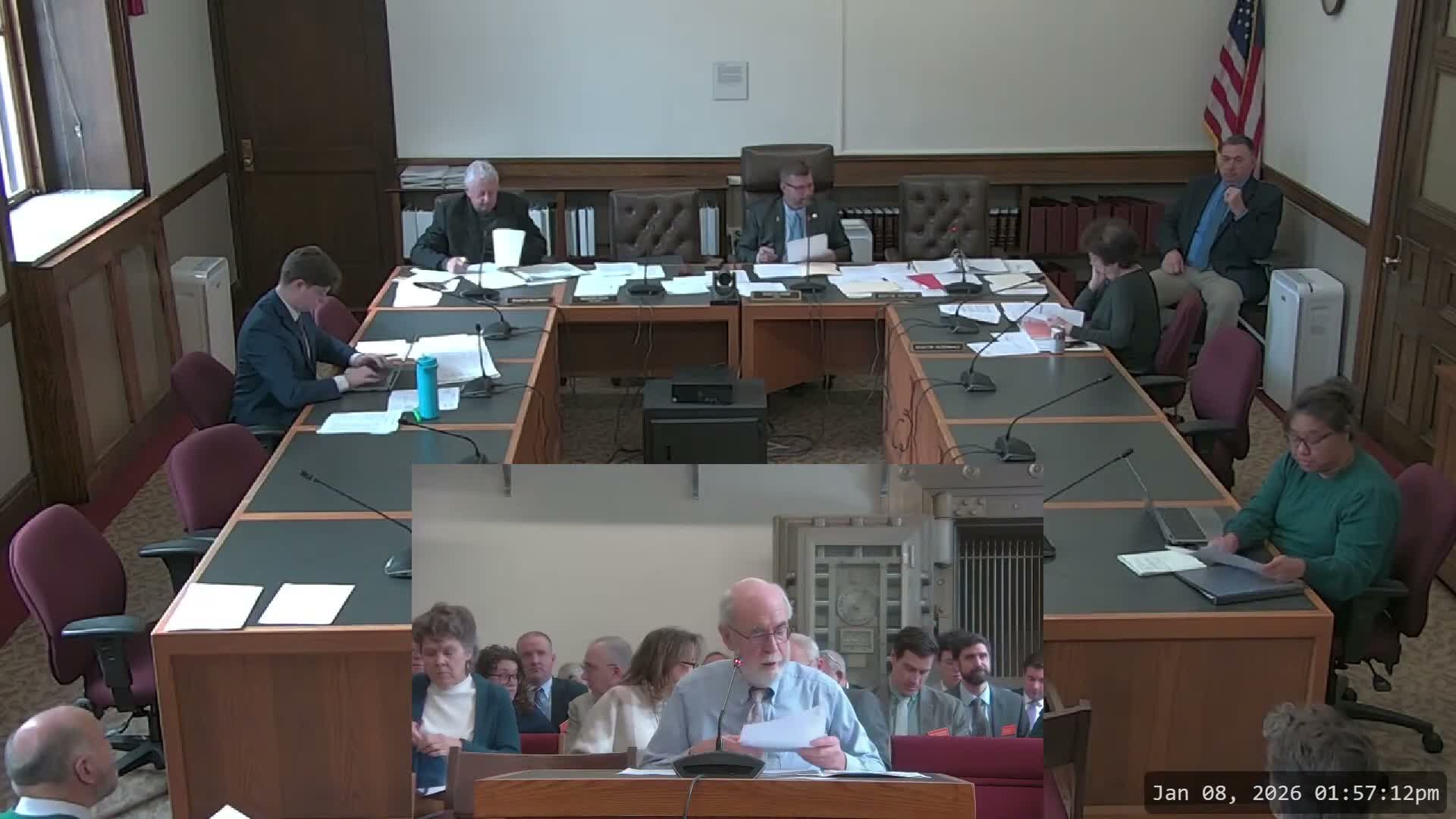
Summary
Senate Energy Committee heard extensive testimony on SB 540, which would allow portable plug-in solar devices (up to 800 watts), require safety standards and a 30-day registration, exempt them from net metering, and limit utility liability; witnesses urged technical edits around UL 3700, outlets, and aggregate device tracking.
Sen. David Waters introduced SB 540, a bill to define and enable small portable plug-in solar generation devices and to set safety and notification requirements for their use.
Supporters — including community-energy groups, conservation organizations and solar companies — told the committee the technology broadens access to behind-the-meter solar for renters, low-income households and small businesses, reduces bills, and can be safely deployed with appropriate standards and a short registration requirement. Dina Dennis of the Community Power Coalition said the bill ‘‘expands customer choice without mandates or subsidies’’ and urged modest technical refinements.
Sponsor’s proposal and rationale Sen. Waters said the amended bill (Amendment 17) reduces the maximum output to 800 watts, clarifies the devices are not net-metered generation, and adds a short registration/notification (30 days) so utilities can be aware of aggregated capacity on a circuit. He argued the change protects consumers and grids while avoiding burdensome interconnection rules.
Safety and code concerns Representatives of the Department of Energy, the State Building Code Review Board, and licensed electricians urged the committee to align statutory language with emerging technical standards. Philip Sherman of the Building Code Review Board said UL 3,700 (an Underwriters Laboratories investigation/standard under development) contemplates a unique plug arrangement that may conflict with the bill language permitting ordinary 110V outlets; he recommended more time for code coordination. DOE witnesses suggested referencing successor standards and the National Electric Code where appropriate.
Utilities and engineering issues Eversource and Unitil described engineering and metering challenges. Utilities asked for a registry to track devices and for consideration of aggregate caps at an address or transformer level so multiple small units cannot effectively circumvent interconnection rules. Alec O’Meara (Unitil) and Griffin Robersch (Eversource) said the proposed 800W cap helps but expressed concern about unknown numbers of devices per address and meter-read distinctions between registered rooftop systems and plug-in devices.
Installer and electrician testimony Licensed electricians and the Electrical Contractors Business Association flagged specific hazards: backfeeding GFI-protected outlets, cord and plug exposure during brief energization when unplugging, and the need to clarify whether the 800-watt cap applies to AC or DC ratings. They recommended clearer circuit/capacity language and explicit references to relevant UL/IEEE/NEC guidance.
Provisions the committee is considering Key policy elements discussed were the 800-watt maximum, an information-only 30-day registration for utilities, required compliance with current and successor safety standards (e.g., UL 3700 and relevant NEC provisions), exemption from net metering and interconnection requirements, and clear limits on utility liability.
What’s next Committee members urged stakeholders — utilities, the building-code board, DOE, industry, and installers — to reconcile technical conflicts before executive action. Sponsors agreed to continue drafting work to align the bill with UL and code processes.
Ending The committee closed the public hearing after broad stakeholder testimony and signaled it will work toward technical amendments prior to final executive consideration.