Glynn County holds third town hall on zoning rewrite as residents warn of added density and weaker tree protections
Loading...
Summary
County staff walked through the November draft zoning rewrite and related ordinance updates; residents and realtor groups praised outreach but warned that reductions in tree protections, smaller lot minimums and stricter penalties could harm neighborhoods and affordable housing options.
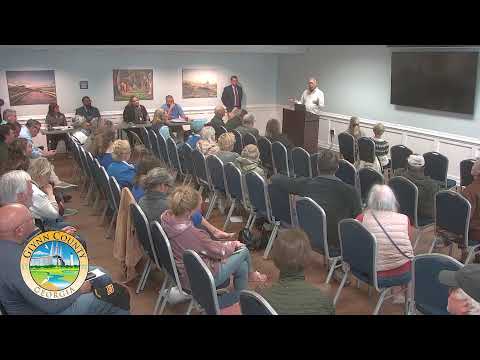
Glynn County officials on Monday held the third of four public town halls on a proposed comprehensive zoning rewrite, summarizing changes to lot sizes, site coverage, subdivision thresholds and other land‑use rules while an auditorium of residents and stakeholders urged caution.
County Manager Bill Allen and Planning Director Stephanie Lee told the audience the draft — based on a prior TSW study and a November 3 version posted to the county website — consolidates decades of code into a modernized ordinance. Lee listed proposed changes ranging from reclassified commercial districts and clarified planned‑development rules to updated parking standards and new wetland and marsh buffers.
The draft would allow smaller single‑family lots in higher‑density districts — staff cited potential 4,000‑square‑foot minimums in some higher‑density residential zones compared with the current 6,000‑square‑foot standard — and proposes a uniform site‑coverage approach with a 60% maximum for residential districts and 85% for commercial areas. It would also permit detached accessory dwelling units up to roughly 800 square feet under specified limits.
Residents and stakeholders pressed staff on multiple fronts. Miriam Lancaster, who participated on the county’s 2016 tree committee, said the rewrite weakens existing tree protections: “Section 6.24 requires planting and preservation of 12 trees per acre. Section 3.1 reduces that requirement to 8 trees per acre,” Lancaster said, and added that eliminating a prior 25% open‑soil requirement in favor of a 400‑square‑foot per‑tree rule effectively reduces open soil allocation to about 7.4% per acre. “These two changes result in a 70% reduction to the open soil requirement and a 33% reduction in the total number of trees,” she said.
Other contested elements included a proposed increase in the subdivision exemption threshold from 3 acres to 10 acres and a proposed rise in bond requirements from 100% to 150% of estimated cost for some subdivision work. One resident asked why the exemption threshold would jump so high; staff took note and said the concern would be returned to the zoning team for consideration.
Local realtor leaders asked for precise, enforceable definitions and transitional grace periods for existing structures. Lauren Zinski, the local Realtors Association executive director, requested clearly articulated technical standards and a reconsideration of severe penalties such as revocation of a certificate of occupancy, saying those consequences could trigger mortgage acceleration and utility interruptions for homeowners.
Staff said some changes are intended to streamline administrative reviews and to make expectations clearer for applicants. Officials also noted many items remain under discussion and that the November 3 draft remains the working version until the county posts an updated text. The county will accept written comments and QR‑code submissions, and the draft will return to a citizen workgroup and the planning commissions for further refinement.
What happens next: staff said comments from the four town halls will be compiled for the citizen zoning workgroup to consider; a subsequent schedule for planning commission and board hearings was not specified at the meeting.