Get Full Government Meeting Transcripts, Videos, & Alerts Forever!
Get email alerts on the Author Event topic
No spam. Unsubscribe anytime.
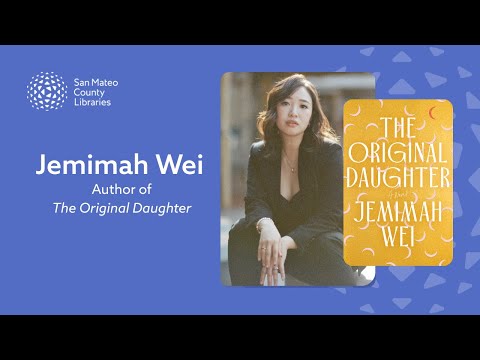
San Mateo County Libraries hosts author talk with Jemima Way on The Original Daughter
Summary
San Mateo County Libraries hosted an online conversation between library assistant Sam and debut novelist Jemima Way, who discussed The Original Daughter's working-class Singapore setting, a nine-year drafting process, research trips and the book's reception, including debuting at No. 1 on the Straits Times list.
San Mateo County Libraries hosted an online author event in which librarian Sam interviewed Jemima Way about her debut novel, The Original Daughter. The program included a short reading, a discussion of the novel's setting and themes, and an audience Q&A. The library also promoted upcoming author talks and how to place holds on the book.
Way described the novel as rooted in the experience of a working-class Singaporean family living in government housing, a form of housing she said houses ‘‘over 80% of Singaporeans.’’ She said she wanted to portray a side of Singapore that differs from global images of a gleaming, highly modern city-state. "We are smaller than the size of New York," she said, adding that Singapore's density shapes close-knit, sometimes suffocating, community bonds.
Sam read a short, non-spoiler passage early in the program that Way said "really does encapsulate" the characters' concerns about performing perfection for their neighborhood. Way said the novel's central questions examine what people owe each other in tight communities and "what kind of frictions those relationships can endure."
On craft, Way described a long revision history: she began writing the novel in 2014, worked in drafts for about nine years before securing representation, and said the full publication timeline extended roughly 11 years from first words to release. She described different working patterns across that span: drafting in spurts while freelancing early on, then treating writing as a full-time job while in the Bay Area and during residencies. "The minute I landed in the Bay Area, I treated it like a full time job," she said, describing a disciplined daily routine of reading and writing.
Way discussed narrative choices behind the book's structure. She said the manuscript shifted from third person to first person in later drafts so readers could inhabit the narrator Genevieve's perspective and better understand the narrator's blind spots. She described the book's layered story time: a present-day narrator in her late 20s reflecting on an eight-year-old version of herself to justify the narrator's choices.
To ground scenes in lived detail, Way said she conducted archival research in Singapore and took a research trip to New Zealand (she said the trip happened in late 2017 or early 2018) to map routes, neighborhoods and daily routines for scenes set there. She described observing children, asking parents about sibling dynamics, and, unconventionally, using therapy sessions as character study to test how real people might think and respond.
Way also reviewed the book's reception and launch: she said it debuted at No. 1 on the Straits Times bestseller list and that readers from Singapore and elsewhere have written to say the book reflected their own childhood experiences. She described family and friends' support during the launch and said many people came to events, creating a celebratory atmosphere.
Sam closed the event by thanking Way and the online audience, reminding listeners that copies are available for hold or checkout through San Mateo County Libraries and promoting upcoming author talks at local branches.
Note on names in the transcript: the program introduced the guest as "Jemima Way," and the transcript includes alternate renderings of the author's name in a few places. This article attributes quotes and claims to the names as they appear in the event recording and program materials.