
Appeals court hears challenge to denial of manslaughter instruction in De La Rosa case
Get AI-powered insights, summaries, and transcripts
Subscribe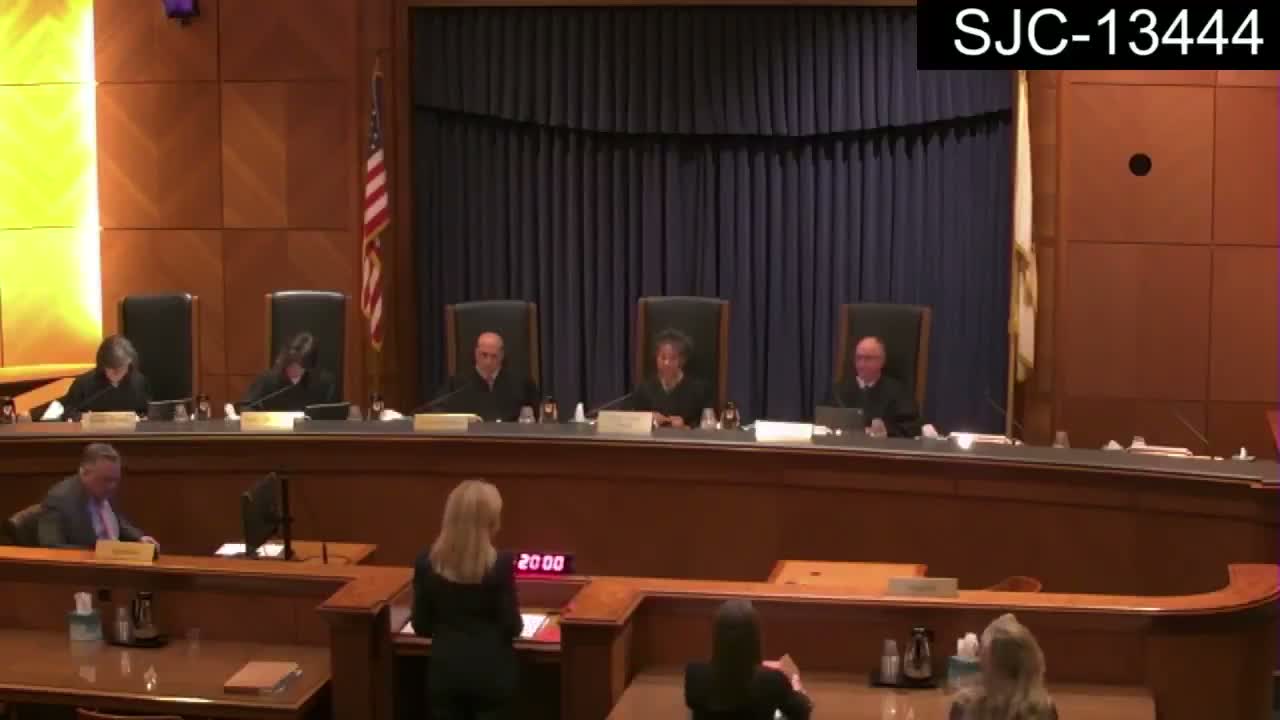
Summary
At oral argument in SJC-13444, defense counsel said a trial judge's initial refusal to give a voluntary manslaughter instruction forced Emilio De La Rosa to testify and harmed his defense; the Commonwealth countered that prior knowledge of paternity questions and a cooling-off period defeat that claim.
The Massachusetts Supreme Judicial Court heard oral argument in SJC-13444 over whether a trial judge's initial refusal to give a voluntary manslaughter instruction was reversible error because it compelled defendant Emilio De La Rosa to testify.
Attorney Michelle Menken, arguing for De La Rosa, told the court that the trial judge's initial denial of a manslaughter instruction "forced the defendant to testify where he otherwise wouldn't have" and that "that testimony ended up harming his defense more than helping." Menken said the relevant evidence at the time of the request was ambiguous about timing but argued the provocation was the immediate confrontation about an inflammatory letter, not merely the discovery of the letter itself.
"The character of the letter that he had found is an important backdrop," Menken said, adding that third-party observations and the defendant's own police statement (in which he said the victim "snapped") could reasonably be read to support a manslaughter instruction. She acknowledged there is no precedent exactly on point but asked the court to view the record in the light most favorable to the defendant and to find prejudice from the sequence of rulings.
Marina Moriarty, for the Commonwealth, acknowledged a citation error in her brief but argued Andrade and other precedents do not require the court to reverse. Moriarty said three features of the record justified the trial judge's decision: the parties'on-again, off-again relationship with a history of domestic violence; longstanding ambiguity about the paternity of the child Ethan; and that the defendant had sufficient time to cool off after reading the letter. "He talks about what he lost," Moriarty said, noting the defendant described monetary and other grievances in post-arrest statements.
Justices pressed both sides on timing and memory. One justice asked how the defense addressed the delay between receipt of the information and the homicide; Menken responded that the final confrontation was the operative provocation. Another justice questioned whether, if the provocation had been so intense, the defendant would have remembered the victim's exact words; Menken said the jury could reasonably infer the content from the surrounding evidence.
On the question of prejudice, the court debated whether the judge's initial ruling effectively coerced testimony in a way that implicates the Fifth Amendment or otherwise produced material harm to the defense. Moriarty argued the record shows deliberation and anger tied to prior events, including four years the defendant spent in prison for abusing the victim, and that the killing more closely resembles intentional violence than an uncontrollable impulse.
Counsel for both sides concluded argument and offered to supply or rest on briefs and citations. The court reserved decision.
The appeal will be decided on the briefing and the argument presented; the justices did not indicate a timetable for issuing their ruling.