
State supreme court hears appeal in Van Dorsey murder conviction over PTSD inquiry and premeditation evidence
Get AI-powered insights, summaries, and transcripts
Subscribe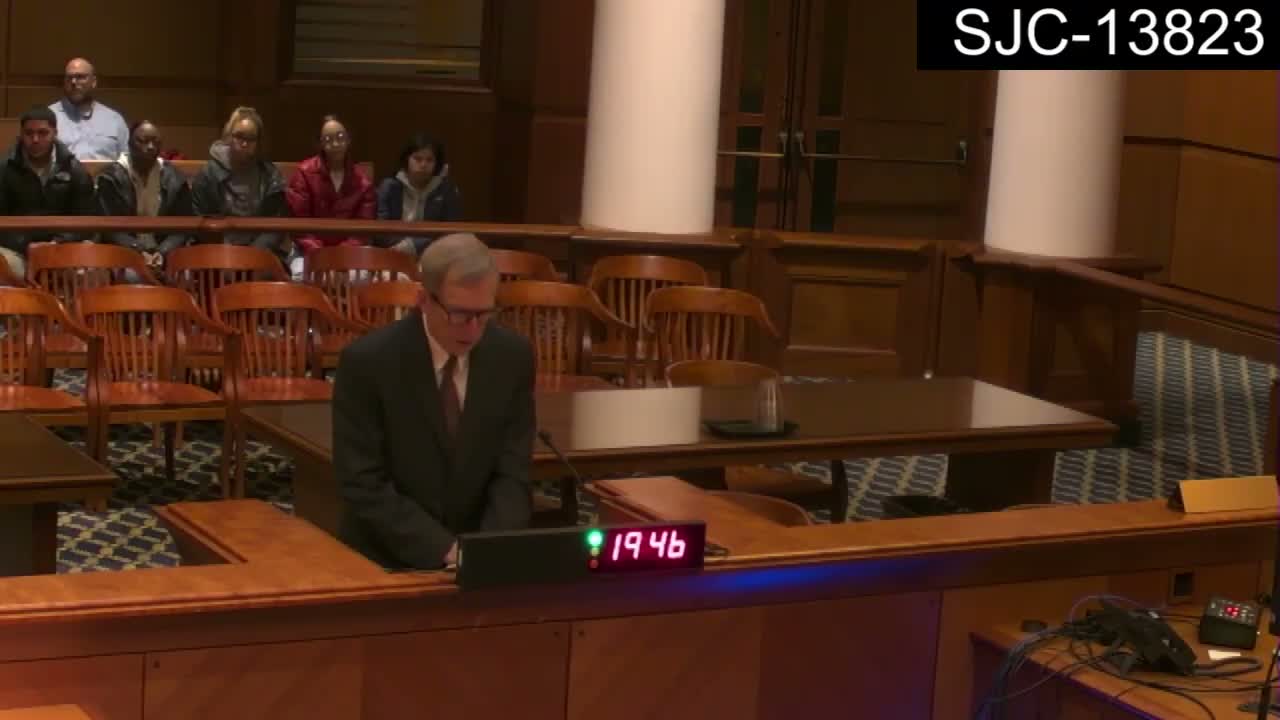
Summary
At oral argument in Commonwealth v. Van Dorsey Jr., defense counsel argued trial counsel improperly ended an investigation into post‑traumatic stress disorder (PTSD), depriving the defendant of a viable mental‑state defense; the Commonwealth said the affidavit is insufficient to meet the defendant's burden. The justices probed expert reports, forensic details and whether the record supports premeditation.
Boston — The state supreme court heard oral argument in Commonwealth v. Van Dorsey Jr., during which defense attorney Edward Gaffney told the justices that trial counsel had an expert available but "prematurely" ended the investigation into whether Van Dorsey suffered from post‑traumatic stress disorder (PTSD) at the time of the stabbing.
Gaffney argued that trial counsel "had an expert" and then, based on limited inquiry, concluded PTSD was unavailable as a defense. "He asked the expert to look into PTSD, and she reported back what she reported back," Gaffney told the court, pressing that counsel failed to send the expert back for a fuller evaluation and so deprived the jury of scientific evidence that might have undercut the Commonwealth's theory of premeditation.
The question before the court, as framed in argument, is twofold: whether counsel's investigation was constitutionally inadequate under ineffective‑assistance standards, and, if so, whether the omission created a substantial likelihood of a different result. The defense emphasizes gaps in the trial record and the defense affidavit describing a limited assessment; the Commonwealth counters that the affidavit is cryptic and that the defendant bears the burden of showing a better inquiry would have changed the outcome.
"I think because the affidavit is insufficient, I think the defendant just doesn't meet his burden," said David Shepherd Brook, arguing for the Commonwealth, who pointed to the absence of an affidavit from the mental‑health evaluator identified in the record (Dr. Tammy Jones) and to earlier expert evaluations that weighed against a PTSD‑based account.
Justices pressed both sides on particulars. One justice summarized the defense theory to date: "So he gets an expert. The expert evaluates your client. Right?" Defense counsel responded that, according to trial counsel's affidavit, the expert merely asked whether the defendant had ever been treated or diagnosed for PTSD and that the investigation stopped there. The court repeatedly queried whether the record contains additional factual material from the evaluator whose actions are summarized only in counsel's affidavit.
Counsel debated how these evidentiary questions intersect with other trial themes: the defense's diminished‑capacity/excessive‑self‑defense theory tied to intoxication on PCP, alleged defensive wounds, and the lack of an obvious motive. Gaffney stressed that premeditation evidence was "thin" — he said the primary showing cited by the Commonwealth was that the knife used had been taken from the kitchen — and argued that credible PTSD or defensive‑wound evidence might have swayed even one juror, avoiding the unanimity required for first‑degree murder.
The Commonwealth responded with a detailed account of the crime scene and the defendant's post‑arrest behavior, citing cast‑off blood spatter suggesting the victim was fleeing the apartment, multiple stab wounds, and the defendant's alleged conduct in taking the victim's phone. Shepherd told the court multiple doctors characterized the defendant as exaggerating or malingering, and he argued those facts support the jury's original verdict and undercut a PTSD theory's likely effect.
Both sides and the justices also discussed the admissibility and weight of prior‑incident evidence the defense seeks to present to show a history of violence by the victim — material the defense described as more than "pushing and shoving" and the Commonwealth characterized as largely uncorroborated by police reports or witnesses.
On forensic specifics, counsel and a justice confirmed facts in the record: multiple stab wounds (counsel referenced six), defensive scratches and abrasions, a fatal neck wound, and blood‑spatter patterns. Those details were central to the court's analysis about whether the facts show a deliberate, premeditated killing or a different degree of homicide.
At the close of argument, the Commonwealth's attorney said he would "rest on his brief." The transcript of the argument contains no ruling from the bench; the justices heard extensive questioning on both the adequacy of the PTSD inquiry and the sufficiency of circumstantial evidence supporting premeditation.
The court's decision will turn on how it interprets the trial‑record affidavits and whether it finds the defendant met the legal standard for relief on an ineffective‑assistance claim or for reducing the degree of conviction.