
Officials warn of continued avalanche risk; DOT reports multiple avalanches near Thane Road
Get AI-powered insights, summaries, and transcripts
Subscribe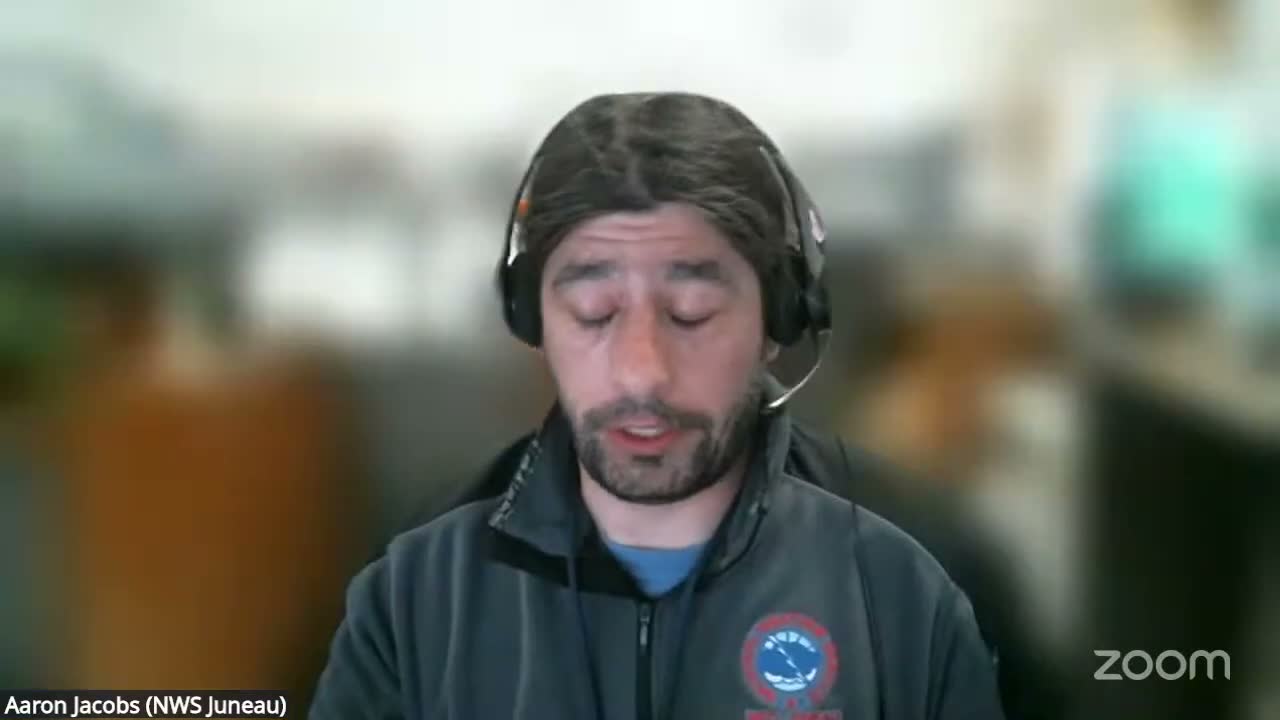
Summary
National Weather Service and local avalanche experts said hazard remains high as freezing levels rose and rain returns; DOT's infrasound system detected 8–10 events near Thane Road and agencies plan drone reconnaissance and LIDAR to assess slide paths before reopening roads.
Juneau officials and the National Weather Service said the region remains at elevated avalanche risk as a warm atmospheric river raised freezing levels above 3,000 feet and produced heavy runoff, and local monitoring systems have already recorded multiple releases.
Aaron Jacobs of the National Weather Service said the region saw roughly "1 to 2 inches" of liquid-equivalent precipitation in the last 36 hours and that freezing levels rose rapidly, producing runoff that contributed to avalanches and clogged drains. "The amount of snowpack that we are seeing in the ground ... really hasn't been seen in the climate records," Jacobs said, and forecasters are watching another system expected Tuesday–Wednesday.
CBJ avalanche adviser John Brissett said overnight activity was limited during a brief lull but warned the hazard will "ramp back up today as rain comes back in and freezing levels rise again," and that officials do not feel comfortable returning people to homes beneath slide paths until reassessment.
Pat Dreyer of the Alaska Department of Transportation and Public Facilities said DOT's infrasound detection system along Thane Road recorded "between 8 and 10 unique avalanche events" since the road closed Jan. 9. Pat Dreyer added that DOT observed several large avalanches and debris near the roadway and that drone reconnaissance in partnership with CBJ will be used to assess conditions before changing the closure status.
DOT and CBJ described monitoring approaches: DOT's infrasound and infrared detection systems, visual inspections, drone reconnaissance and potential LIDAR or helicopter reconnaissance when weather allows. CBJ said it is working to acquire similar infrared detection assets and is relying on visual and drone assessments while staging equipment and resources to respond.
On road safety, Marcus Zimmerman (DOT) said crews are using sand for traction where water sits on ice and will use brine or granular salt depending on conditions; he confirmed Thane Road and the end of Glacier Highway are closed and that operators are addressing localized ponding and clearing drainage where possible. Vicky Roberts (Alaska DOT) advised drivers to check 511 Alaska for current road conditions.
Officials said they will share reconnaissance results as they become available and that reopening roads depends on hazard assessments and reconnaissance details.