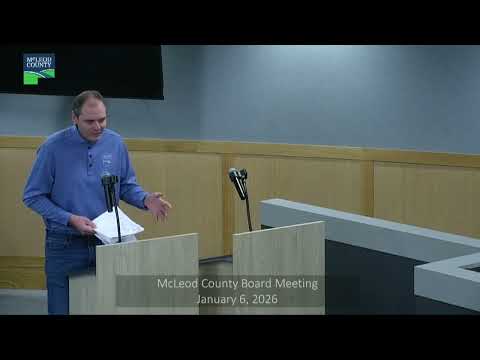
McLeod County approves HHS MOU for Family First grant application and adds two social‑services positions
Loading...
Summary
The McLeod County Board authorized an MOU enabling Safe Generations Counseling LLC to apply as fiscal host for a DHS Family First Prevention Services Act grant and voted to add a social worker and an eligibility worker to HHS after staff described rising caseloads and increased state oversight. Both personnel additions passed 3–1.
The McLeod County Board of Commissioners on Jan. 6 authorized a memorandum of understanding that allows Safe Generations Counseling LLC to apply on behalf of an 18‑county southwest Minnesota consortium for a Family First Prevention Services Act grant administered by the Minnesota Department of Human Services.
HHS Director Barrett told the board there is a DHS grant pool of $10,000,000 and that the consortium hopes McLeod County’s share would be about $800,000 if the application were awarded. Barrett said the MOU does not obligate county funds now and that McLeod County can withdraw with 30 days’ written notice. "We are not giving them any money. We are not obligated to anything," Barrett said during the presentation.
Why it matters: the MOU would let the county access regional training and technical assistance for child‑welfare prevention if Safe Generations is selected as fiscal host. The agreement commits the county only to participation in the application and clarifies that any awarded funds and program participation are subject to future approval.
The board also considered staffing requests from HHS to address rising workloads. Barrett described adult‑protection caseloads that staff say have grown: two current APS investigators together had roughly 80 open cases that had not yet been closed. Barrett said case intake has increased and that some responsibilities previously handled by regional programs shifted to county staff.
After extended discussion about budget risk and state funding volatility, the board approved two positions included in the 2026 budget: a social‑worker position focused on adult protection (moved from a previously proposed developmental‑disability assignment) and an eligibility worker to strengthen fraud‑protection and eligibility review processes. The votes for both positions were recorded as 3–1 in favor.
Board discussion emphasized checks and balances and operational need. One commissioner said the positions had been reviewed in budget and personnel committees and that additional oversight mechanisms — including state reimbursement reporting and fraud investigations — already exist.
What happens next: HHS will implement hiring steps consistent with personnel rules; if the regional grant is awarded the county can decide whether to accept funds and participate. Barrett committed to returning with updates and to notify the board about how any awarded grant funds would be allocated.