
JFO: Changing universal pre-K funding weight could shift family incentives and strain related programs
Get AI-powered insights, summaries, and transcripts
Subscribe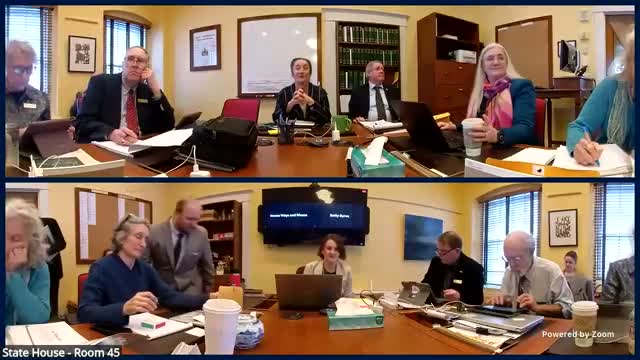
Summary
The Joint Fiscal Office told the Ways & Means committee that modifying the statutory weight for universal pre-K (UPK) may change how families use Child Care Financial Assistance Program (CCFAP) subsidies and could affect Head Start matching funds; JFO said data gaps prevent precise measurement and the report is not yet final.
Emily Byrne of the Joint Fiscal Office told the Ways & Means committee the office’s preliminary analysis shows that altering the statutory weight for publicly funded universal pre-kindergarten (UPK) could change families’ subsidy calculations and have knock-on effects for district budgets and federal Head Start matching funds.
"Now we don't actually know. There's no specific data on whether or not those choices are being made by individual families," Byrne said, describing the JFO work as an "academic exercise" that identifies plausible incentives rather than proving widespread behavioral change. She told the committee the report is largely complete but not finalized.
Why it matters: UPK and the Child Care Financial Assistance Program interact in ways that can move families between subsidy "buckets." Byrne explained that DCF reduces a family's CCFAP-eligible hours by 10 when a child receives the UPK 10-hour weekly tuition, which can drop some families from the full-time to the part-time subsidy tier and increase out-of-pocket costs. "There are data gaps in this space," she said, noting districts and state counts use different reference dates and do not consistently record whether UPK slots are served in public schools or by private providers.
Numbers cited: Byrne gave specific examples drawn from agency guidance and market surveys. She said the state’s UPK tuition payment for the 2025–26 school year is "almost $4,000." Citing DCF’s 2024 market-rate survey, she said the median preschool tuition on the licensed center market is about $325 per week while the state CCFAP preschool rate is $439 per week. Byrne also noted a DCF example where a family-share at a higher income tier would be $425 per week (about $22,000 annually).
Program interactions and risks: Because Head Start grantees must provide local non-federal matching funds to draw down federal dollars, Byrne warned that programs using UPK and CCFAP revenue as part of that local match could face changes if UPK or CCFAP rules shift. "Head Start programs are an important part of the community," she said, recommending that any legislative changes consider federal matching implications.
Limits and next steps: JFO emphasized the limits of its analysis. "We are not here to provide judgment on the success of the programs," Byrne said, adding that the office focused chiefly on fiscal mechanics and not child- or provider-level outcomes. She recommended that the committee invite DCF, the Agency of Education and program operators for follow-up hearings. Byrne said JFO expects to finalize the report soon and return to discuss incentives for school districts and private providers.
The committee did not take action during this session; JFO will deliver the completed report and further briefings to inform statutory weight decisions.