
AOT: Monetizing telecom in highway rights of way unlikely to cover costs, study finds
Get AI-powered insights, summaries, and transcripts
Subscribe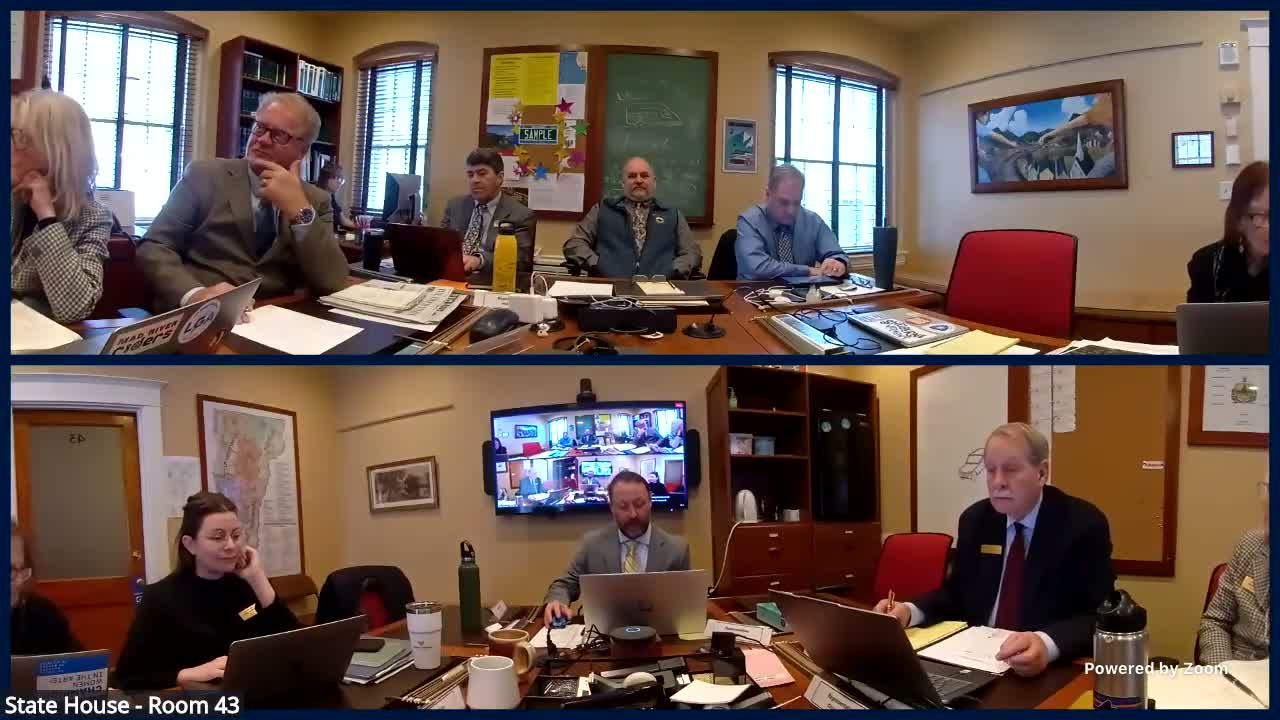
Summary
Agency of Transportation staff told a legislative committee that gaps in telecom mapping, legal limits and likely administrative costs make monetizing telecom use of state highway rights of way an uncertain and probably inefficient revenue source.
Jeremy Reed, chief engineer for the Agency of Transportation, told the House Transportation Committee on Jan. 8 that a 2024-mandated study of telecommunications in state highway rights of way found significant data, legal and administrative barriers to reliably raising revenue.
The study, Reed said, focused on telecommunications assets in the right of way and compared two common approaches used nationally: barter arrangements that secure infrastructure improvements, and direct revenue-generation schemes such as leases or per-foot fees. "One of the common themes, though, is it's unclear with the second approach whether or not the revenue generated actually offsets the cost it takes to administer the program," Reed said.
Why it matters: state transportation agencies are seeking new revenue streams amid tight budgets. Reed and the consultant team examined statewide data sources — including 2024 broadband-status, fiber-status and cable-route filings — and interviewed officials in 10 states, but found communications-infrastructure records are far less complete and spatially precise than records for electric utilities or fixed tower sites.
Key findings from the study included that telecom reporting is inconsistent (broadband is reported by address while fiber and cable routes are reported at road centerlines), buried or underground assets are difficult to locate without intrusive work, and small spatial errors (a foot or two) can change whether a line falls inside a state-owned right of way. Reed said those measurement problems would force any monetization program to invest in geospatial (GIS) inventory work before a fee regime could be applied.
Reed also emphasized statutory and policy tensions. While some state law language contemplates recovering costs for right-of-way use, other provisions direct the state not to impede broadband expansion. "At this point, we are not trying to monetize telecommunications in the right of way," Reed said, citing a long-standing policy preference dating back through multiple administrations.
The national comparison showed most states that monetize telecom do so on interstates and limited-access freeways, not on the broader network of state routes. Reed said Utah was an exception among the states the consultant reviewed, and he cited Iowa as an example where monetized funds were directed to an environmental trust rather than general transportation coffers.
Legislators pressed practical questions about permitting and fees. Committee members asked whether existing permitting (referred to in the hearing as the "11:11 permit") and project-level work would capture asset locations; Reed said permitting fees likely apply to many work types but that provider-reported datasets are self-reported and not currently sufficient to enforce an accuracy standard.
On the equity and economic effect, Reed warned that a per-foot or mileage fee could be regressive: rural hookups would face higher per-connection charges and providers might slow builds or pass costs to customers. He offered two hypothetical fee frameworks discussed in other states — long-term leases (20–30 years) or permanent per-foot fees — and said either would require defensible market justification, not arbitrary charges.
The committee received the study as an assessment rather than a recommendation. "At this point, the report wasn't asked to make any recommendations," Reed said, and he concluded the agency would likely not prioritize building a monetization program now given uncertain returns, required staff and GIS investment, and potential legal and broadband-expansion conflicts.
Representative Lachlan, who asked several questions during the briefing, urged continued exploration. "I would really encourage more of this exploration, and I hope my colleagues will be supportive of that too," Lachlan said, emphasizing interest in finding value in publicly owned rights of way while protecting broadband expansion.
Next steps: the report is available to committee members and AOT staff said further work would be project- and policy-driven rather than an immediate revenue program. No motions or formal actions were taken during the meeting.