Get Full Government Meeting Transcripts, Videos, & Alerts Forever!
Get email alerts on the Dual Language Immersion topic
No spam. Unsubscribe anytime.
Weber School District presents DLI study, proposes 30-student cap at Bates and possible Chinese DLI boundary study
Summary
District staff summarized a year-long review of special programs and recommended a 30-student first-grade cap at Bates to reduce staffing overages, moving DLI under Student Access & Opportunity and asking the board to consider a future boundary/closure study for Chinese DLI; parents urged transparency and raised equity concerns over class-size disparities.
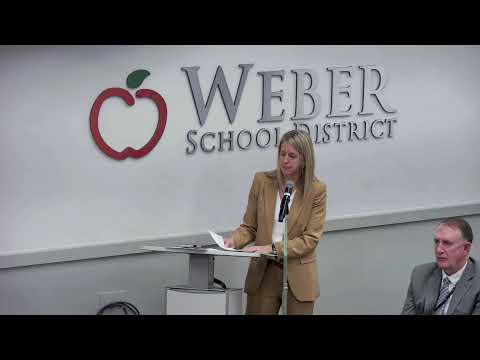
District staff presented the findings of a year-long study of special programs, including dual language immersion (DLI), gifted and talented, STEM and arts, and proposed procedural changes to how programs are added or removed.
Dr. Baccarini and Jamie Ellis told the board the review collected 1,641 completed surveys, summarized academic and fiscal data, and recommended moving DLI formally under Student Access and Opportunity to centralize support. The presenters said visa costs for DLI teachers typically run about $7,000 per teacher and noted uncertainty around new H‑1B rules. They described class‑size targets and staffing tradeoffs on DLI versus traditional tracks and provided three-year AP exam pass-rate averages: for Chinese-language AP courses they reported 39.3% (compared with a cited Utah figure of 52.8%).
Jamie Ellis said the credit committee recommended capping first-grade enrollment at Bates at 30 for the 2026 school year to address FTE overage by reducing two sections to one. Ellis described the cap as an administrative action that “doesn’t require any board action” but asked the board to consider a boundary/closure study for Chinese DLI in the near future, citing state funding costs, visa and curriculum expenses, declining enrollment in some sites and lower language outcome measures.
Parents speaking during public comment offered a mix of support for the DLI program and sharp concerns about equity and classroom balance. Camilla Harper (Uinta Elementary parent) said, “The Chinese immersion program is the main reason why I send my kids to public school in Weber County.” In contrast, several parents and former teachers described a widening gap between small DLI classes and large traditional classes. Quincy Bischoff, a former first-grade teacher, said one fifth-grade classroom had been scheduled with 35 students while a nearby DLI class had roughly 18, calling the disparity “insane.” Tenille Begman told the board the imbalance is an equity issue: “Traditional classes are overcrowded, leaving teachers overwhelmed and students, especially those who need more individualized support, at a disadvantage.”
Several parents questioned the study methods and metrics. Dustin asked whether the district was measuring the right outcomes and criticized relying on AP exam pass rates to judge language programming, saying the AP is an imperfect proxy for language acquisition. Julia Stevens urged more support for teachers to avoid “teaching to the test” and asked for better continuity of instructional supports into junior high and high school.
District staff outlined next steps: implement the 30-student cap at Bates for first grade (no board action required), continue collecting forecasting data and vendor support to inform longer-range boundary or closure decisions, and, if warranted by the forecasting study, present a formal boundary/closure study for board consideration.
The presentation and the public comment period did not produce a binding board vote on program closure or boundaries; the only immediate administrative change staff said they would enact was the Bates first-grade cap.