
Parents urge Wayzata board to limit iPad use, seek data on instructional screen time
Get AI-powered insights, summaries, and transcripts
Subscribe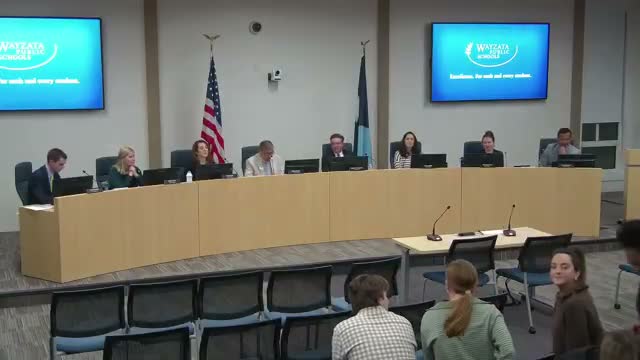
Summary
Parents at the Jan. 12 meeting argued district iPad use has become pervasive and asked the board to reintegrate print materials, create opt-outs, restrict device use during transitions and request data on instructional and homework screen time by grade.
Multiple parents used the audience opportunity at the Wayzata Public Schools board meeting on Jan. 12 to raise concerns about pervasive iPad use in classrooms and homework.
Sarah Olsen, a parent and district teacher, said iPads have shifted from supplemental tools to replacements for textbooks and paper work, and asked the district to: reintegrate physical textbooks and paper‑and‑pencil activities; provide family opt-out pathways so devices remain at school for students whose families prefer a screen‑free home environment; and implement a policy limiting iPad use during choice time and transitions. "IPads should be used intentionally, not as a default learning tool," she said.
Jenny Sorensen, a parent with children in Greenwood Elementary and West Middle School, described a sixth grader spending roughly three to four hours a day on an iPad between classroom work and homework. Sorensen asked the board to request district data on instructional and homework screen time by grade and to study how screen time aligns with learning outcomes, particularly reading.
Julie Peterson echoed those concerns and urged other parents with similar views to signal support during public comment. Board members acknowledged the concerns, encouraged families to complete superintendent‑search and district surveys, and noted administration would review possible policy or practice changes.
Speakers framed their requests as calls for balance and intentional use of technology rather than wholesale removal of devices; they cited research concerns about reading comprehension on screens and described observed drops in reading stamina for some students.