Unidentified speaker opposes H.R. 2270, says bill would reduce overtime pay by excluding employer-provided care
Loading...
Summary
An unidentified speaker opposed H.R. 2270, the Empowering Employer Child and Elder Care Solutions Act, arguing it would exclude employer-provided child and elder care from the regular rate used to calculate overtime under the Fair Labor Standards Act—reducing pay for workers who already receive such benefits and offering no guarantee of expanded care.
Speaker 1, an unidentified speaker, rose to oppose H.R. 2270, the Empowering Employer Child and Elder Care Solutions Act, arguing the bill would lower some workers' overtime pay without expanding access to child or elder care.
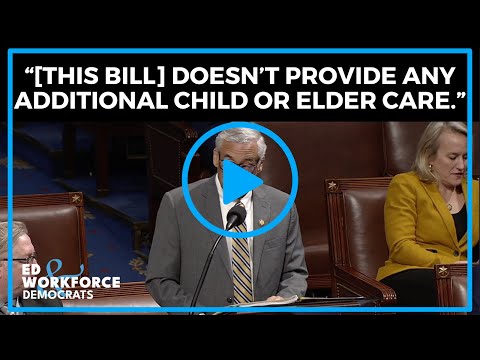
The speaker said the measure would amend the Fair Labor Standards Act to exclude the value of employer-provided child or dependent care from the “regular rate” used to calculate overtime. Under existing law, the speaker explained, hourly workers receive time-and-a-half for hours worked over 40 in a week, and the regular rate includes cash pay and certain non-wage compensation. “It doesn't provide any additional child, elder care,” the speaker said, describing the bill as a technical change that "does not require employers to provide any child or elder care."
The speaker argued the change would have concrete effects on pay. “Workers who already receive these benefits will see their overtime pay reduced,” the speaker said, and added the bill would effectively lower the cost of overtime for employers who offer such benefits. The speaker contended there is no evidence that workers who do not now receive employer-provided care are likely to gain it under the bill, and said the only group certain to be affected are those who already have the benefit.
The speaker also framed behavioral incentives: by reducing overtime costs for employers, the bill could encourage keeping workers on the job longer rather than expanding access to affordable care, the speaker said, adding that the proposal could increase time away from families "while offering no assurance that any support for childcare will be provided."
The floor statement closed with an explicit request to oppose the legislation. The speaker reserved the balance of their time.
Background: The Fair Labor Standards Act governs federal overtime requirements; H.R. 2270 is titled the Empowering Employer Child and Elder Care Solutions Act. The speaker framed the dispute as a choice between preserving current overtime-calculation rules that include some employer-provided benefits and adopting a statutory exclusion that would lower overtime costs for employers who offer dependent-care benefits.