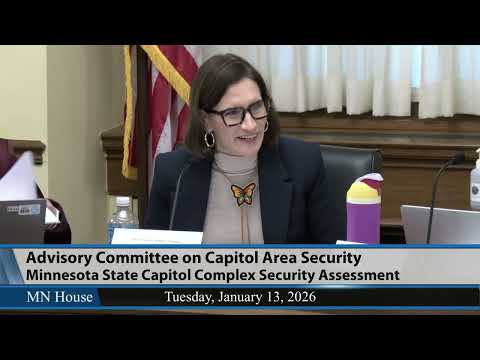
Advisory committee approves ACAS security recommendations; weapon screening prompts split
Loading...
Summary
The Advisory Committee on the State Capitol Area Security approved a slate of high-level security recommendations from an Axtell Group assessment — including access control, credential oversight, perimeter and staffing improvements — and directed agencies to finalize a report for submission to the legislature. Weapon-screening drew debate and some dissent during votes.
The Advisory Committee on the State Capitol Area Security voted to include a package of high-level security recommendations from an external assessment in its final ACAS report and directed the Department of Public Safety and Department of Administration to finalize and submit the report to the legislature, judicial branch and governor by Jan. 15, 2026.
The committee approved recommendations covering access control and visitor management, credential oversight, internal circulation and zoning controls, perimeter and exterior-grounds work, staffing models and post orders, technology and systems integration, emergency preparedness and protective intelligence. Chair Flanagan moved each recommendation and the committee recorded roll-call votes; most motions passed with recorded unanimous ayes. The package is based on findings from the Axtell Group security assessment, which the committee placed in the public executive summary.
Why it matters: committee approval creates formal recommendations that DPS and Administration can include in a final report and that may lead to legislative or budget requests to fund implementation. Kerry Suki, director of the Administration Facilities Management Division, told the committee that past appropriations include $2,000,000 in general obligation bonds last session and total physical-security funding of about $22,900,000 over the past eight years; the administration requested $41,008,000 to cover remaining enhancements in phase three of the work.
The report and the committee’s votes emphasize a mix of physical upgrades and operational changes. Lieutenant Colonel Geiger (DPS) summarized the Capital Complex as 16 buildings on 140 acres with staffing roles across capital security officers and state troopers; he also said State Patrol staffing vacancies on the Complex have fallen from 38 in 2024 to 17 in 2025. The committee recommended adopting rules for trauma-informed safety drills, establishing reporting protocols for threats and designating the Minnesota State Patrol Capital Security Division as the primary investigative authority for potential criminal activity on the Capitol grounds.
On weapon screening: the committee discussed weapon screening at length and members described it as a top recommendation from the external assessment. A department presenter summarized the report’s assessment that "the 1 thing that if it was available to do would be weapon screening within the state capital." Some members urged it as the "biggest bang for our buck" to improve safety. But the record shows dissent when that specific screening item came up for vote: some members voted against the screening item while supporting other recommendations. Representative Mueller criticized the lack of support for weapon screening and said funding uncertainty did not explain the split, urging colleagues to back screening as bills come before the legislature. Representative Nash said he voiced support for the bulk of the package but expressed reticence on the funding picture for the screening item.
Public testimony: two members of the public spoke during the committee’s public-comment period. Lexi Anderson, a Students Demand Action volunteer, urged the committee to ensure the Capitol is a place where people "feel safe to show up, speak out, and participate in democracy" and said "banning guns from Capitol grounds should also be part of the safety plan." Rick Heller, speaking about accessibility and security observations, offered to provide additional details offline and raised concerns about report accessibility and third-party vendor vulnerabilities.
Next steps: the committee’s motion that DPS and Administration finalize the ACAS report passed and the agencies were directed to submit it to the legislature, judicial branch and governor by Jan. 15, 2026. Implementation and funding will require follow-up by the agencies and eventual legislative appropriations before many recommended physical changes can proceed.