
Agriculture department highlights wine grapes, timber and compliance programs; warns of water and labor pressures
Get AI-powered insights, summaries, and transcripts
Subscribe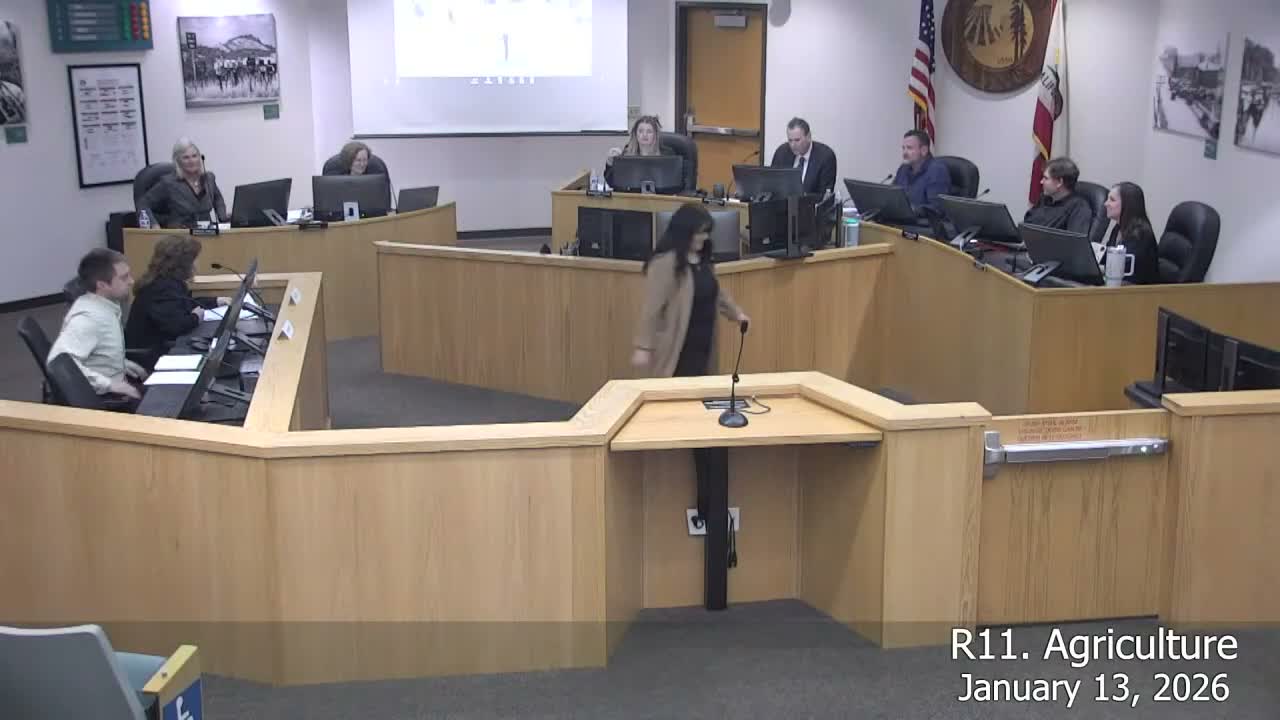
Summary
The agricultural commissioner told supervisors Mendocino’s agricultural production (including wine grapes and timber) remains a major local economic engine. Staff outlined pest detection work, pesticide enforcement, certified farmers’ markets and weights & measures responsibilities and flagged water reliability and labor costs as ongoing threats.
Agriculture officials told the board that Mendocino County’s farm and timber economy remains a major local employer and economic engine, but that rising costs, water uncertainty and regulatory complexity are persistent challenges.
Commissioner Angela Godwin outlined the county’s crop mix and economic profile: wine grapes remain the largest commodity, followed by timber and pears, and the county supports a significant nursery sector and regulated cannabis cultivation. She emphasized the county’s strength in organic viticulture and described programs that protect agriculture: more than 1,000 pest traps for early detection, pesticide use enforcement and organic certification oversight.
Weights & Measures staff described responsibilities ranging from scanning and price verification to testing commercial scales, gas pumps and EV chargers — functions that protect consumers and businesses. Pesticide program staff said worker health and environmental protection are priorities and noted limited staffing reduces inspection capacity.
Concerns raised: Officials emphasized water reliability (including Potter Valley project impacts), volatility in commodity markets and rising labor costs. Staff asked the board to support investments in program capacity and interagency coordination to preserve agriculture and protect markets.
Next steps: Agriculture staff will continue outreach, pest surveillance and regulatory work and asked supervisors for continued support to maintain program staffing and equipment.