Iroquois County panel deems large solar applications complete despite public opposition
Loading...
Summary
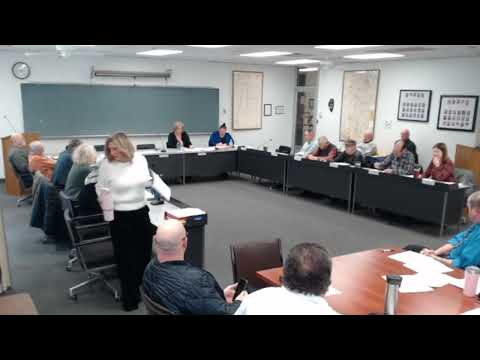
The Planning & Zoning committee voted to deem multiple large solar applications complete and send them to public hearings after residents raised farmland, habitat and tax-base concerns and committee members flagged legal limits imposed by a recent state law.
The Iroquois County Planning & Zoning committee on Jan. 6 moved two large solar development applications forward to Zoning Board of Appeals public hearings despite vocal opposition from local residents worried about farmland loss and environmental impacts. Committee members voted to deem the US Solar Venus application and the Moda Satriales application complete and ready for public hearings; a separate motion on another application failed on a roll call.
The decision comes after several residents told the committee the projects would harm productive farmland, disrupt habitat and reduce the county tax base. One public commenter said the board “will be remembered as the 1 who sold out the future of your court accounting for corporate reasons.” Todd Chase, a local resident, urged the committee to include explicit contract provisions — such as specific tree-height requirements and numbers — so expectations are enforced if projects proceed.
Zoning Administrator Julie Fowler told the committee the applications had been reviewed by county attorneys and, where required, revised documents had been provided to the county’s outside consultant. The committee’s role, she said, is to determine whether an application is administratively complete so it can be scheduled for a discretionary public hearing; actual project approvals are made at later hearings.
Committee members discussed a recent state law that limits county discretion: under the statute, if an application meets state requirements it is a “shall issue” determination and a county cannot impose more restrictive conditions than the state allows. A committee member warned that denying a compliant application could expose the county to litigation and said those legal questions would likely need further discussion with the state's attorney in executive session.
The US Solar Venus application was described in committee materials as a 4,468.5-acre, 398-megawatt project located in Moda and Canyon Road townships and included two requested variances. The committee voted to deem that application complete and move it to a public hearing; the motion was made by Chad McGinnis and carried on roll call.
The committee scheduled the public hearing process for affected projects and encouraged public attendance at ZBA hearings. The next zoning-related public hearings were listed in committee notices for Jan. 6 and Jan. 28, 2026.
What happens next: Deeming a filing complete sends the applications to the Zoning Board of Appeals for public hearings where discretionary approvals, conditions, or denials may be considered. The county’s ability to deny projects depends in part on how state requirements are interpreted and whether the county can lawfully impose additional conditions.