Legislative counsel flags technical issues in CHIP guidance on site definition and 'public good'
January 10, 2026 | Commerce & Economic Development, HOUSE OF REPRESENTATIVES, Committees, Legislative , Vermont
This article was created by AI summarizing key points discussed. AI makes mistakes, so for full details and context, please refer to the video of the full meeting. Please report any errors so we can fix them. Report an error »
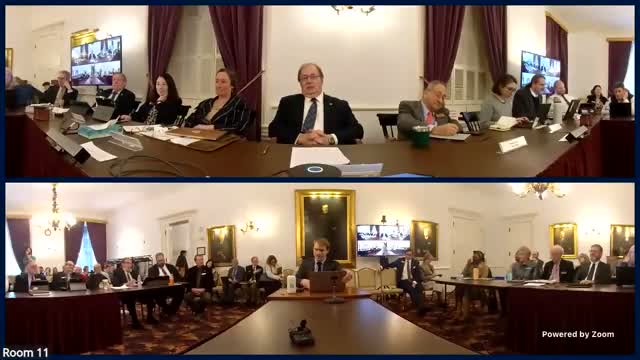
John Craig of the Office of Legislative Council walked lawmakers through technical areas in the CHIP guidance that may require attention as implementation proceeds. Craig said the guidance’s definition of "housing development site" goes beyond the tight parcel-based statutory language by potentially including contiguous parcels that share a common grand-list span; that approach resolves administrative difficulties but could broaden the area eligible for increment financing.
Craig also discussed the move from the statutory language of "public purpose" to the guidance’s use of "public good," which permits privately owned infrastructure to be eligible if the municipality can show a community benefit. He warned this standard is more malleable and may invite arguments that increased property values alone satisfy community benefit.
The guidance also supplements statutory requirements for housing infrastructure agreements by listing expected outcomes (percent of floor area dedicated to housing, number of units, expected development value) and requiring the municipality and sponsor to define obligations in the event tax increment falls short of financing needs. Craig noted the guidance requires municipalities to submit requests for any "significant change" and identified examples that could trigger FTSE/council review: increases in CHIP-funded share, scope changes, or higher debt ceilings.
Several witnesses and lawmakers raised longer-term enforcement questions for for-sale homeownership projects that rely on covenants or deed restrictions to secure primary-residence requirements. Witnesses said banks and mortgage markets may treat unusual covenant language as problematic for resale and secondary-market financing, and urged that housing infrastructure agreements be drafted to address those enforcement and marketability concerns.
Craig and other panelists recommended follow-up sessions with tax and valuation staff to reconcile administrative issues about contiguous parcels and span numbers, and suggested monitoring amendment requests and shortfalls once early applications are processed.
Craig also discussed the move from the statutory language of "public purpose" to the guidance’s use of "public good," which permits privately owned infrastructure to be eligible if the municipality can show a community benefit. He warned this standard is more malleable and may invite arguments that increased property values alone satisfy community benefit.
The guidance also supplements statutory requirements for housing infrastructure agreements by listing expected outcomes (percent of floor area dedicated to housing, number of units, expected development value) and requiring the municipality and sponsor to define obligations in the event tax increment falls short of financing needs. Craig noted the guidance requires municipalities to submit requests for any "significant change" and identified examples that could trigger FTSE/council review: increases in CHIP-funded share, scope changes, or higher debt ceilings.
Several witnesses and lawmakers raised longer-term enforcement questions for for-sale homeownership projects that rely on covenants or deed restrictions to secure primary-residence requirements. Witnesses said banks and mortgage markets may treat unusual covenant language as problematic for resale and secondary-market financing, and urged that housing infrastructure agreements be drafted to address those enforcement and marketability concerns.
Craig and other panelists recommended follow-up sessions with tax and valuation staff to reconcile administrative issues about contiguous parcels and span numbers, and suggested monitoring amendment requests and shortfalls once early applications are processed.
View the Full Meeting & All Its Details
This article offers just a summary. Unlock complete video, transcripts, and insights as a Founder Member.
✓
Watch full, unedited meeting videos
✓
Search every word spoken in unlimited transcripts
✓
AI summaries & real-time alerts (all government levels)
✓
Permanent access to expanding government content
30-day money-back guarantee
